
Life, 1921-07-07 · page 11 of 34
Life — July 7, 1921 — page 11: what you’re looking at
What you’re looking at
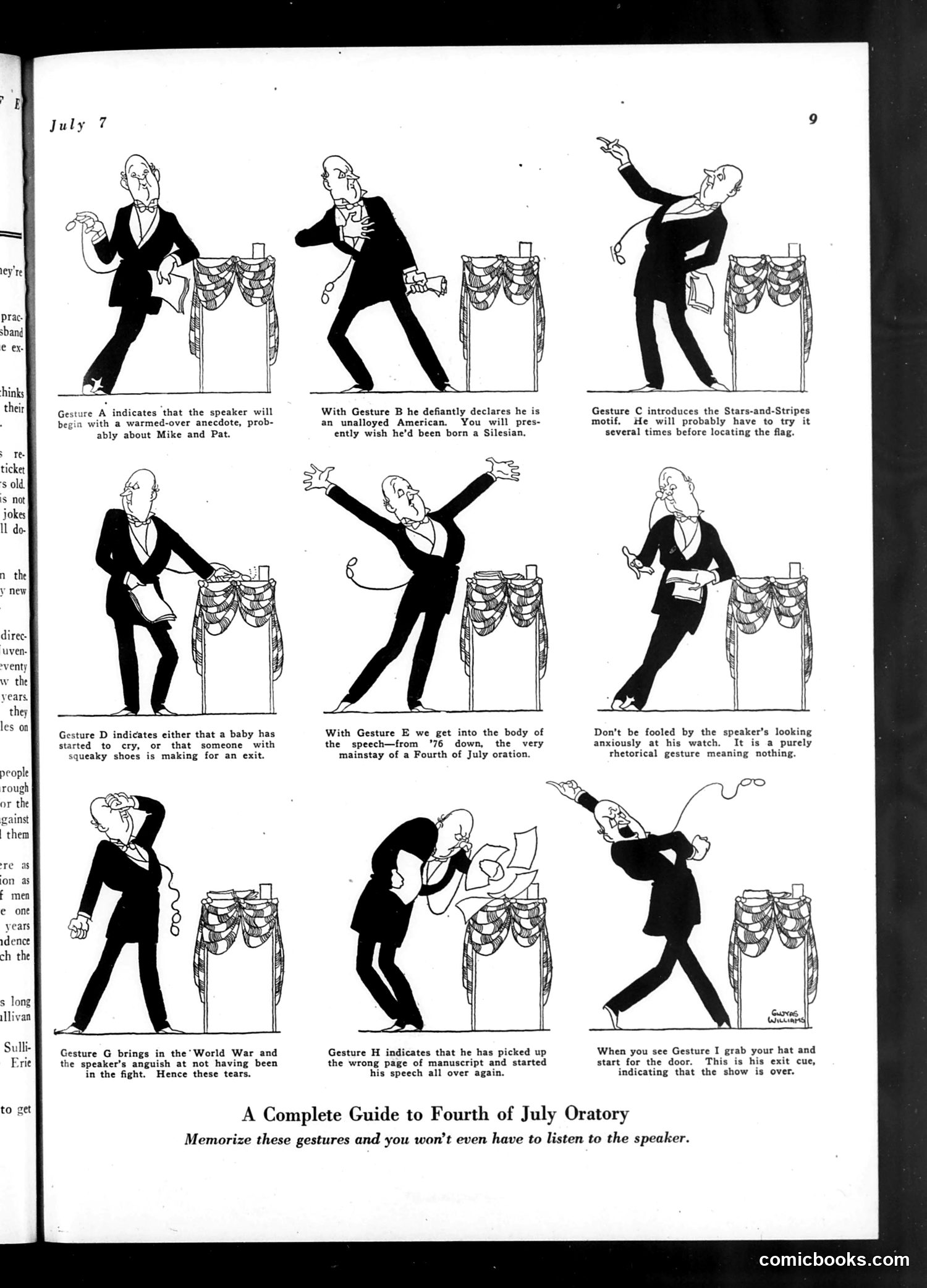
This satirical guide mocks predictable Fourth of July speeches through nine exaggerated gestures. The cartoon shows a speaker demonstrating typical rhetorical moves: opening with anecdotes (Gesture A), declaring patriotic sentiments (B), displaying the flag (C), addressing babies crying or squeaky shoes disrupting proceedings (D), building emotional intensity (E), recovering from fumbles like dropped manuscript pages (F), referencing World War involvement (G), recovering from mistakes (H), and finally signaling the speech's end (I). The satire targets the formulaic, theatrical nature of patriotic oratory—suggesting Fourth of July speakers follow predictable, often overwrought emotional and physical patterns regardless of substance. The tagline jokes that memorizing these gestures makes actually listening unnecessary. This reflects post-WWI American skepticism toward bombastic patriotic rhetoric.
📄 Transcribed text from this page (OCR, searchable)
Machine-transcribed from the original scan — historical spelling and the odd misread are preserved.
Gesture A indicates that the speaker will begin with a warmed-over anecdote, prob- ably about Mike and Pat. direc- uven- Gesture D indicates either that a baby has started to cry, or that someone with squeaky shoes is making for an exit. ion as f men e one years idence ch the s long llivan Ss Gesture G brings in the’ World War and the speaker’s anguish at not having been in the fight. Hence these tears. With Gesture B he defiantly declares he is an unalloyed American. You will pres- ently wish he’d been born a Silesian, With Gesture E we get into the body of the speech—from '76 down, the very mainstay of a Fourth of July oration. Gesture H indicates that he has picked up the wrong page of manuscript and started his speech all over again. Gesture C introduces the Stars-and-Stripes motif, He will probably have to try it several times before locating the flag. Don’t be fooled by the speaker's looking anxiously at his watch. It is a purely rhetorical gesture meaning nothing. When you see Gesture I grab your hat and start for the door. This is his exit cue, indicating that the show is over. A Complete Guide to Fourth of July Oratory Memorize these gestures and you won't even have to listen to the speaker. comicbooks.com