
Life, 1920-07-01 · page 25 of 56
Life — July 1, 1920 — page 25: what you’re looking at
What you’re looking at
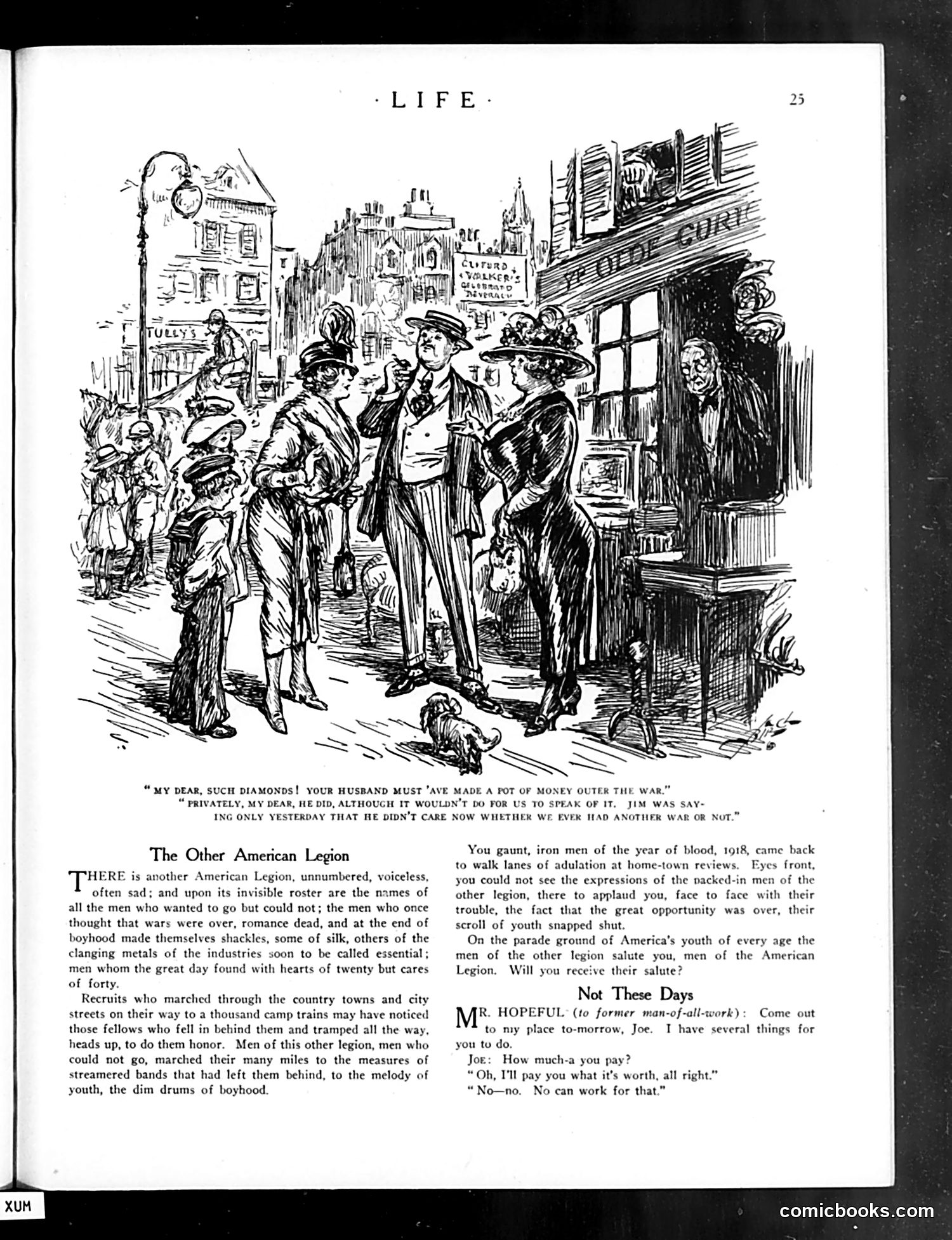
The top illustration satirizes war profiteering: a woman boasts of her husband's wartime wealth ("made a pot of money"), while he cynically admits he no longer cares if there's another war—implying he's indifferent to human suffering if it means profit. The main article, "The Other American Legion," addresses a social tragedy specific to 1918-1920s America. It describes men who *couldn't* serve in WWI because they had family obligations or industrial work deemed "essential" to the war effort. While combat veterans returned as celebrated heroes, these men faced permanent exclusion from that honor and camaraderie, their "scroll of youth snapped shut." The brief dialogue "Not These Days" reflects post-war labor dynamics: an employer offers vague wages ("what it's worth"), but the worker refuses—likely indicating workers gained negotiating power after the war and would no longer accept such exploitative terms. Together, these pieces critique wartime inequality: some profited enormously, veterans received glory, yet many ordinary workers sacrificed without recognition or fair compensation.
📄 Transcribed text from this page (OCR, searchable)
Machine-transcribed from the original scan — historical spelling and the odd misread are preserved.
“ MY DEAR, SUCH DIAMONDS! YOUR HUSBAND MUST 'AVE MADE A POT OF MONEY OUTER THE WAR.” “ PRIVATELY, MY DEAR, HE DID, ALTHOUGH IT WOULDN'T DO FOR US TO SPEAK OF IT. JIM WAS SAY- ING ONLY YESTERDAY THAT HE DIDN'T CARE NOW WHETHER WE EVER IAD ANOTHER WAR OR NOT.” The Other American Legion HERE is another American Legion, unnumbered, voiceless, often sad; and upon its invisible roster are the names of all the men who wanted to go but could not; the men who once thought that wars were over, romance dead, and at the end of boyhood made themselves shackles, some of silk, others of the clanging metals of the industries soon to be called essential ; men whom the great day found with hearts of twenty but cares of forty. Recruits who marched through the country towns and city streets on their way to a thousand camp trains may have noticed those fellows who fell in behind them and tramped all the way, heads up, to do them honor. Men of this other legion, men who could not go, marched their many miles to the measures of streamered bands that had left them behind, to the melody of youth, the dim drums of boyhood. You gaunt, iron men of the year of blood, 1918, came back to walk lanes of adulation at home-town reviews. Eyes front, you could not see the expressions of the packed-in men of the other legion, there to applaud you, face to face with their trouble, the fact that the great opportunity was over, their scroll of youth snapped shut. On the parade ground of America’s youth of every age the men of the other legion salute you, men of the American Legion. Will you receive their salute? Not These Days R. HOPEFUL (to former man-of-all-work) : to my place to-morrow, Joe. you tu do. Jor: How much-a you pay? Come out T have several things for “Oh, I'll pay you what it’s worth, all right.” “No—no. No can work for that.” comicbooks.com