
Life, 1920-04-01 · page 31 of 60
Life — April 1, 1920 — page 31: what you’re looking at
What you’re looking at
This page contains editorial satire about two post-WWI issues: **Main article**: Criticizes a proposal to exhume American soldiers' bodies buried in France and return them home. The author argues this is sentimentally misguided and wasteful ($50 million proposed). Instead, he suggests Congress fund trips for mothers to visit their sons' graves in France. He also attacks the organized propaganda campaign supporting the repatriation, particularly noting quotes from *The Casket* (an undertakers' trade publication), implying financial motives behind the movement. **Roosevelt Statue controversy**: Exposes that a proposed equestrian statue of Theodore Roosevelt at Central Park was actually a disguised real estate scheme—the project's leader wrote to Roosevelt's son framing it as honoring the deceased Colonel, but really sought to facilitate a traffic outlet for commercial development. The satirist condemns the manipulation. Both pieces critique organized manipulation of sentiment for profit or development purposes.
📄 Transcribed text from this page (OCR, searchable)
Machine-transcribed from the original scan — historical spelling and the odd misread are preserved.
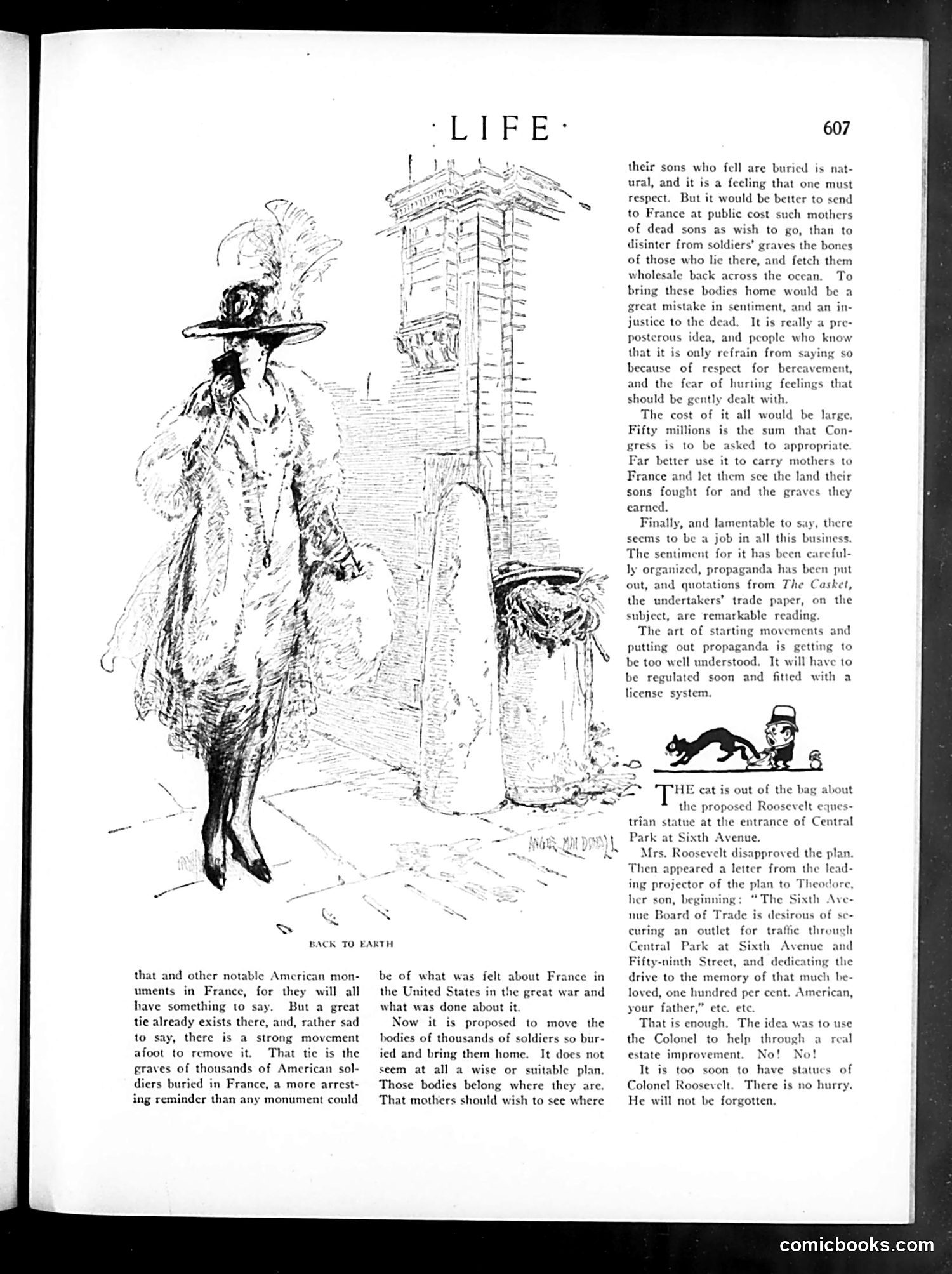
BACK TO EARTH that and other notable American mon- uments in France, for they will all have something to say. But a great tie already exists there, and, rather sad to say, there is a strong movement afoot to remove it. That tie is the graves of thousands of American sol- diers buried in France, a more arrest- ing reminder than any monument could be of what was felt about France in the United States in the great war and what was done about it. Now it is proposed to move the bodies of thousands of soldiers so bur- ied and bring them home. It does not seem at all a wise or suitable plan Those bodies belong where they are. That mothers should wish to see where 607 their sons who fell are buried is nat- ural, and it is a feeling that one must respect. But it would be better to send to France at public cost such mothers of dead sons as wish to go, than to disinter from soldiers’ graves the bones of those who lic there, and fetch them wholesale back across the ocean. To bring these bodies home would be a great mistake in sentiment, and an in- justice to the dead. It is really a pre- postcrous idea, and people who know that it is only refrain from saying so because of respect for bereaveme and the fear of hurting feelings that should be gently dealt with The cost of it all would be large. Fifty millions is the sum that Con- gress is to be asked to appropriate. Far better use it to carry mothers to France and let them sce the land their sons fought for and the graves they carned, Finally, and lamentable to say, there seems to be a job in all this business, The sentiment for it has been careful- ly organized, propaganda has been put out, and quotations from The Casket, the undertakers’ trade paper, on the subject, are remarkable reading. The art of starting movements and putting out propaganda is getting to be too well understood. It will have to be regulated soon and fitted with a license s; = HE cat is out of the bag about the proposed Roosevelt eques- trian statue at the entrance of Central Park at Sixth Avenue. Mrs. Roosevelt disapproved the plan. Then appeared a letter from th lead- ‘Git: ing projector of the plan to Theodor her son, beginning: “The Sixth rd of Trade curing an outlet for traffic Central Park at Sixth Avenue and Fifty-ninth Street, and dedi drive to the memory of that much he- loved, one hundred per cent. American, Ave- nue Be s desirous of se- through ating the your father,” ete. ete. That is enough. The idea was to use the Colonel to help through a real estate improvement. No! No! It is too soon to have statues of Colonel Roosevelt. There is no hurry. He will not be forgotten. comicbooks.com