
Life, 1919-12-04 · page 33 of 80
Life — December 4, 1919 — page 33: what you’re looking at
What you’re looking at
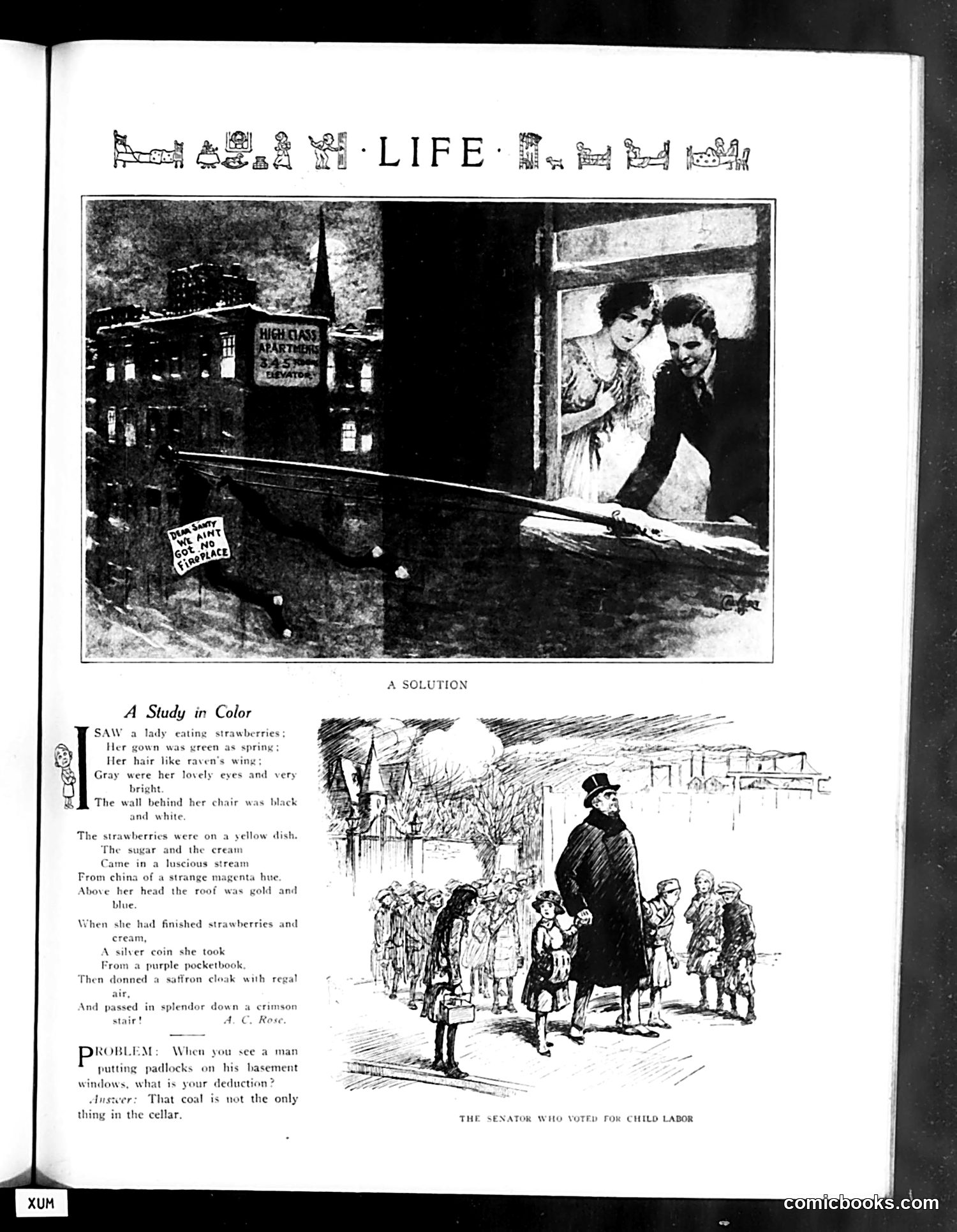
This Life magazine page contains two distinct pieces of satire: **"A Study in Color"** (top and middle): A whimsical poem about a lady eating strawberries, emphasizing vivid colors throughout the scene. This appears to be light, aesthetic humor—poking fun at overly flowery, color-obsessed descriptive writing popular in the era. **"The Senator Who Voted for Child Labor"** (bottom illustration): The sketch shows a well-dressed man in a top hat standing among working children in what appears to be an industrial or urban setting. This is pointed social commentary criticizing politicians who opposed child labor laws. The caption's irony is clear: the senator's fine clothing and demeanor contrast sharply with the children's poverty, suggesting hypocrisy or moral blindness. **"Problem/Answer" joke** (middle-left): A quick gag about a man putting padlocks on basement windows—implying he's hiding something illegal or improper inside, not just coal storage. The page satirizes both aesthetic pretension and political corruption regarding worker protections.
📄 Transcribed text from this page (OCR, searchable)
Machine-transcribed from the original scan — historical spelling and the odd misread are preserved.
Weg - Abs Bet BA poly A Study in Color SAW a lady eating strawberries; Her hair like raven's wi Gray were her lovely eyes and very bright The wall behind her chair was black and white The strawberries were on a yellow dish. The sugar and the cream Came in a luscious stream From china of a strange magenta hue. Above her head the roof was gold and blue. When she had finished strawberries and A silver coin she took From a purple pocketbook Then donned a saffron cloak with regal air, And passed in splendor down a crimson stair! A.C. Rose ROBLEM: When you see a man putting padlocks on his basement windows, what is your deduction? Ans That coal is not the only thing in the cellar. SENATOR WHO VOTED FOR CHILD LABOR