
Life, 1919-09-11 · page 27 of 48
Life — September 11, 1919 — page 27: what you’re looking at
What you’re looking at
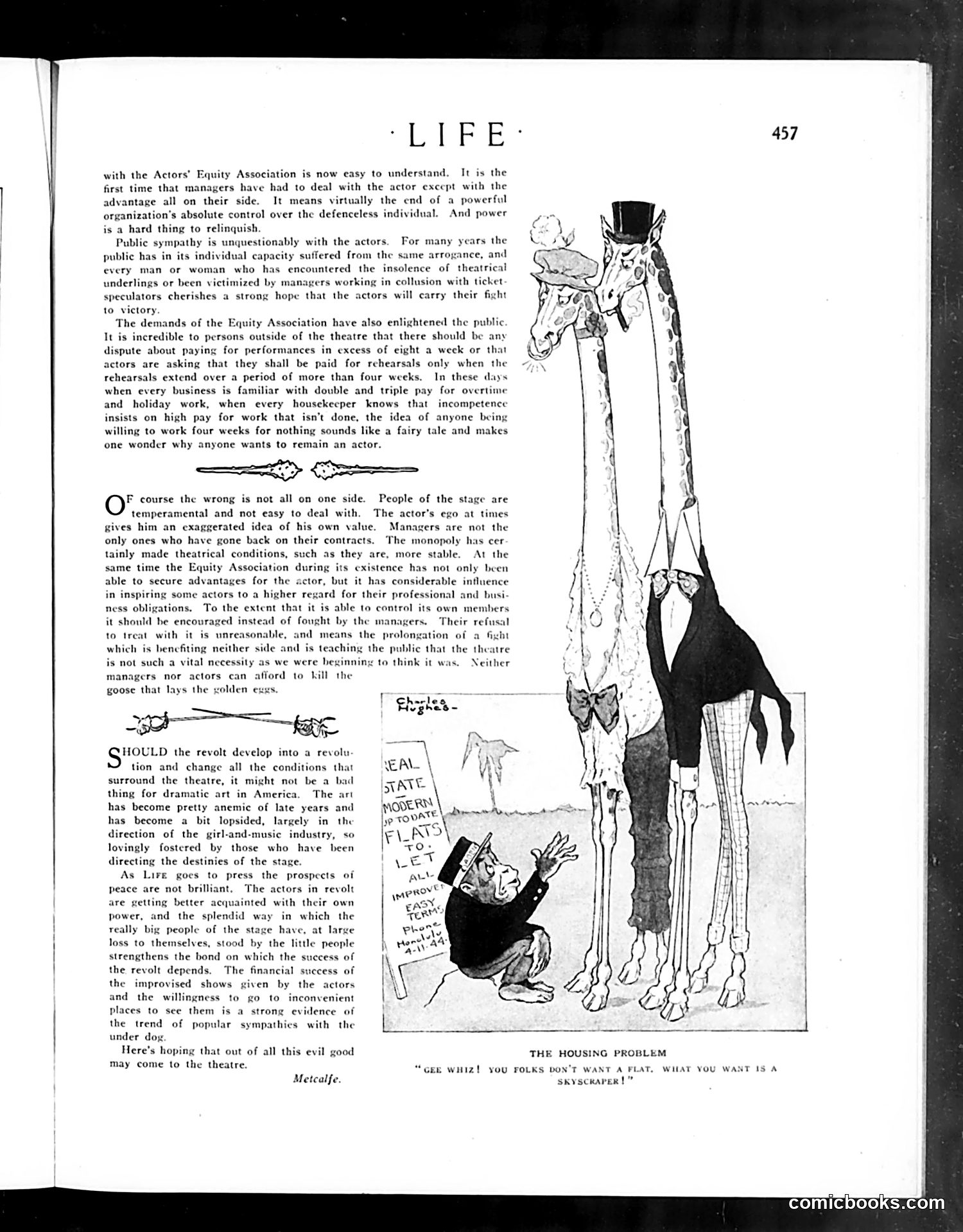
This page discusses the **Actors' Equity Association strike** (appears to be from 1919), presenting Life's editorial support for actors' labor demands against theatrical managers. The main cartoon, titled "The Housing Problem," depicts a landlord (drawn as a tall, thin figure) towering over a tiny tenant holding a sign listing grievances. The joke satirizes both the actors' strike and the broader post-WWI housing shortage: just as actors demand fair pay and working conditions, ordinary people desperately seek affordable housing. The landlord's dismissive response—that tenants want skyscrapers, not flats—mocks landlords' refusal to acknowledge legitimate housing needs, paralleling managers' dismissal of actors' reasonable demands (eight-hour days, paid rehearsals). The editorial argues actors' grievances are justified and that the Equity Association's existence has benefited even theatrical art itself. Life positions itself with "the under dog," hoping labor reform might revitalize American drama.
📄 Transcribed text from this page (OCR, searchable)
Machine-transcribed from the original scan — historical spelling and the odd misread are preserved.
‘LIFE with the Actors’ Equity Association is now easy to understand, It is the first time that managers have had to deal with the actor except with the advantage all on their side. It means virtually the end of a powerful organization's absolute control over the defenceless individual. And power is a hard thing to relinquish. Public sympathy is unquestionably with the actors. For many years the public has in its individual capacity suffered from the same arrogance, and every man or woman who has encountered the insolence of theatrical underlings or been victimized by managers working in collusion with ticket speculators cherishes a strong hope that the actors will carry their fight to victory. The demands of the Equity Association have also enlightened the public It is incredible to persons outside of the theatre that there should be any dispute about paying for performances in excess of eight a week or that actors are asking that they shall be paid for rehearsals only when the rehearsals extend over a period of more than four weeks. In these days when every business is familiar with double and triple pay for overtime and i work, when every housekeeper knows that incompetence insists on high pay for work that isn’t done, the idea of anyone being willing to work four weeks for nothing sounds like a fairy tale and makes one wonder why anyone wants to remain an actor. course the wrong is not all on one side. People of the stage are temperamental and not easy to deal with. The actor's ego at times gives him an exaggerated idea of his own value. Managers are not the only ones who have gone back on their contracts. ‘The monopoly has cer tainly made theatrical conditions, such as they are, more stable. At the same time the Equity Association during its cxistence has not only been able to secure advantages for the actor, but it has considerable influence in inspiring some actors to a higher regard for their professional and busi- ness obligations. To the extent that it is able to control its own members it should he encouraged instead of fought by the managers. Their refusal to treat with it is unreasonable, and means the prolongation of a fixht which is henefiting neither side and is teaching the public that the theatre is not such a vital necessity as we were beginning to think it was. Ne managers nor actors can afford to kill the goose that lays the xolden ess. 2 oe fC HOULD the revolt develop into a revolu tion and change all the conditions that surround the theatre, it might not be a bad thing for dramatic art in America. The art has become pretty anemic of late years and has become a bit lopsided, largely in the direction of the girl-and-music industry, so lovingly fostered by those who have been directing the destinies of the stage. As Lire goes to press the prospects of peace are not brilliant, The actors in revolt are getting better acquainted with their own power, and the splendid way in which the really big people of the stage have, at large loss to themselves, stood by the little people strengthens the bond on which the success of the revolt depends. The financial success of the improvised shows given by the actors and the willingness to go to inconvenient places to see them is a strong evidence of the trend of popular sympathies with the under dog Here's hoping that out of all this evil good THE HOUSING PROBLEM may come to the theatre. “GEE WHIZ! YOU FOLKS DON'T WANT A FLAT, WHAT YOU WANT 1S A Metcalfe. skysckarer!”