
Life, 1919-06-26 · page 21 of 43
Life — June 26, 1919 — page 21: what you’re looking at
What you’re looking at
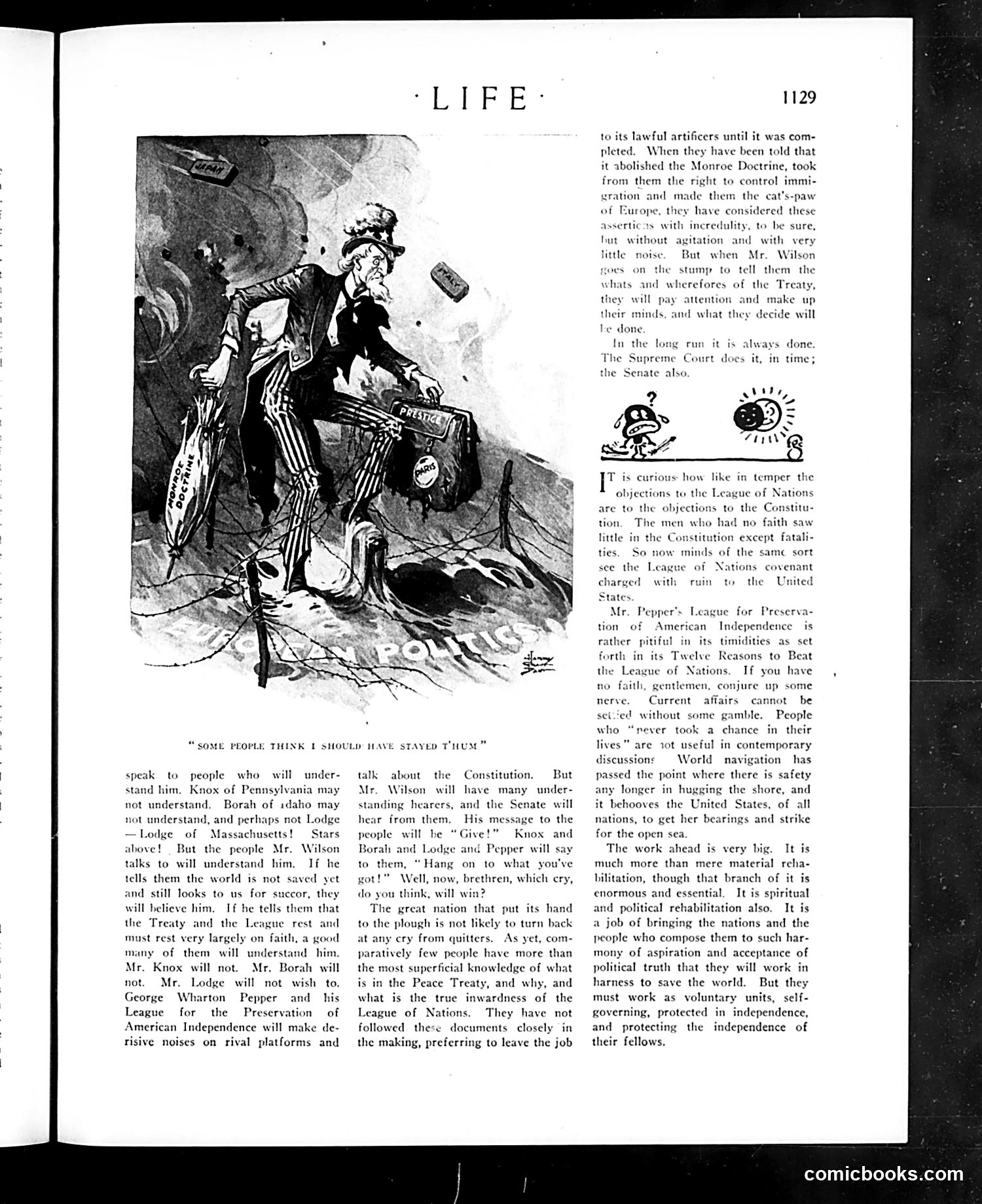
This page critiques opponents of the League of Nations Treaty following World War I. The central cartoon depicts Uncle Sam as a tired farmer, with the caption "Some People Think I Should Have Stayed T'Home"—satirizing isolationist politicians who want America to retreat from international involvement. The editorial identifies specific Republican senators opposing President Wilson's League proposal: Knox (Pennsylvania), Borah (Idaho), Lodge (Massachusetts), and George Wharton Pepper. The text argues these men lack faith in the League, while common Americans—once informed by Wilson's speeches—will support it. The satire's point: isolationist politicians are out of touch with the people's better judgment. The cartoonist presents Wilson as addressing ordinary citizens who will understand the necessity of international cooperation, contrasting them against cynical politicians protecting narrow interests. The farmer figure represents America itself, exhausted but recognizing global responsibilities cannot be abandoned.
📄 Transcribed text from this page (OCR, searchable)
Machine-transcribed from the original scan — historical spelling and the odd misread are preserved.
“SOME PEOPLE THINK L SHOULD HAVE STAYED T'HUM” speak to people who will unde stand him. Knox of Pennsylvania may not understand. Borah of idaho may not understand, and perhaps not Lodge —Lodge of Massachusetts! above! But the people Mr. Wilson talks to will understand him. If he tells them the world is not saved yet and still looks to us for succor, the will believe him, If he tells th that the Treaty and the League rest and must rest very largely on faith, a good of them will understand him. Mr. Knox will not. Mr. Borah will not. Mr. Lodge will not George Wharton Pepper and his League for the Preservation of American Independence will make de- risive noises on rival platforms and many wish to. Constitution, But many under- talk about the Mr. Wilson will have standing hearers, and the Senate will His message to the Knox and hear from them. people will be “Give!” Borah and Lodge and Pepper will say to them, “Hang on to what you've got Well, now, brethren, which ery, do you thin win? The great nation tha to the plough is not likely to turn back at any cry from quitters. As yet, com- paratively few people have more than the most superficial knowledge of what is in the Peace Treaty, and why, and what is the true inwardness of the League of Nations. They have not followed these documents closely in the making, preferring to leave the job put its hand 1129 to its lawful artificers until it was com- pleted. When they have been told that it abolished the Monroe Doctrine, took from them the right control immi- gration and made them the cat's-paw of Europe, they have considered these asserticas with incredulity, to be sure, hut without agitation and with very little noise. But when Mr. Wilson joes on the stump to tell them: the whats and wherefores of the Treaty, they will their minds, and what they decide will pay attention and make up he done. it is always done. . in time; the long rur The Supreme Court does the Senate also ay, = Pes 7 an “Sg T is curious how like in temper the objections to the League of Nations are to the objections to the Constitu- The men who had no faith saw itution except fatali- the same sort tion little in ties. So now minds he Ce ions covenant to the United League of with rt see the charge States, Mr. Pepper's 1. tion of American rather pitiful in its timidities as set forth in its Twelve Reasons to Beat gue of Nations. If you have gentlemen, conjure up some cannot be seiied without some gamble. People ver took a chance in their lives" are 1ot useful in contemporary discussions World navigation has passed the point where there is safety ue for Preserva- Independence i the Lea no faith, Current nerve. affairs who any longer in hugging the shore, and it behooves the United States, of all nations, to get her bearings and strike for the open sea. The work ahead is very big. It is much more than mere material reha- hilitation, though that branch of it is enormous and essential. It is spiritual and political rehabilitation also. It is a job of bringing the nations and the people who compose them to such har- mony of aspiration and acceptance of political truth that they will work in harness to save the world. But they must work as voluntary units, self- governing, protected in independence, and protecting the independence of their fellows. comicbooks.com