
Life, 1919-03-06 · page 21 of 42
Life — March 6, 1919 — page 21: what you’re looking at
What you’re looking at
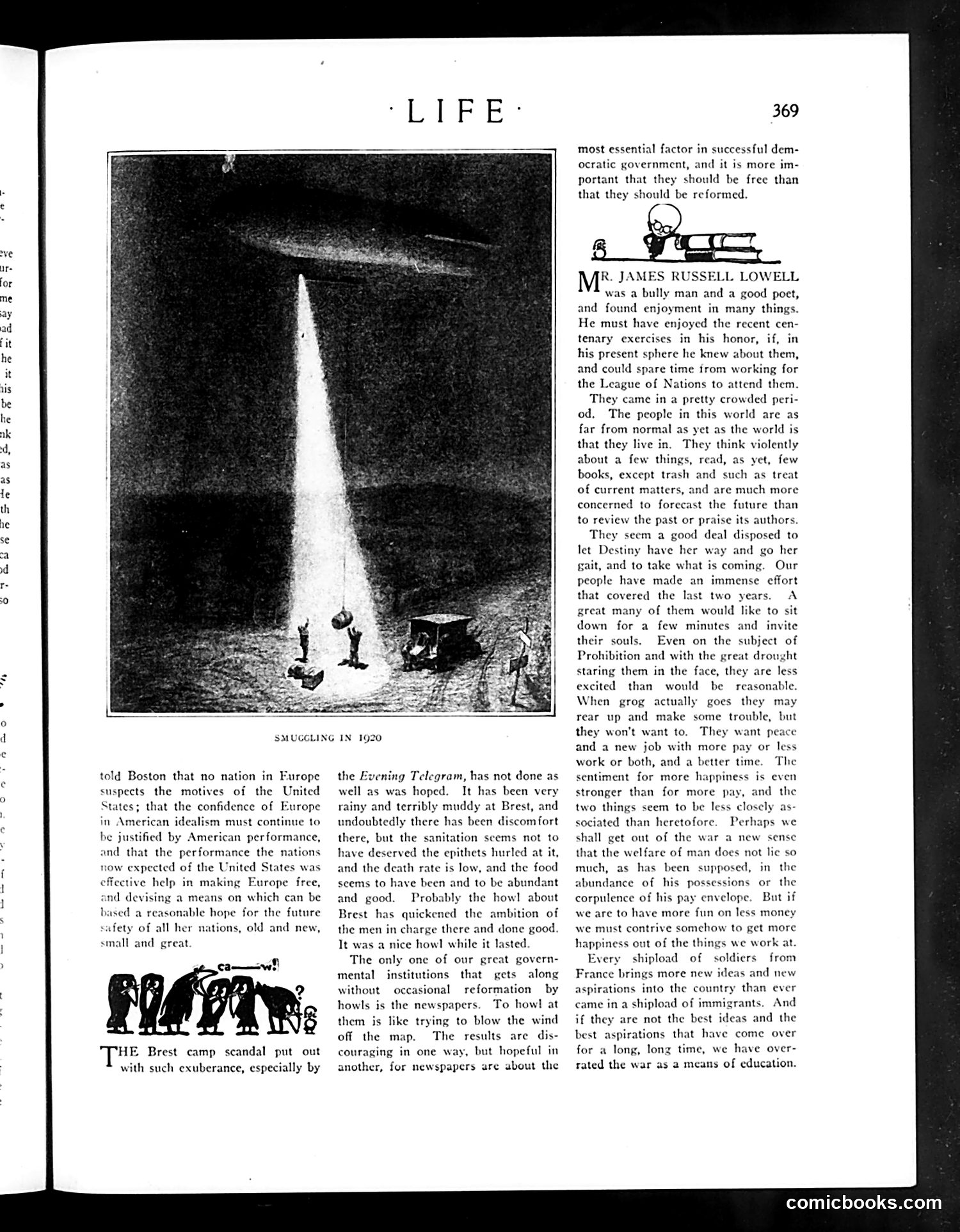
This page from Life magazine (page 369) contains two satirical cartoons and commentary from around 1920. **"Smuggling in 1920"** (top image): Shows figures operating a light beam or searchlight during Prohibition. The satire mocks the absurdity of the newly enacted alcohol ban—the "smugglers" are openly using obvious equipment, suggesting that illegal liquor trafficking will be impossible to hide or stop, making Prohibition enforcement inherently comic. **Bottom cartoon**: Depicts what appears to be political or military figures with exaggerated features, likely referencing the "Brest camp scandal"—a controversy over conditions at the American military camp in Brest, France after World War I. The text criticizes sensationalist newspaper coverage that exaggerated problems there. The accompanying essay discusses post-WWI American idealism, newspaper freedom, Prohibition's coming effects, and soldiers returning with new ideas. The overall tone reflects 1920s skepticism about reform efforts and faith in democratic institutions.
📄 Transcribed text from this page (OCR, searchable)
Machine-transcribed from the original scan — historical spelling and the odd misread are preserved.
ve af for me ay ad ne SMUGGLING IN 1920 told Boston that no nation in Furope suspects the motives of the United States; that the confidence of Europe in American idealism must continue to be justified by American performance, and that the performance the nations now expected of the United States was effective help in making Europe free, and devising a means on which can be based a reasonable hope for the future safety of all her nations, old and new, small and great caw! § HE Brest camp scandal put out with such exuberance, especially by the Evening Telegram, has not done as well as was hoped. It has been very rainy and terribly muddy at Brest, and undoubtedly there has been discomfort there, but the sanitation scems not to have deserved the epithets hurled at it, and the death rate is low, and the food seems to have been and to be abundant and good. Probably the howl about Brest has quickened the ambition of the men in charge there and done good It was a nice how! while it lasted The only one of our great govern- mental institutions that gets along without occasional reformation by howls is the newspapers. To howl at them is like trying to blow the wind off the map. The results are dis- couraging in one way, but hopeful in another, for newspapers are about the 369 most essential factor in successful dem- ocratic government, and it is more im- portant that they should be free than that they should be reformed. R. JAMES RUSSELL LOWELL a bully man and a good poet, and found enjoyment in many things. He must have enjoyed the recent cen- tenary exercises in his honor, if, in his present sphere he knew about them, and could spare time from working for the League of Nations to attend them. They came in a pretty crowded peri- od, The people in this world are as far from normal as yet as the world is that they live in. They think violently about a few things, read, as yet, few books, except trash and such as treat of current matters, and are much more concerned to forecast the future than to review the past or praise its authors. They seem a good deal disposed to let Destiny have her way and go her gait, and to take what is coming. Our people have made an immense effort that covered the last two years. A great many of them would like to sit down for a few minutes and invite their souls. Even on the subject of Prohibition and with the great drought staring them in the face, they are less excited than would be reasonable. When grog actually goes they may rear up and make some trouble, but they won't want to. They want peace and a new job with more pay or less work or both, and a better time. The sentiment for more happiness is even stronger than for more pay, and the two things seem to be less closely as- sociated than heretofore. Perhaps we shall get out of the war a new sense that the welfare of man does not lic so much, as has been supposed, in the abundance of his possessions or the corpulence of his pay envelope. But if we are to have more fun on less money we must contrive somchow to get more happiness out of the things we work at Every shipload of soldiers from France brings more new ideas and new aspirations into the country than ever came ina shipload of immigrants. And if they are not the best ideas and the best aspirations that have come over for a long, long time, we have over- rated the war as a means of education. comicbooks.com