
Life, 1918-09-26 · page 23 of 33
Life — September 26, 1918 — page 23: what you’re looking at
What you’re looking at
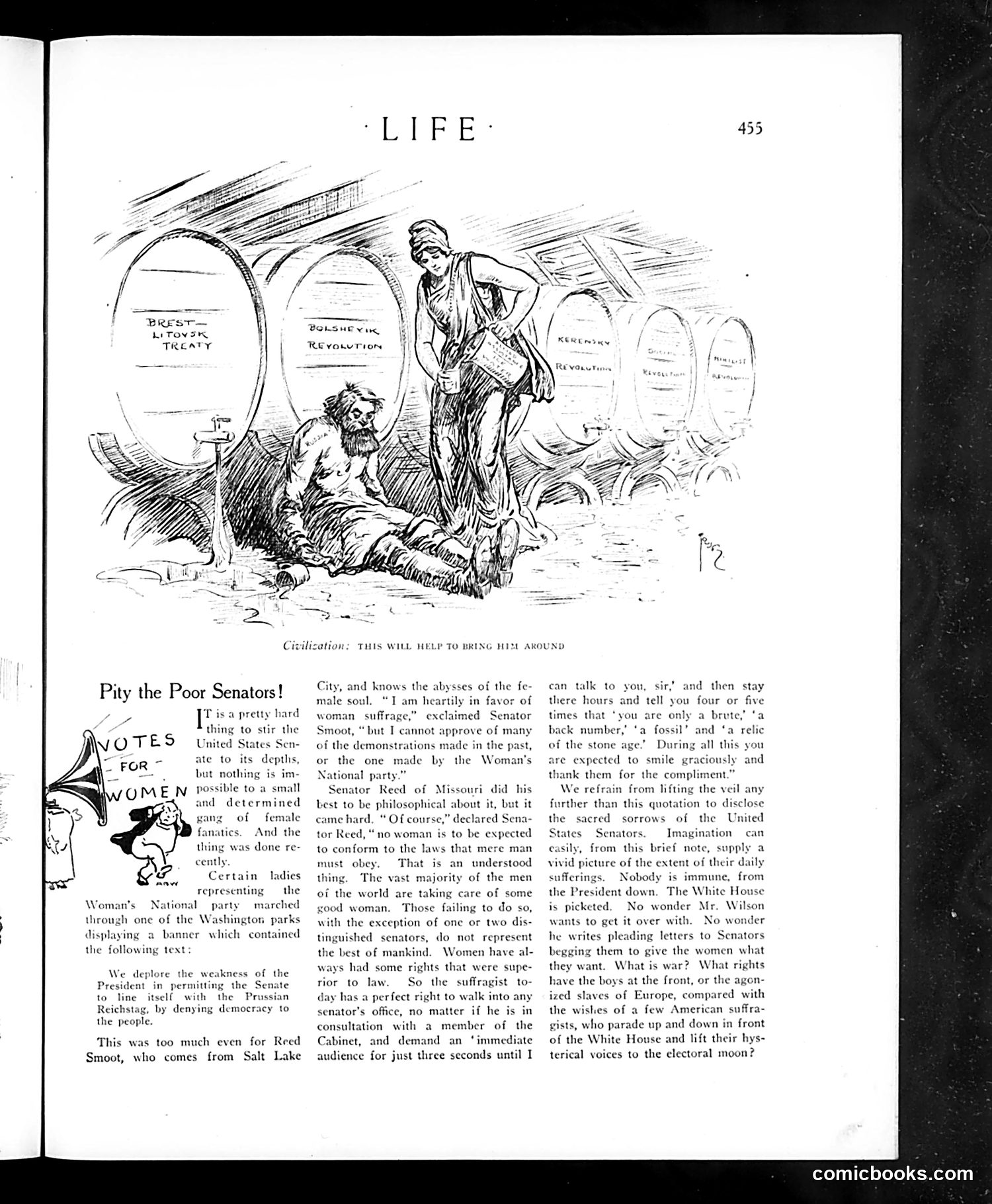
This 1918 Life magazine page satirizes female suffragists' tactics by mocking sympathetic male senators. The cartoon depicts a disheveled man amid barrels labeled with international crises (Brest-Litovsk Treaty, Bolshevik Revolution) being confronted by a woman activist—suggesting women's suffrage demands distract from serious wartime concerns. The text ridicules senators like Reed Smoot and Senator Reed who, while opposing women's suffrage philosophically, acknowledge suffragists' "right" to disrupt their offices. The article sarcastically portrays suffragists as unreasonable, comparing their demands unfavorably to soldiers' sacrifices in World War I. The caption "This will help to bring him around" implies that harassment will change senators' minds—presented as absurd. Overall, the satire defends senators against persistent suffrage activists, framing women's political engagement as hysterical disruption rather than legitimate democratic protest.
📄 Transcribed text from this page (OCR, searchable)
Machine-transcribed from the original scan — historical spelling and the odd misread are preserved.
BREST Li Tovar, TREATY BOrsue vue, : KeREn Ky Re vowwrion REVOLT ication: THIS WILL HELP TO BRING HIM AROUND City, and knows the abysses of the fe- male soul. “Iam heartily in favor of c,” exclaimed Senator Smoot, “but T cannot approve of many can talk to you, sir’ and then stay there hours and tell you four or five times that ‘you back number,’ ‘ Pity the Poor Senators! T is a pretty hard thing to stir the woman suffrag: ¢ only a brute, ‘a fossil’ and ‘a relic WO TES United States Sen- ate to its depths, but nothing is im- possible to a small and determined gang of female fanatics. And the thing was done re- cently. Certain representing — the Woman's National _ party through one of the Washington. parks displaying a banner which contained ladies marched the following text: ¢ weakness of the rmitting the Senate line itself with the Prussian Reichstag, by denying democracy to the people. This was too much even for Reed Smoot, who comes from Salt Lake of the demonstrations made in the past, or the one made by the Woman's National party.” Senator Reed of Missouri did his best to be philosophical about it, but it “ Of course,” declared Sena- tor Reed, “no woman is to be expected to conform to the laws that m man must obey. That is an understood thing. The vast majority of the men came hard oi the world are taking care of some good won Those failing to do so, with the exception of one or two dis- tinguished senators, do not represent the best of mankind. Women have al- ways had some rights that were supe- rior to law So the suffragist to- day has a perfect right to walk into any senator's office, no matter if he is in consultation with a member of the Cabinet, and demand an ‘immediate audience for just three seconds until I of the stone age.” During all this you re expected to smile graciously and ank them for the compliment We refrain from lifting the veil further than this quotation to disclo: the sacred sorrows of the United States Senators. Imagination can , from this brief note, supply a vivid picture of the extent of their daily Nobody is immune, from lent down. The White House is picketed. No wonder Mr. Wilson wants to get it over with. No wonder he writes pleading letters to Senators begging them to give the women what they want. What is war? What rights have the boys at the front, or the agon- ized slaves of Europe, compared with the wishes of a few American suffra- gists, who parade up and down in front of the White House and lift their hys- terical voices to the electoral moon? comicbooks.com