
Life, 1918-09-26 · page 22 of 33
Life — September 26, 1918 — page 22: what you’re looking at
What you’re looking at
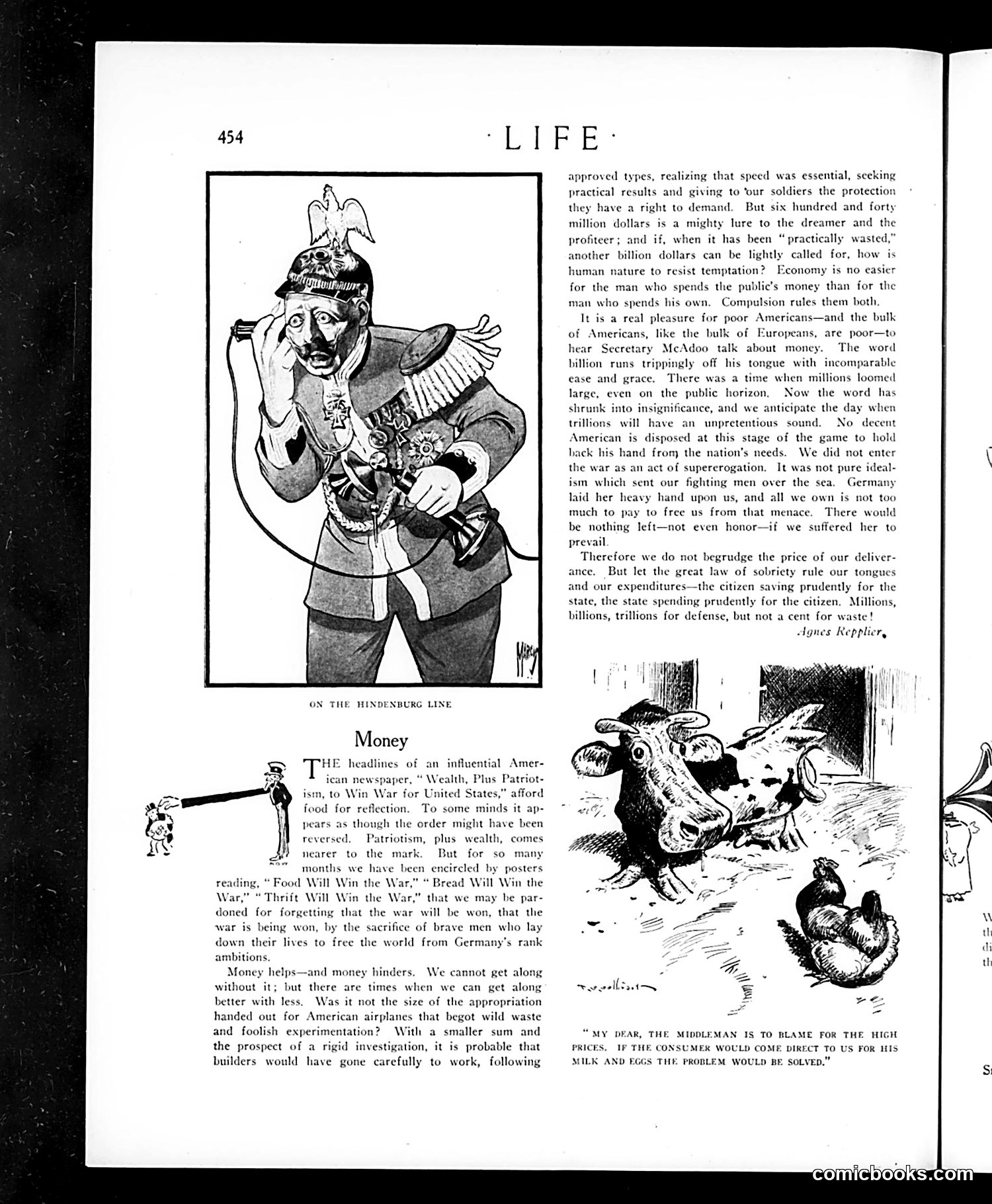
**Top Cartoon ("On the Hindenburg Line"):** This depicts a caricatured German military figure (likely Kaiser Wilhelm II, given the Prussian uniform and eagle insignia) laden with military decorations and weapons. The "Hindenburg Line" reference places this during WWI, satirizing German militarism and imperial excess. **Article "Money" by Agnes Repplier:** Written during American WWI involvement, this editorial criticizes wasteful military spending while defending necessary wartime expenditures. Repplier argues that $640 million appropriated for airplanes produced "wild waste and foolish experimentation" due to lack of oversight. She praises Secretary of Treasury McAdoo's rhetoric about sacrifice but urges fiscal discipline: "Millions, billions, trillions for defense, but not a cent for waste." **Bottom Cartoon:** Shows farm animals (cow, chicken) speaking to a consumer about middlemen causing high food prices—a domestic economic complaint during wartime inflation. **Overall Context:** The page addresses tension between patriotic spending and fiscal responsibility during WWI, criticizing both military waste and wartime profiteering.
📄 Transcribed text from this page (OCR, searchable)
Machine-transcribed from the original scan — historical spelling and the odd misread are preserved.
‘LIP E- ON THE HINDENBURG LINE Money S TPHE headlines of an influential “Wealth, Plus Patriot- ism, to Win War for United States,” afford To some minds it ap- Amer- an newspaper food for reflection. pears as though the order might have been reversed. Patriotism, plus wealth, comes nearer to the mark. But for so many months we have been encircled by posters Food Will Win the War,” “ Bread Will Win the Thrift Will Win the War,” that we may be par- doned for forgetting that the war will be won, that the men who lay reading, war is being won, by the sacrifice of bray down their lives to free the world from Germany's rank ambitions. Money helps without it; but there are times when we can get along better with less, Was it not the size of the appropriation handed out for American airplanes that begot wild waste and foolish experimentation? With a smaller sum and the prospect of a rigid investigation, it is probable that builders would have gone carefully to work, following and money hinders. We cannot get along approved types, realizing that speed was essential, seeking practical results and giving to ‘our soldiers the protection they have a right to demand. But six hundred and forty million dollars is a mighty lure to the dreamer and the profiteer; and if, when it has been “ practically wasted,” another billion dollars can be lightly called for, how is human nature to resist temptation? Economy is no easier for the man who spends the public's money than for the man who spends his own, Compulsion rules them both. It is a real pleasure for poor Americans—and the bulk of Americans, like the bulk of Europeans, are poor—to hear Secretary McAdoo talk about money. The word billion runs trippingly off his tongue with incomparable There was a time when millions loomed Now the word has ease and grace. large, even on the public horizon, shrunk into insignificance, and we trillions will have an unpretentious sound. No decent American is disposed at this stage of the game to hold back his hand from the nation’s needs. We did not enter the war as an act of supererogation. It was not pure ideal- ism which sent our fighting men over the sea. Germar laid her heavy hand upon us, and all we own is not too much to pay to free us from that menace. There would be nothing left—not even honor—if we suffered her to prevail Therefore we do not begrudge the price of our deliver- ance. But let the great law of sobriety rule our tongues and our expenditures—the citizen saving prudently for the state, the state spending prudently for the citizen. Millions, Dillions, trillions for defense, but not a cent for waste! Agnes Repplier, nticipate the day when revelltim~ MY DEAR, THE MIDDLEMAN IS TO BLAME FOR THE HIGH PRICES. IF THE CONSUMEK WOULD COME. DIRECT TO US FOR HIS MILK AND EGGS THE PROBLEM WOULD BE SOLVED.”