
Life, 1918-05-16 · page 9 of 40
Life — May 16, 1918 — page 9: what you’re looking at
What you’re looking at
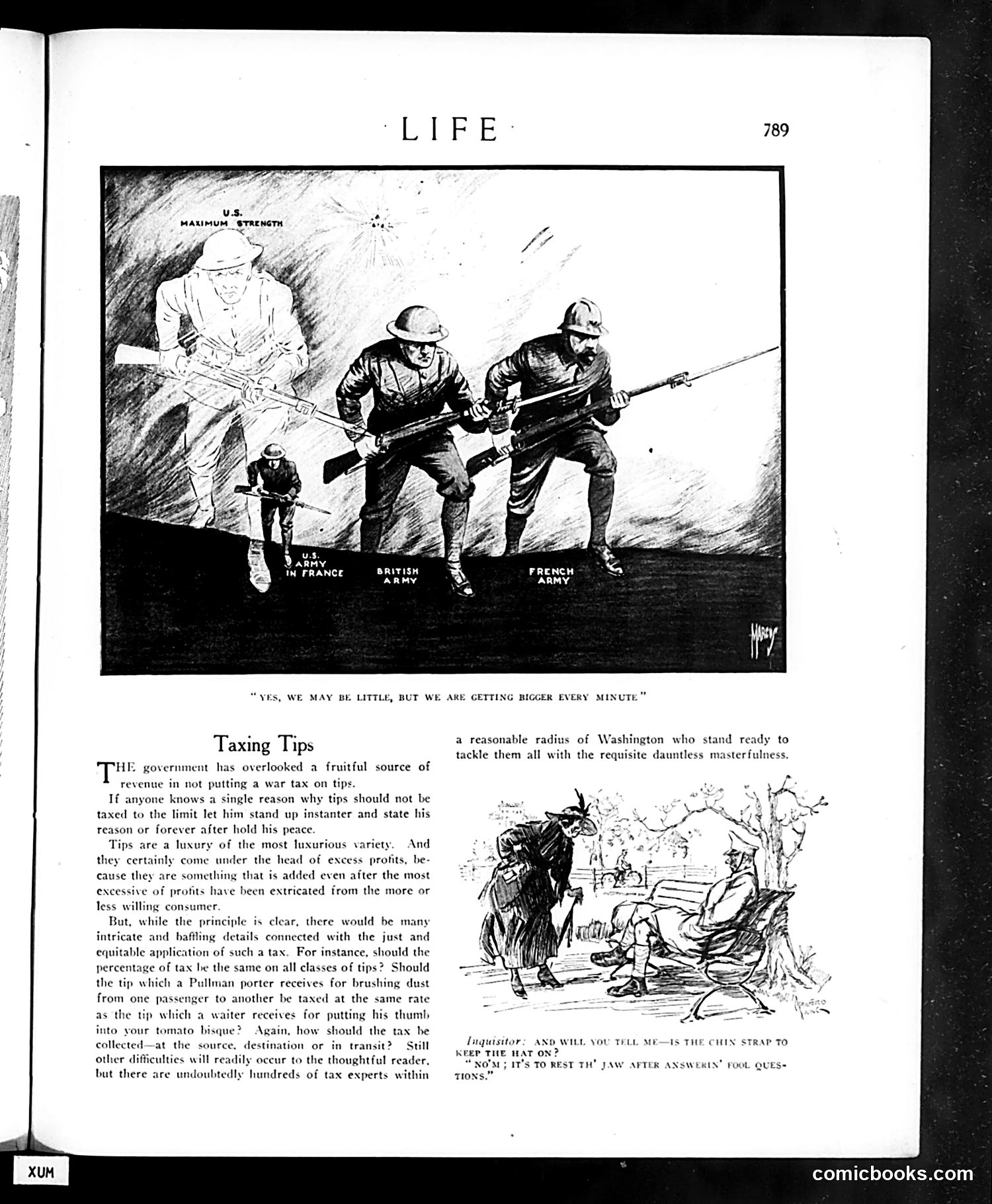
**Top Cartoon:** This depicts U.S. military strength ("U.S. Maximum Strength") as a large figure emerging from darkness, while three allied armies—labeled "U.S. Army in France," "British Army," and "French Army"—stand ready with rifles. The caption reads: "Yes, we may be little, but we are getting bigger every minute." This appears to satirize American military growth during World War I, suggesting the U.S. contribution was initially modest but rapidly expanding, bolstering Allied forces. **"Taxing Tips" Article:** Below is a humorous editorial proposing war taxes on gratuities (tips)—a luxury item. The author argues the government overlooks this revenue source and debates implementation details, questioning whether taxi tips should be taxed identically to restaurant tips. The accompanying sketch illustrates this absurdist suggestion through a conversation about maintaining tipping customs during wartime.
📄 Transcribed text from this page (OCR, searchable)
Machine-transcribed from the original scan — historical spelling and the odd misread are preserved.
ws. Vann 1H FRANCE BRITISH ARMY FRENCH ARMY “YES, WE MAY BE LITTLE, BUT WE ARE GETTING BIGGER EVERY MINUTE” Taxing Tips HE government has overlooked a fruitful source of revenue in not putting a war tax on tips. If anyone knows a single reason why tips should not be taxed to the limit let him stand up instanter and state his reason or forever after hold his peace. Tips are a luxury of the most luxurious variety. And they certainly come under the head of excess profits, be- cause they are something that is added even after the most excessive of profits have been extricated from the more or less willing consumer. But, while the principle is clear, there would be many intricate and bafiling details connected with the just and equitable application of such a tax. For instance, should the percentage of tax he the same on all classes of tips? Should the tip which a Pullman porter receives for brushing dust from one passenger to another be taxed at the same rate iter receives for putting his thumb into your tomato bisque? Again, how should the tax be collected—at the source, destination or in transit? Still other difficulties will readily occur to the thoughtful reader, but there are undoubtedly hundreds of tax experts within as the tip which av a reasonable radius of Washington who stand ready to tackle them all with the requisite dauntless masterfulness. AND WILL YOU TELL ME—IS THE CHIN STRAP TO. ST TH’ JAW AFTER ANSWERIN’ FOOL QUES- comicbooks.com