
Life, 1917-11-01 · page 5 of 38
Life — November 1, 1917 — page 5: what you’re looking at
What you’re looking at
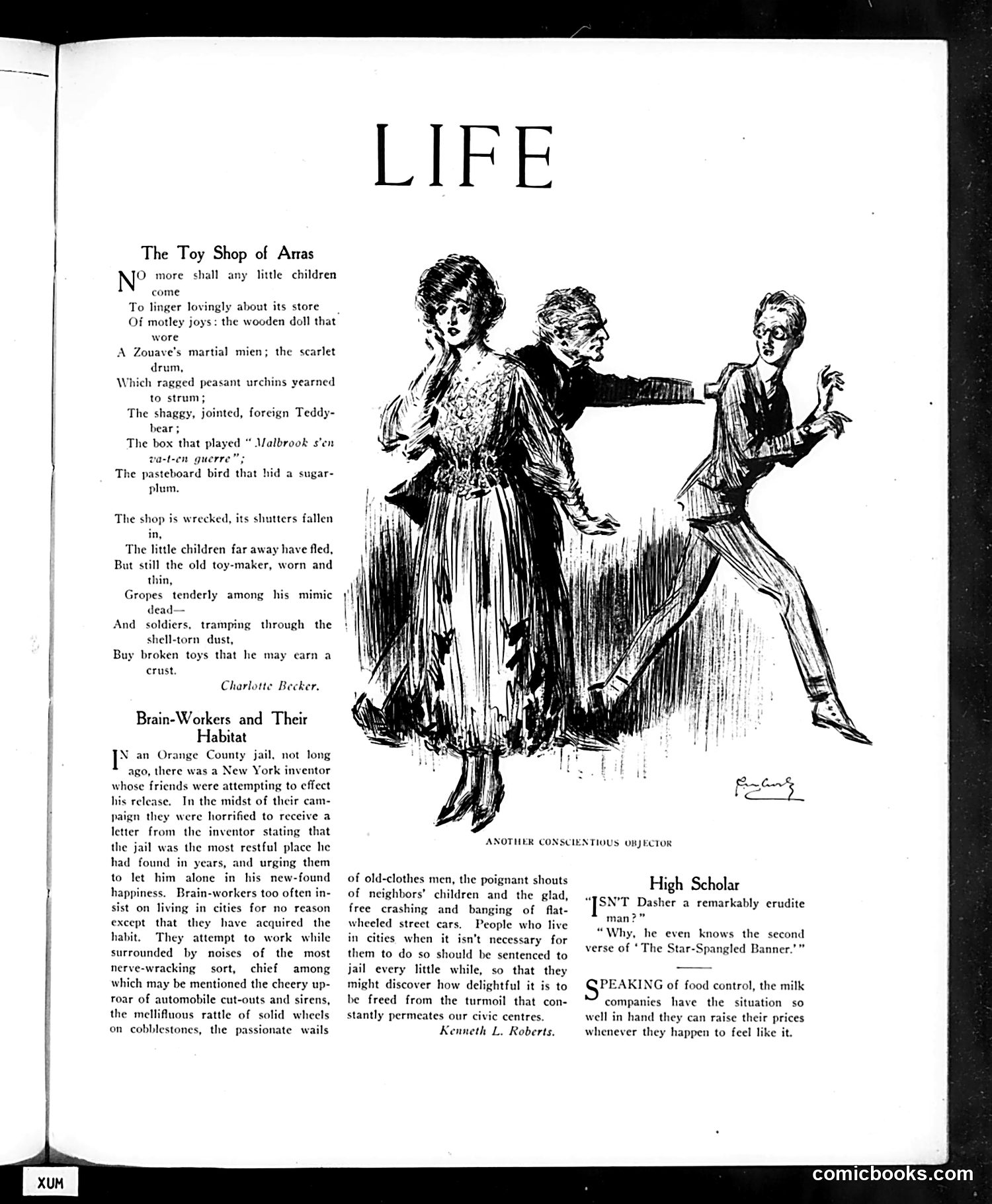
This page contains three distinct pieces of social commentary: 1. **"The Toy Shop of Arras"** (Charlotte Becker poem): A melancholic piece about a destroyed toy shop during wartime, with an elderly toy-maker salvaging broken toys amid soldiers and destruction. References WWI damage to the French town of Arras. 2. **"Brain-Workers and Their Habitat"** (Kenneth L. Roberts): Satirizes urban professionals forced to work amid constant noise pollution—automobile sirens, street cars, and city chaos. The critique targets how modern city life undermines intellectual work through relentless acoustic assault. 3. **"High Scholar"**: A brief joke mocking an overly erudite person who knows obscure literary references ("The Star-Spangled Banner's" second verse). The main illustration depicts a woman with two children, captioned "Another Conscientious Objector"—likely satirizing pacifist opposition to WWI.
📄 Transcribed text from this page (OCR, searchable)
Machine-transcribed from the original scan — historical spelling and the odd misread are preserved.
XUM The Toy Shop of Aras N° more shall any little children come To linger lovingly about its store Oi motley joys: the wooden doll that” wore A Zouave’s martial mien; the scarlet drum, Which ragged peasant urchins yearned to strum; The shaggy, jointed, foreign Teddy- bear; The box that play. va-t-en guerre The pasteboard bird that hid a sugar- plum. ed “ Malbrook s'en The shop is wrecked, its shutters fallen in, The little children far away have fled, But still the old toy-maker, worn and thin, Gropes tenderly among his mimic dead— And_ soldiers, tramping through the shell-torn dust, Buy broken toys that he may earn a crust. Charlotte Becker. Brain-Workers and Their Habitat Is an Orange County jail, not long ago, there was a New York inventor whose friends were attempting to effect his release. In the midst of their cam- paign they were horrified to receive a letter from the inventor stating that the jail was the most restful place he had found in years, and urging them to let him alone in his new-found happiness. Brain-workers too often in- sist on living in cities for no reason except that they have acquired the habit. They attempt to work while surrounded by noises of the most nerve-wracking sort, chief among which may be mentioned the cheery up- roar of automobile cut-outs and sirens, the mellifluous rattle of solid wheels on cobblestones, the passionate wails ANOTHER CONSCIENTIOUS OBJECTOR of old-clothes men, the poignant shouts of neighbors’ children and the glad, free crashing and banging of flat- wheeled street cars. People who live in cities when it isn’t necessary for them to do so should be sentenced to jail every little while, so that they might discover how delightful it is to be freed from the turmoil that con- stantly permeates our civic centres. Kenneth L. Roberts. High Scholar SN’'T Dasher a remarkably erudite man?” “Why, he even knows the second verse of ‘The Star-Spangled Banner.’” PEAKING of food control, the milk companies have the situation so well in hand they can raise their prices whenever they happen to feel like comicbooks.com