
Life, 1917-09-06 · page 27 of 40
Life — September 6, 1917 — page 27: what you’re looking at
What you’re looking at
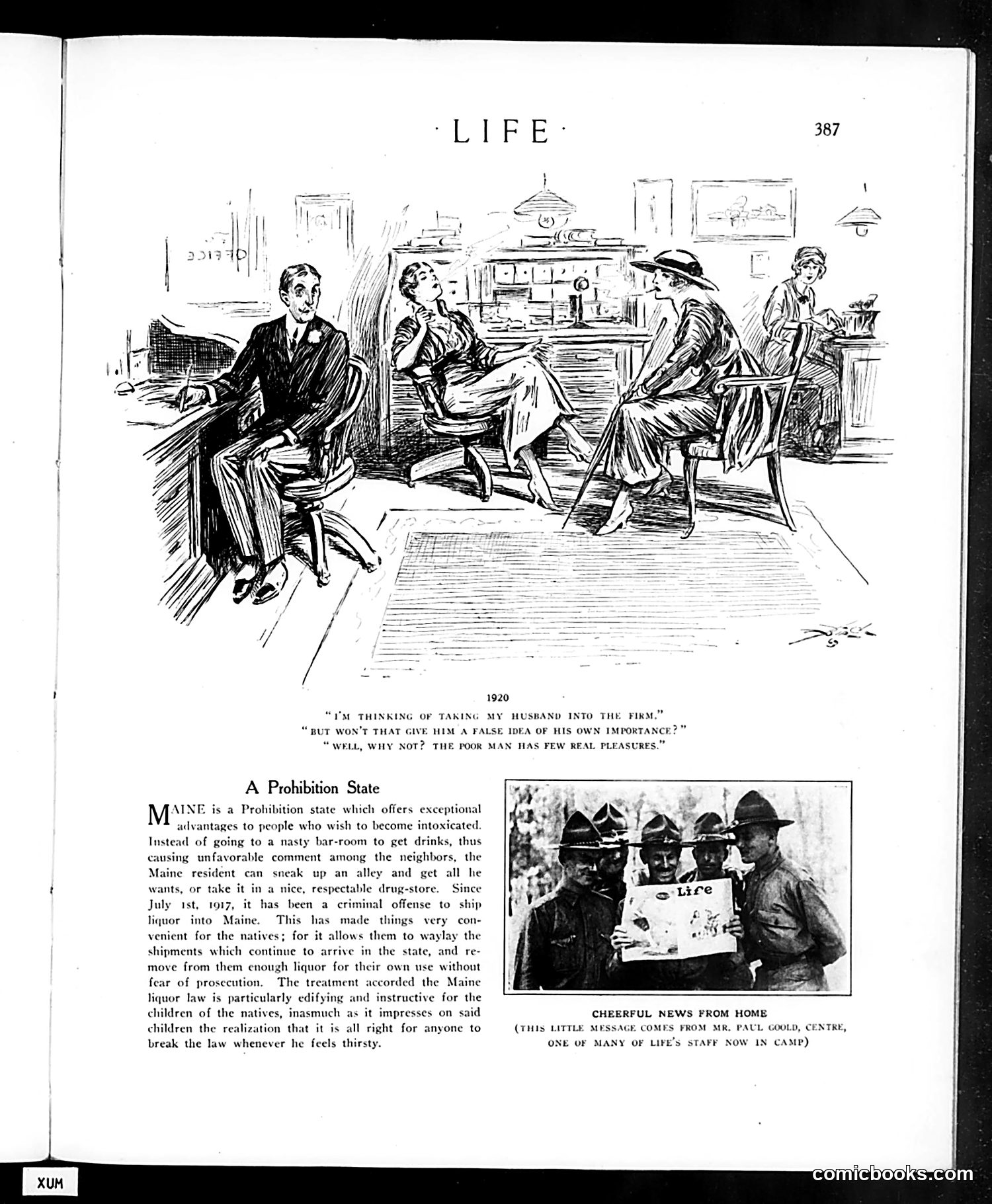
This 1920 *Life* magazine page satirizes **Prohibition's practical failure** in Maine, which banned liquor in 1917. The top cartoon shows an office discussion about hiring someone's husband, joking that giving him a job title provides one of life's few pleasures for working men—bittersweet humor about male dignity. The main article mocks Maine's Prohibition law as counterproductive. It argues that instead of eliminating drinking, the law merely drove it underground: residents now patronize alleys and drugstores rather than public bars. More critically, the satire highlights how Prohibition created **perverse incentives**—it legalized smuggling and black-market distribution while making law-breaking appear acceptable, especially to children witnessing adults openly flouting the law without consequences. The accompanying photograph labeled "Cheerful News from Home" appears to show soldiers in camp—contextualizing how Prohibition affected military life during or after WWI. The satire's point: Prohibition didn't eliminate drinking; it criminalized normal behavior and corrupted public morality.
📄 Transcribed text from this page (OCR, searchable)
Machine-transcribed from the original scan — historical spelling and the odd misread are preserved.
“VM THINKING OF TAKING A Prohibition State AINE is a Prohibition state which offers exceptional advantages to people who wish to become intoxicated. Instead of going to a nasty bar-room to get drinks, thus causing unfavorable comment among the neighbors, the Maine resident can sneak up an alley and get all he t wants, or take it in a nice, respectable drug-store. Since July ist, 1917, it has been a criminal offense to ship liquor into This has made things very con- venient for the natives; for it allows them to w ’ shipments which continue to arrive in the state, move from them enough liquor for their own use without fear of prosecution. The treatment accorded the Maine liquor law is particularly edifying and instructive for the children of the natives, inasmuch as it impresses on said children the ization that it is all right for anyone to break the law whenever he feels thirsty. ne. 1920 MY HUSBAND INTO THE FIRM. “BUT WON'T THAT GIVE HIM A FALSE IDEA OF HIS OWN IMPORTA “WELL, WHY NOT? THE POOR MAN HAS FEW REAL PLEASURES CHEERFUL NEWS FROM HOME (THIS LITTLE MESSAGE COMES FROM MR, PAUL GOOLD, CENTRE, ONE OF MANY OF Live's STAFF NOW IN CAMP)