
Life, 1917-04-12 · page 18 of 42
Life — April 12, 1917 — page 18: what you’re looking at
What you’re looking at
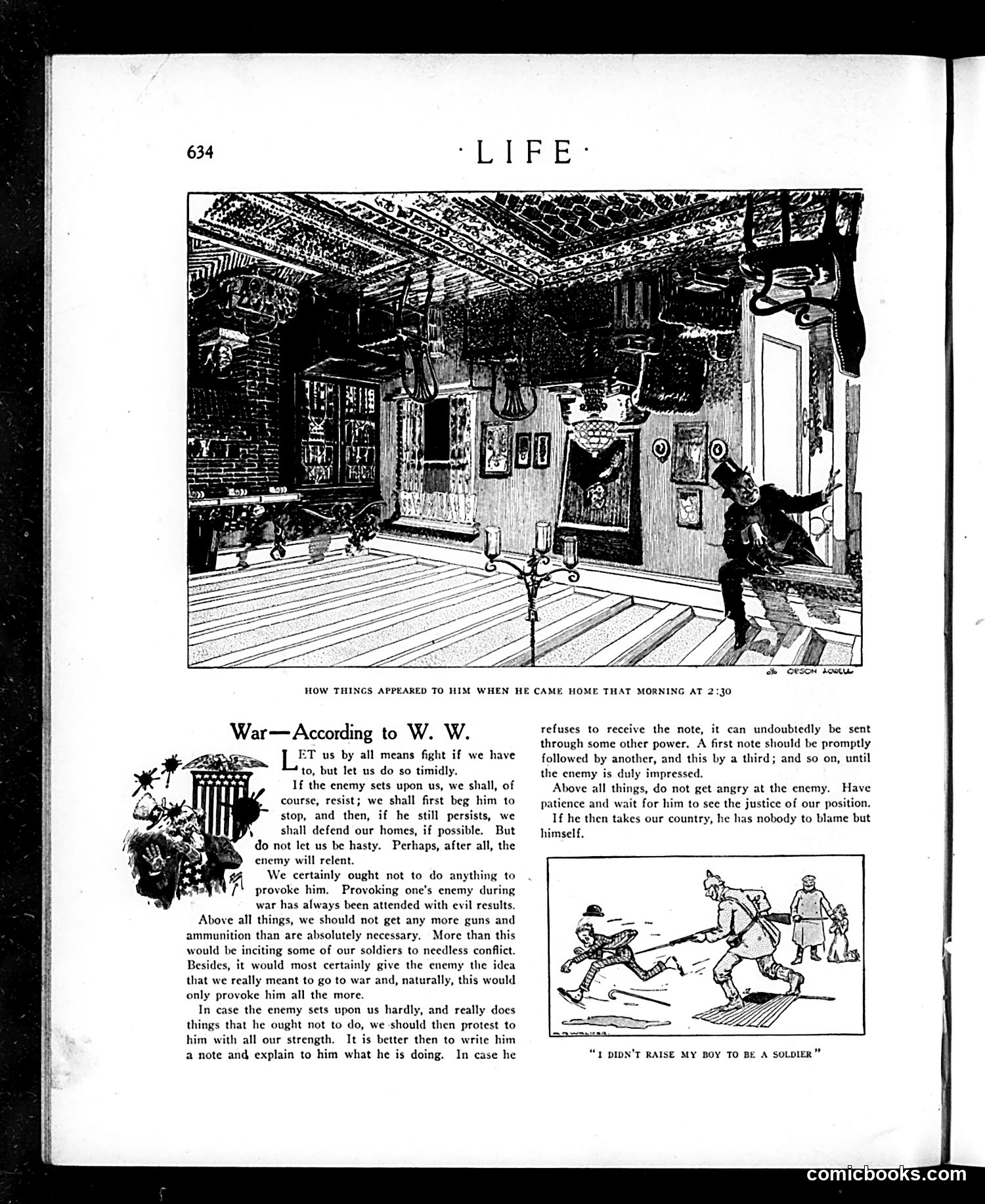
This page satirizes pacifist opposition to military preparedness, likely from WWI era. The top illustration shows a man arriving home at 2:30 AM to find his home ransacked—visualizing the consequences of the passive approach advocated in the accompanying text. The essay "War—According to W. W." mocks an overly cautious wartime philosophy: don't provoke the enemy, avoid excessive weapons, write polite protest notes instead of fighting back, and maintain patience even if the country is conquered. The satire suggests this approach is absurdly ineffectual. The bottom cartoon references the anti-war song "I Didn't Raise My Boy to Be a Soldier," showing a child caught in conflict—illustrating the irony that refusing military strength doesn't prevent war, it invites invasion. The target appears to be pacifist or anti-militarism activists whom *Life* viewed as dangerously naïve during wartime.
📄 Transcribed text from this page (OCR, searchable)
Machine-transcribed from the original scan — historical spelling and the odd misread are preserved.
oh OFSOM Lost HOW THINGS APPEARED TO HIM WHEN HE CAME HOME THAT MORNING AT 2:30 War—According to W. W. ET us by all means fight if we have to, but let us do so timidly. If the enemy sets upon us, we shall, of course, resist; we shall first beg him to stop, and then, if he still persists, we shall defend our homes, if possible. But do not let us be hasty. Perhaps, after all, the enemy will relent. We certainly ought not to do anything to provoke him. Provoking one’s enemy during war has always been attended with evil results. Above all things, we should not get any more guns and ammunition than are absolutely necessary. More than this would be inciting some of our soldiers to needless conflict. Besides, it would most certainly give the enemy the idea that we really meant to go to war and, naturally, this would only provoke him all the more. In case the enemy sets upon us hardly, and really does things that he ought not to do, we should then protest to him with all our strength. It is better then to write him a note and explain to him what he is doing. In case he refuses to receive the note, it can undoubtedly be sent through some other power. A first note should be promptly followed by another, and this by a third; and so on, until the enemy is duly impressed. Above all things, do not get angry at the enemy. Have patience and for him to see the justice of our position. If he then takes our country, he has nobody to blame but himself. “1 DIDN'T RAISE MY BOY TO BE A SOLDIER”