
Life, 1917-03-01 · page 7 of 42
Life — March 1, 1917 — page 7: what you’re looking at
What you’re looking at
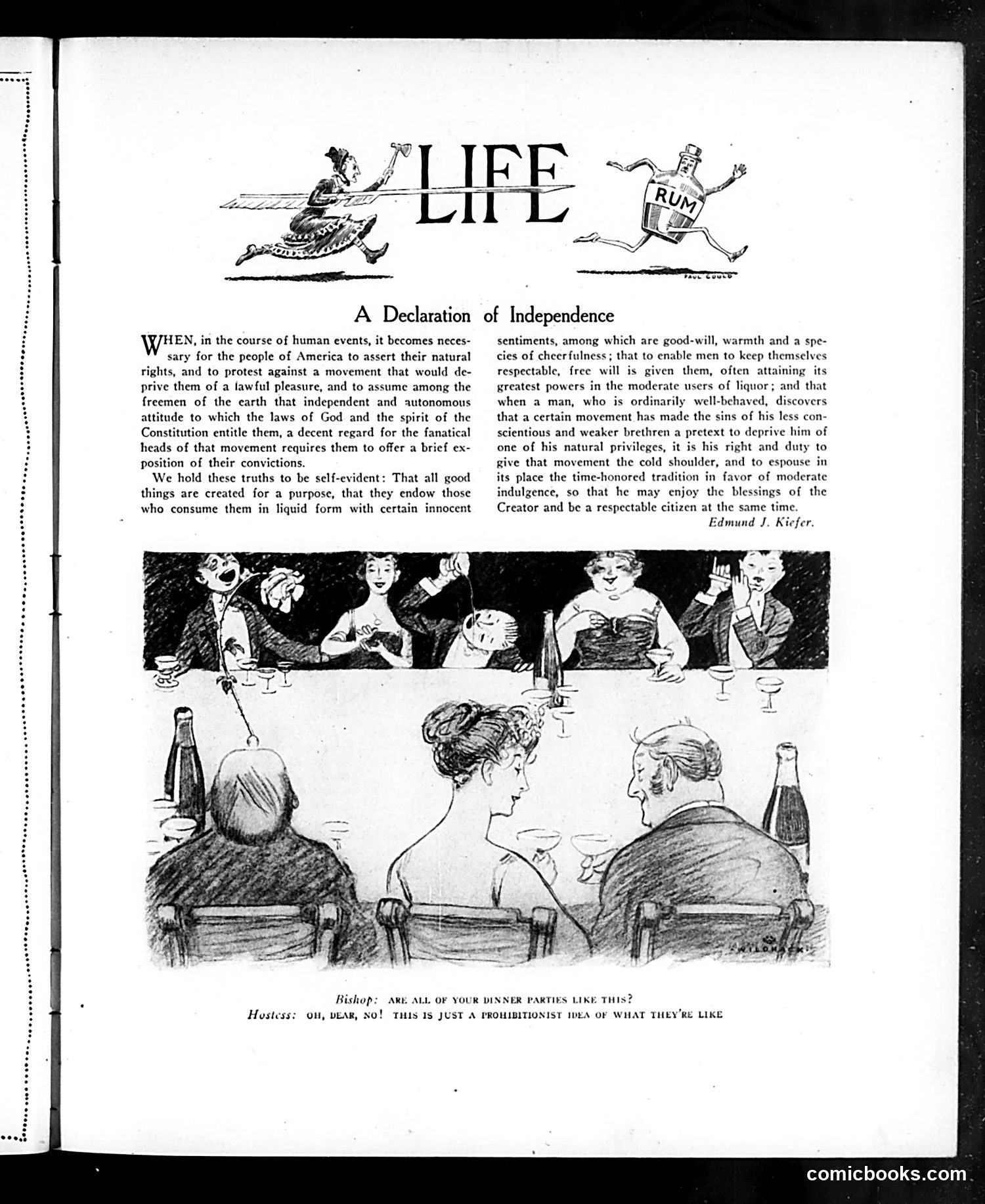
This page satirizes Prohibition-era attitudes toward alcohol. The header, "A Declaration of Independence," mockingly mimics the U.S. Declaration of Independence to argue for the "right" to drink alcohol. It's attributed to Edmund J. Kiefer. The cartoon below depicts a dinner party scene. A bishop expresses shock at the lavish drinking depicted, and the hostess responds that this represents what prohibitionists *imagine* happens at modern parties—implying the reality is less scandalous. The satire cuts both ways: it ridicules both prohibitionists (for exaggerating dangers of drinking) and drinkers (for claiming moral justification for defying Prohibition laws). The "rum bottle" in the header reinforces the alcohol theme. This reflects 1920s-1930s American debates over Prohibition enforcement and cultural attitudes toward drinking.
📄 Transcribed text from this page (OCR, searchable)
Machine-transcribed from the original scan — historical spelling and the odd misread are preserved.
A Declaration 1EN, in the course of human events, it becomes neces- sary for the people of America to assert their natural rights, and to protest against a movement that would de- prive them of a lawful pleasure, and to assume among the freemen of the earth that independent and autonomous attitude to which the laws of God and the spirit of the Constitution entitle them, a decent regard for the fanatical heads of that movement requires them to offer a brief ex- position of their convictions. We hold these truths to be self-evident: That all good things are created for a purpose, that they endow those who consume them in liquid form with certain innocent of Independence sentiments, among which are good-will, warmth and a spe- cies of cheerfulness; that to enable men to keep themselves respectable, free will is given them, often attaining its greatest powers in the moderate users of liquor; and that when a man, who is ordinarily well-behaved, discovers. that a certain movement has made the sins of his less con- scientious and weaker brethren a pretext to deprive him of one of his natural privileges, it is his right and duty to give that movement the cold shoulder, and to espouse in its place the time-honored tradition in favor of moderate indulgence, so that he may enjoy the blessings of the Creator and be a respectable citizen at the same time. Edmund J. Bishop: Awe. ALL OF YOUR DINNER PARTIES LIKE THIS? Hostess: OM, DEAR, NO! THIS 1S JUST A PROHIBITIONIST IDEA OF WHAT THEY'RE LIKE comicbooks.com