
Life, 1917-01-04 · page 11 of 38
Life — January 4, 1917 — page 11: what you’re looking at
What you’re looking at
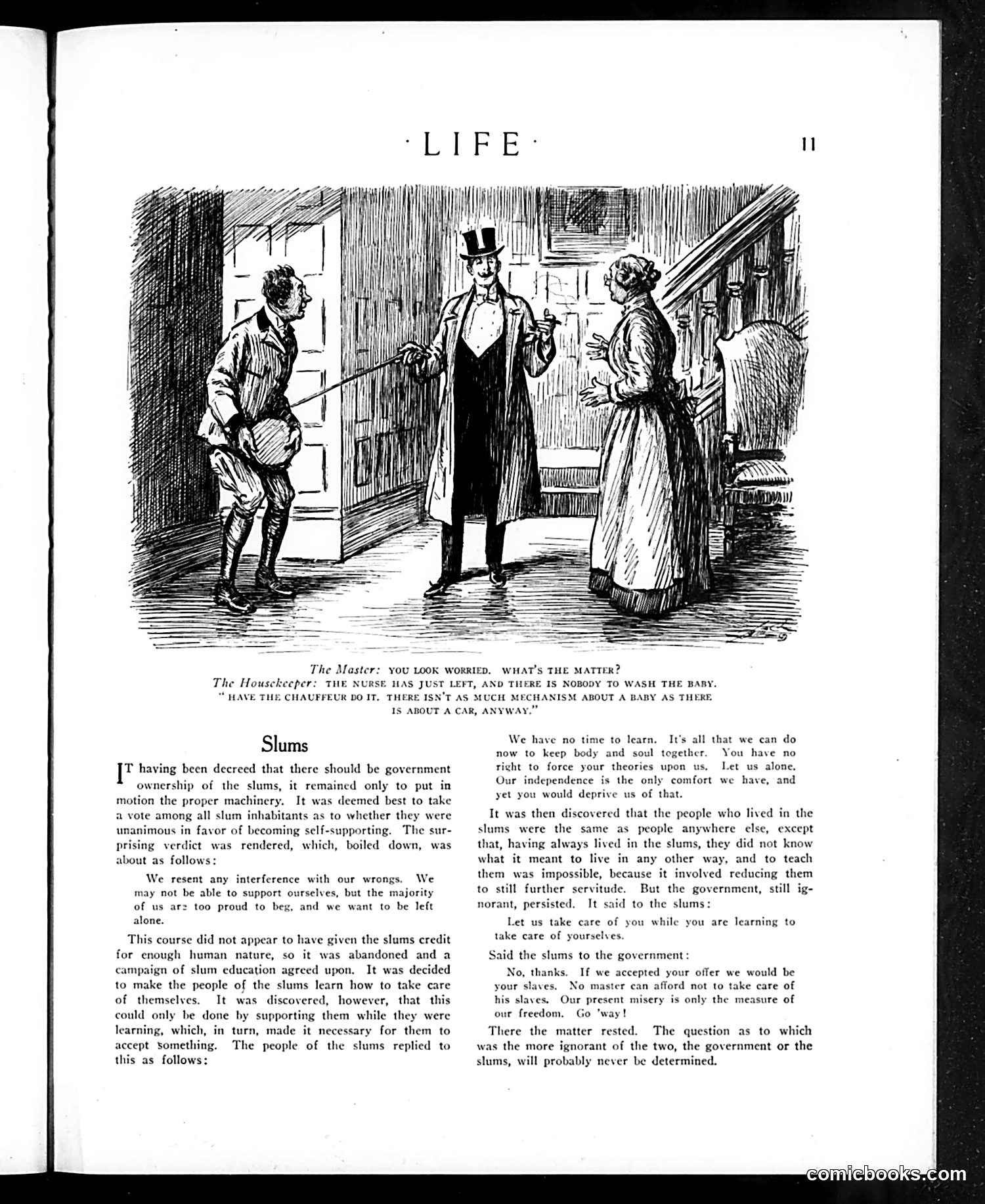
This page from *Life* magazine satirizes a dispute between government authorities and slum residents over who should improve living conditions. The cartoon depicts a well-dressed government official (top hat, formal coat) confronting working-class slum dwellers. The accompanying text describes a debate: the government demanded slum residents learn self-improvement while refusing to provide support. The slum residents replied that they couldn't improve themselves without assistance, and that the government—which claims authority—should bear responsibility for their welfare rather than demanding enslaved-like obedience. The satire criticizes government hypocrisy: authorities impose expectations on the poor while denying them resources, then blame the poor for their own poverty. The piece suggests this represents a fundamental failure of government responsibility to its citizens.
📄 Transcribed text from this page (OCR, searchable)
Machine-transcribed from the original scan — historical spelling and the odd misread are preserved.
LIFE i ii Hy The Maste The Housekeeper: THE SE HAS YOU LOOK WORRIED. T LEFT, AND THERE 1S NOBODY TO WASH THE BABY. WHAT'S THE MATTER? “HAVE THE CHAUFFEUR DO IT, THERE ISN'T AS MUCH MECHANISM ABOUT A BABY AS THERE. IS ABOUT A CAR, ANYWAY.” Slums I" having been decreed that there should be government ownership of the slums, it remained only to put in motion the proper machinery. It was deemed best to take a vote among all slum inhabitants as to whether they were unanimous in favor of becoming self-supporting. The sur- prising verdict was rendered, which, boiled down, was about as follows: We resent any interference with our wrongs. We may not be able to support ourselves, but the majority of us arz too proud to beg, and we want to be left alone. This course did not appear to have given the slums credit for enough human nature, so it was abandoned and a campaign of slum education agreed upon. It was decided to make the people of the slums learn how to take care of themselves. It was discovered, however, that this could only be done by supporting them while they were learning, which, in turn, made it necessary for them to accept Something. The people of the slums replied to this as follows: We have no time to learn, It's all that we can do now to keep body and soul together. You have no right to force your theories upon us, Let us alone, Our independence is the only comfort we have, and yet you would deprive us of that. It was then discovered that the people who lived in the slums were the same as people anywhere else, except that, having always lived in the slums, they did not know what it meant to live in any other way, and to teach them was impossible, because it involved reducing them to still further servitude. But the government, still ig- norant, persisted. It said to the slums: Let us take care of you while you are learning to take care of yourselves. Said the slums to the government: No, thanks. If we accepted your offer we would be your slaves. No master can afford not to take care of his slaves, Our present misery is only the measure of our freedom. Go ‘way! There the matter rested. The question as to which was the more ignorant of the two, the government or the slums, will probably never be determined.