
Life, 1916-10-26 · page 29 of 46
Life — October 26, 1916 — page 29: what you’re looking at
What you’re looking at
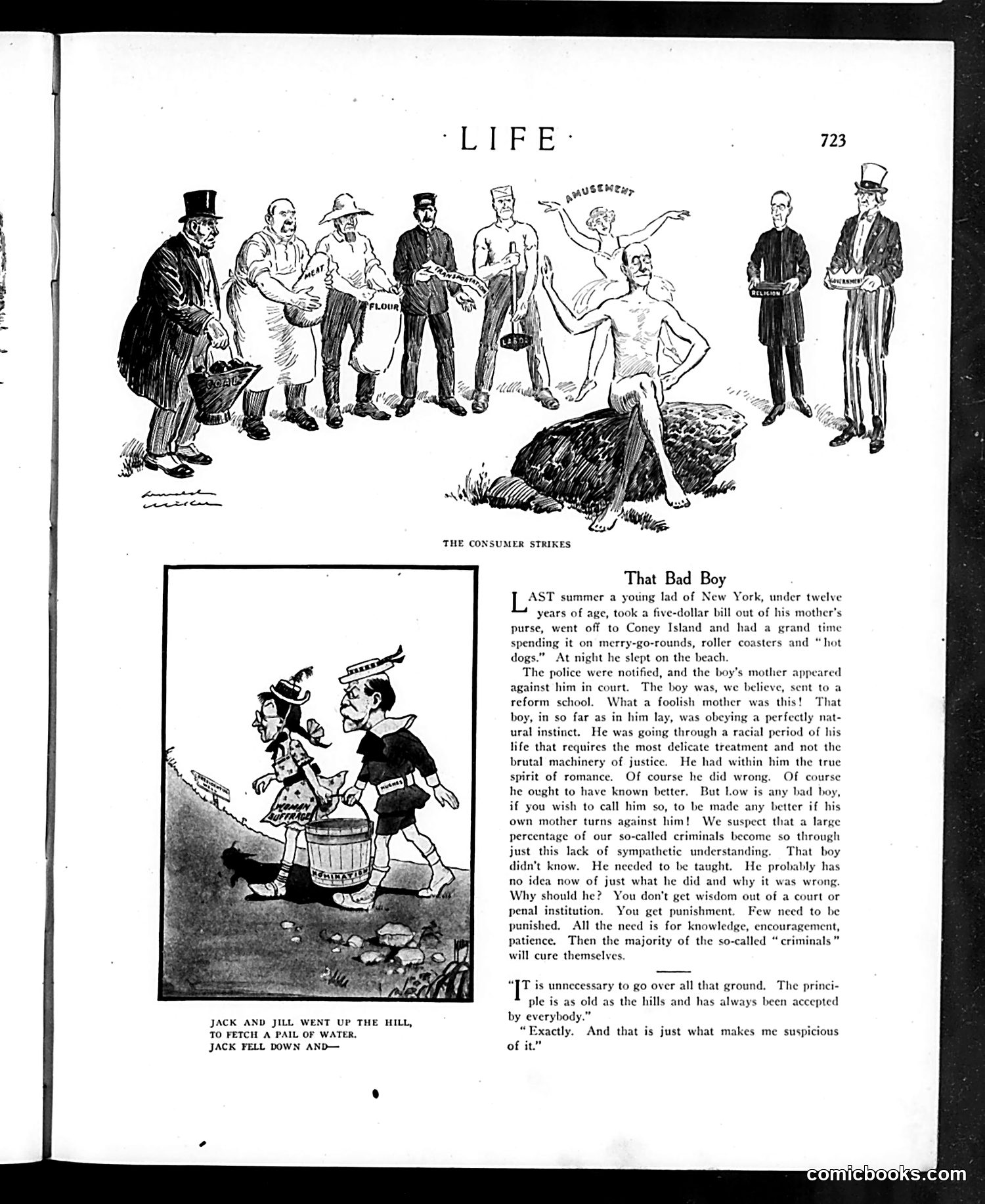
The top cartoon depicts a shirtless youth standing on a rock, surrounded by various tradespeople (baker, butcher, laborer, etc.) and well-dressed gentlemen. The figure represents the "consumer" who has "struck"—withdrawn from normal commercial activity. The accompanying article, "That Bad Boy," describes a twelve-year-old from New York who stole five dollars from his mother and spent it entirely on Coney Island amusements (rides, food). Rather than condemning the boy, Life's writer praises his "natural instinct" and "spirit of romance," sarcastically criticizing the mother for having him sent to reform school. **The satire's point**: The piece mocks both excessive consumerism and sentimental attitudes toward juvenile delinquency. By treating the boy's theft as an innocent expression of consumer desire rather than actual wrongdoing, Life ridicules both the commercialization of youth culture and the notion that criminals need "understanding" rather than consequences. The "consumer strike" cartoon likely comments on consumer power in the economy.
📄 Transcribed text from this page (OCR, searchable)
Machine-transcribed from the original scan — historical spelling and the odd misread are preserved.
ee ee JACK AND JILL WENT UP THE HILL, TO FETCH A PAIL OF WATER. JACK FELL DOWN AND— THE CONSUMER STRIKES That Bad Boy ST summer a yoting lad of New York, under twelve years of age, took a five-dollar bill out of his mother purse, went off to Coney Island and grand time spending it on merry-go-rounds, roller coasters and “hot dogs.” At night he slept on the beach. The police were notified, and the boy’s mother appeared against him in court. The boy was, we believe, sent to a reform school. What a foolish mother was this! That boy, in so far as in him lay, was obeying a perfectly nat- ural instinct. He was going through a racial period of his life that requires the most delicate treatment and not the brutal machinery of justice. He had within him the true spirit of romance. Of course he did wrong. Of course he ought to have known better, But low is any bad boy, if you wish to call him so, to be made any better if his own mother turns against him! We suspect that a large percentage of our so-called criminals become so through just this lack of sympathetic understanding. That boy didn’t know. He needed to be taught. He probably has no idea now of just what he did and why it was wrong. Why should he? You don't get wisdom out of a court or penal institution. You punishment. Few need to be punished. All the need is for knowledge, encouragement, patience. Then the majority of the so-called “criminals” will cure themselves. “JT is unnecessary to go over all that ground. The princi- ple is as old as the hills and has always been accepted by everybody.” “Exactly. And that is just what makes me suspicious