
Life, 1916-10-05 · page 2 of 42
Life — October 5, 1916 — page 2: what you’re looking at
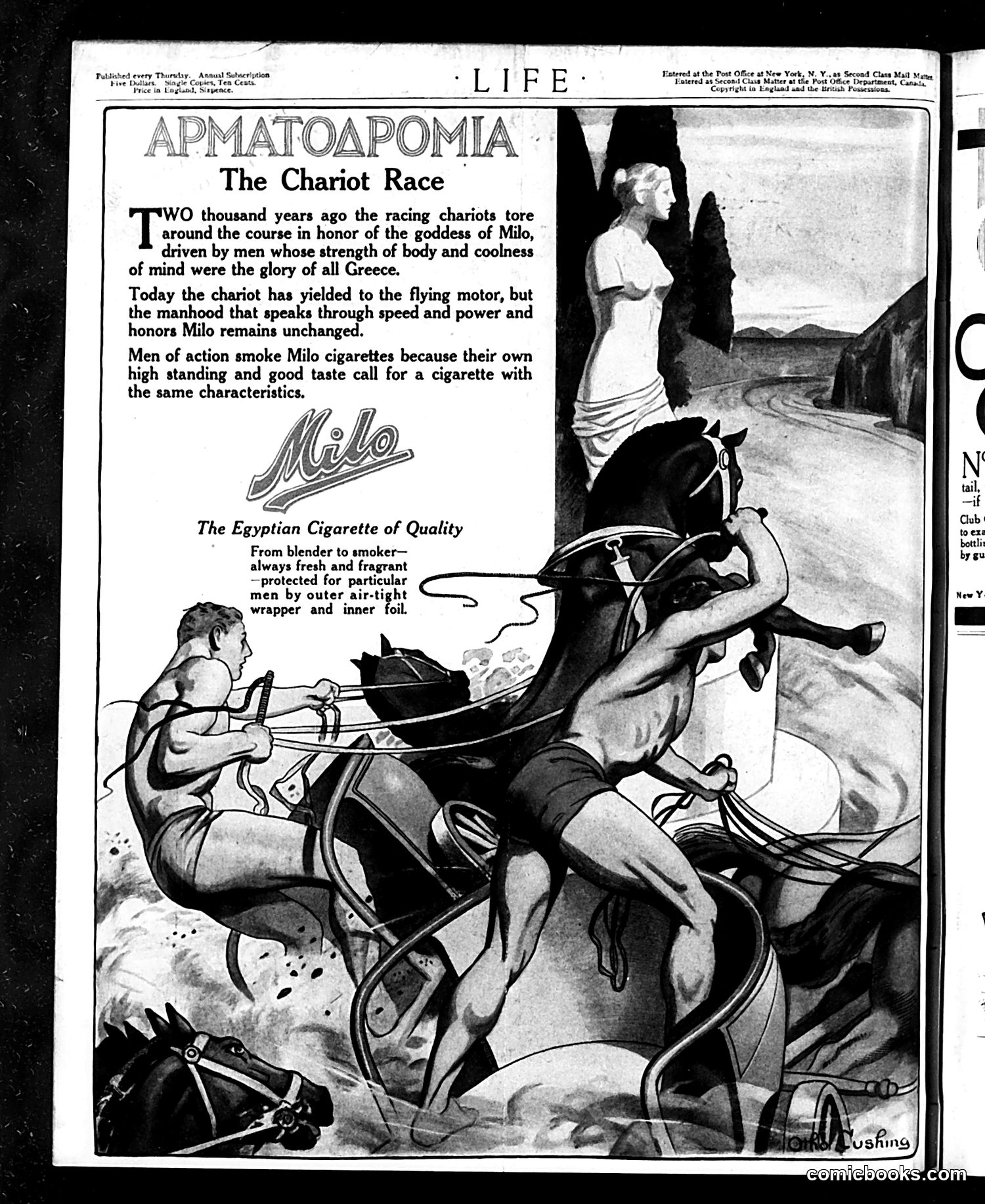
What you’re looking at
This page is primarily a **Milo cigarette advertisement** disguised as editorial content, a common early-20th-century advertising technique. The ad uses classical mythology as its framing device: it compares ancient Greek chariot racing (honoring the goddess Milo) to modern masculine achievement. The chariot scene illustration depicts classical figures racing with horses, while a statue of Milo appears in the background. The satire is subtle but clear: the ad argues that just as ancient athletes embodied "strength of body and coolness of mind," modern men of "action" and "high standing" should smoke Milo cigarettes. It's essentially claiming that smoking demonstrates masculine virtue and good taste. The comparison between ancient competition and contemporary manhood was a common advertising trope of the era, leveraging classical ideals to market consumer products to aspirational male audiences.
📄 Transcribed text from this page (OCR, searchable)
Machine-transcribed from the original scan — historical spelling and the odd misread are preserved.
™ Class Bait Macwe ren C partment, Cann‘ The Chariot Race WO thousand years ago the racing chariots tore around the course in honor of the goddess of Milo, driven by men whose strength of body and coolness of mind were the glory of all Greece. Today the chariot has yielded to the flying motor, but the manhood that speaks through speed and power and honors Milo remains unchanged. Men of action smoke Milo cigarettes because their own high standing and good taste call for a cigarette with the same characteristics. The Egyptian Cigarette of Quality From blender to smoker— always fresh and fragrant —protected for particular men by outer air-tight foil wrapper and inner