
Life, 1916-09-14 · page 20 of 38
Life — September 14, 1916 — page 20: what you’re looking at
What you’re looking at
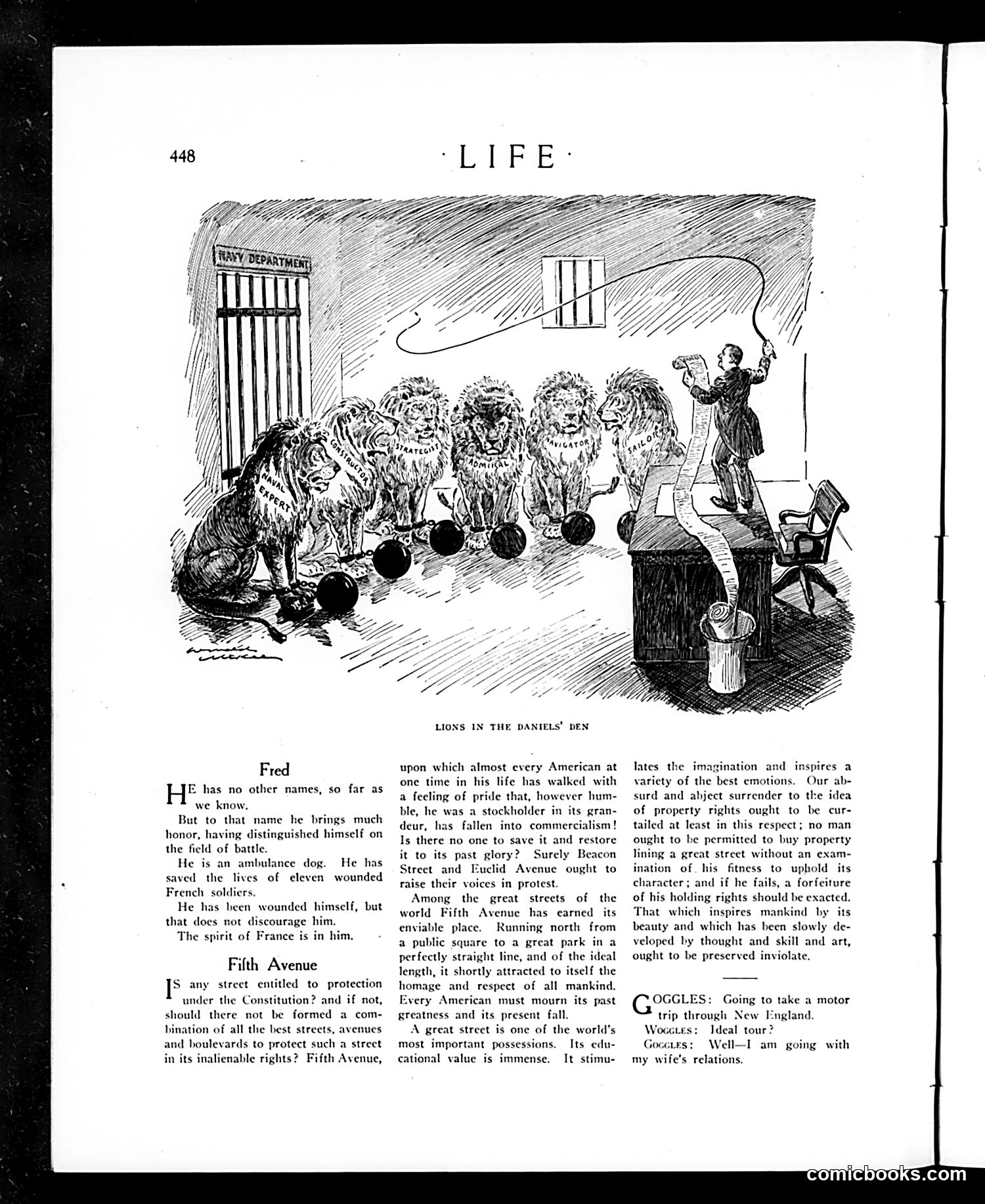
This cartoon satirizes Secretary of the Navy Josephus Daniels as a circus trainer taming "lions"—likely representing either Congress members, admirals, or military/political rivals who oppose his policies. The whip and the den setting suggest Daniels asserting forceful control over institutional resistance. The accompanying text celebrates "Fred," an ambulance dog wounded saving French soldiers in WWI, embodying French valor. It then pivots to lamenting Fifth Avenue's commercialization—arguing that great streets deserve constitutional protection and that property owners should be examined for fitness to maintain their character. This reflects early-20th-century anxieties about unchecked commercialism destroying America's cultural monuments. The bottom dialogue joke is a simple pun: taking a motor trip with one's wife's relations transforms an "ideal" tour into an ordeal.
📄 Transcribed text from this page (OCR, searchable)
Machine-transcribed from the original scan — historical spelling and the odd misread are preserved.
Fred E has no other names, so far as we know, But to that name he brings much honor, having distinguished himself on the field of battle. He is an ambulance dog. saved the lives of eleven French soldiers. He has been wounded himself, but that does not discourage him. The spirit of France is in him. Fifth Avenue Is any street entitled to protection under the Constitution? and if not, should there not be formed a com- Dination of all the best streets, avenues and boulevards to protect such a strect in its inalienable rights? Fifth Avenue, He has wounded LIONS IN THE DANIELS’ DEN upon which almost every American at one time in his life has walked with a feeling of pride that, however hum- ble, he was a stockholder in its gran- deur, has fallen into commercialism! Is there no one to save it and restore it to its past glory? Surely Beacon Street and Euclid Avenue ought to raise their voices in protest. Among the great streets of the world Fifth Avenue has earned its enviable place. Running north from a public square to a great park in a perfectly straight line, and of the ideal length, it shortly attracted to itself the homage and respect of all mankind, Every American must mourn its past greatness and its present fall. A great street is one of the world's most important possessions. Its edu- cational value is immense. It stimu- lates the imagination and inspires a variety of the best emotions. Our ab- surd and abject surrender to the idea of property rights ought to be cur- tailed at least in this respect; no man ought to be permitted to buy property lining a great street without an exam- ination of his fitness to uphold its character; and if he fails, a forfeiture of his holding rights should be exacted. That which inspires mankind by its beauty and which has been slowly de- veloped by thought and skill and art, ought to be preserved inviolate. OGGLES: Going to take a motor trip through New England. Wocctes: Ideal tour? Goccies: Well—I am going with my wife's relations.