
Life, 1916-08-31 · page 23 of 34
Life — August 31, 1916 — page 23: what you’re looking at
What you’re looking at
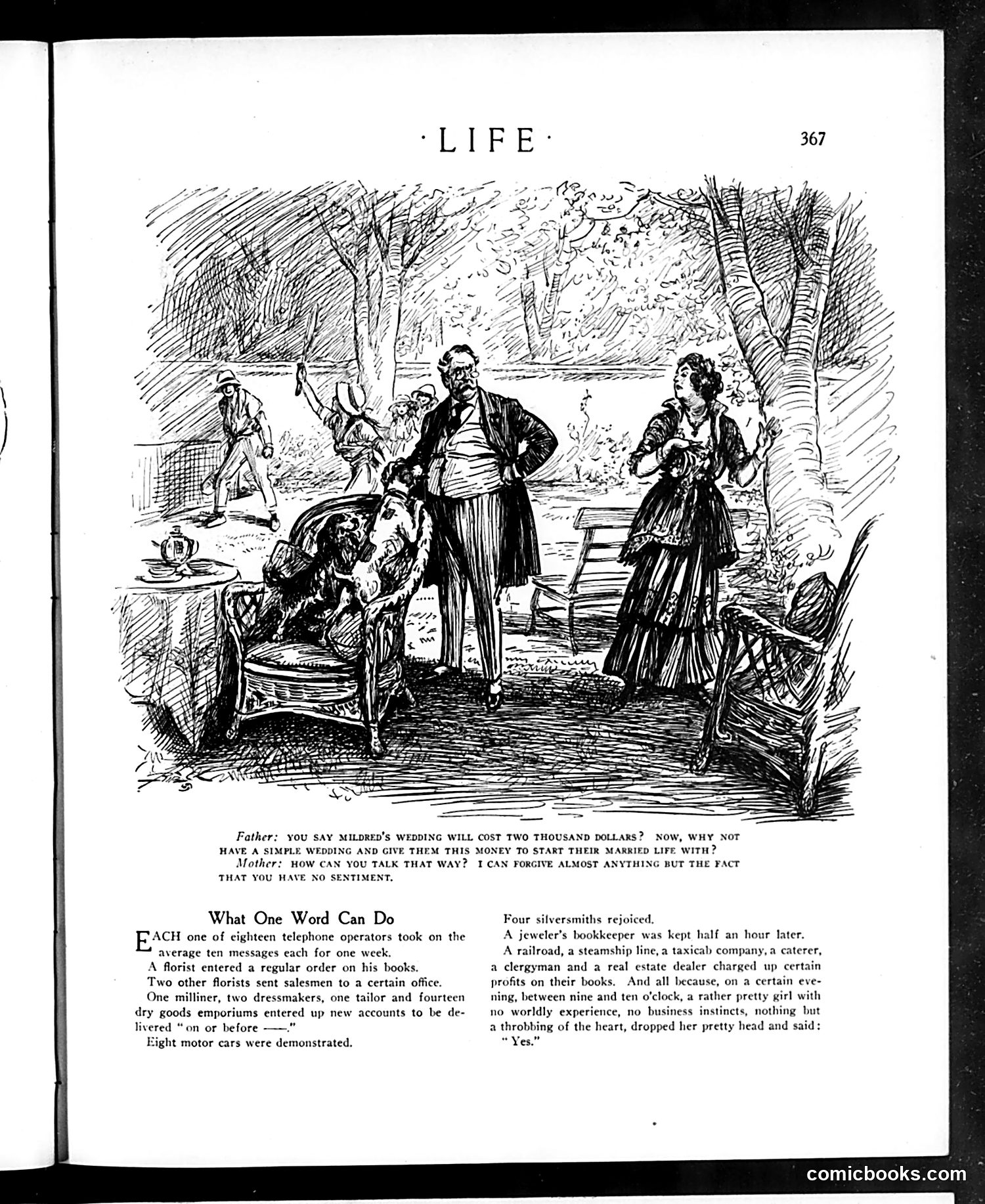
The cartoon satirizes class and gender attitudes about weddings in early 20th-century America. A father suggests giving a couple two thousand dollars instead of spending it on an elaborate wedding ceremony. The mother objects, calling his practicality unsentimentally, implying that elaborate weddings are about emotional and social display rather than the couple's financial security. The accompanying text, "What One Word Can Do," extends this satire by showing how a young woman's single word "Yes" (her engagement) triggers massive economic activity—florists, dressmakers, jewelers, caterers, railroads, and numerous other businesses all profit from wedding preparations. The piece ironically critiques both conspicuous consumption and women's economic powerlessness: the bride has "no worldly experience, no business instincts," yet her one affirmative word generates substantial commerce. The satire targets wasteful spending on weddings while simultaneously highlighting how women's limited agency constrains them to fulfilling expected matrimonial roles.
📄 Transcribed text from this page (OCR, searchable)
Machine-transcribed from the original scan — historical spelling and the odd misread are preserved.
Father: you SAY MILDRED'S WEDDING WILL COST TWO THOUSAND DOLLARS? NOW, WHY NOT HAVE A SIMPLE WEDDING AND GIVE THEM THIS MONEY TO START THEIR MARRIED LIFE WITH? Mother: HOW CAN YOU TALK THAT WAY? I CAN FORGIVE ALMOST ANYTHING BUT THE FACT THAT YOU HAVE NO SENTIMENT, What One Word Can Do ACH one of cighteen telephone operators took on the average ten messages each for one week, A florist entered a regular order on his books. Two other florists sent salesmen to a certain office. One milliner, two dressmakers, one tailor and fourteen dry goods emporiums entered up new accounts to be de- livered “on or before ——.” Eight motor cars were demonstrated. Four silversmiths rejoiced, A jeweler’s bookkeeper was kept half an hour later. A railroad, a steamship line, a taxicab company, a caterer, a clergyman and a real estate dealer charged up certain profits on their books, And all because, on a certain eve- ning, between nine and ten o'clock, a rather pretty girl with no worldly experience, no business instincts, nothing but a throbbing of the heart, dropped her pretty head and said: “Yes.” comicbooks.com