
Life, 1915-12-16 · page 21 of 44
Life — December 16, 1915 — page 21: what you’re looking at
What you’re looking at
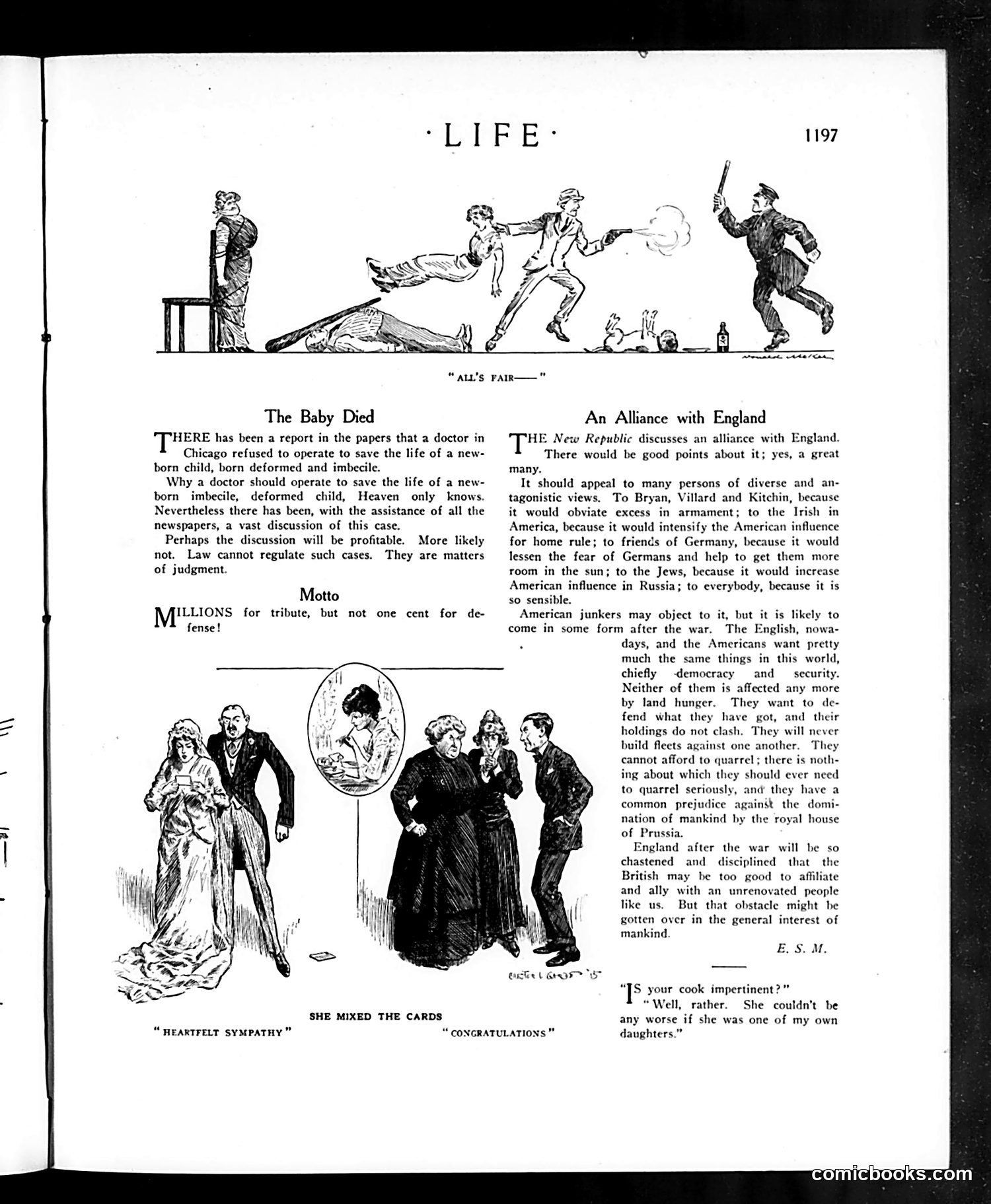
This page from *Life* magazine (circa WWI era, based on references) contains two distinct pieces of political commentary: **"The Baby Died"** addresses a Chicago medical ethics case: a doctor refused surgery on a severely deformed, imbecile newborn. The piece argues law cannot regulate such personal judgments, though newspapers sensationalized the debate. **"An Alliance with England"** discusses a potential U.S.-British alliance. The author argues it appeals across political divides—Bryan and pacifists would support it (reducing armament), Irish-Americans would favor it (strengthening home rule leverage), even German sympathizers might accept it (limiting anti-German sentiment). The piece suggests both nations now share interests in democracy and security rather than territorial expansion, and both fear Prussian domination. The cartoon "All's Fair" depicts cricket (or similar sport), while "She Mixed the Cards" shows ambiguous social commentary about sympathy versus congratulations in unclear circumstances. The page reflects American isolationist/interventionist debates of the WWI period.
📄 Transcribed text from this page (OCR, searchable)
Machine-transcribed from the original scan — historical spelling and the odd misread are preserved.
“AL's FAIR—" The Baby Died HERE has been a report in the papers that a doctor in Chicago refused to operate to save the life of a new- born child, born deformed and imbecile. Why a doctor should operate to save the life of a new- born imbecile, deformed child, Heaven only knows. Nevertheless there has been, with the assistance of all the newspapers, a vast discussion of this case. Perhaps the discussion will be profitable. More likely not. Law cannot regulate such cases. They are matters of judgment. Motto ILLIONS for tribute, but not one cent for de- fense! SHE MIXED THE CARDS “HEARTFELT SYMPATHY ” “ CONGRATULATIONS " An Alliance with England HE New Republic discusses an alliance with England. There would be good points about it; yes, a great many. It should appeal to many persons of diverse and an- tagonistic views. To Bryan, Villard and Kitchin, because it would obviate excess in armament; to the Irish in America, because it would intensify the American influence for home rule; to friends of Germany, because it would lessen the fear of Germans and help to get them more room in the sun; to the Je: because it would increase American influence in Russia; to everybody, because it is so sensible. American junkers may object to it, but it is likely to come in some form after the war. The English, nowa- days, and the Americans want pretty much the same things in this world, chiefly -democracy and __ security. Neither of them is affected any more by land hunger. They want to de- fend what they have got, and their holdings do not clash. They will never build fleets against one another. They cannot afford to quarrel; there is noth- ing about which they should ever need to quarrel seriously, and they have a common prejudice against the domi- nation of mankind by the royal house of Prussia. England after the war will be so chastened and disciplined that the British may be too good to affiliate and ally with an unrenovated people like us. But that obstacle might be gotten over in the general interest of mankind. EB. S. M. ORT eb GOTT “IS your cook impertinent?” “Well, rather. She couldn't be any worse if she was one of my own daughters.”