
Life, 1915-12-02 · page 69 of 100
Life — December 2, 1915 — page 69: what you’re looking at
What you’re looking at
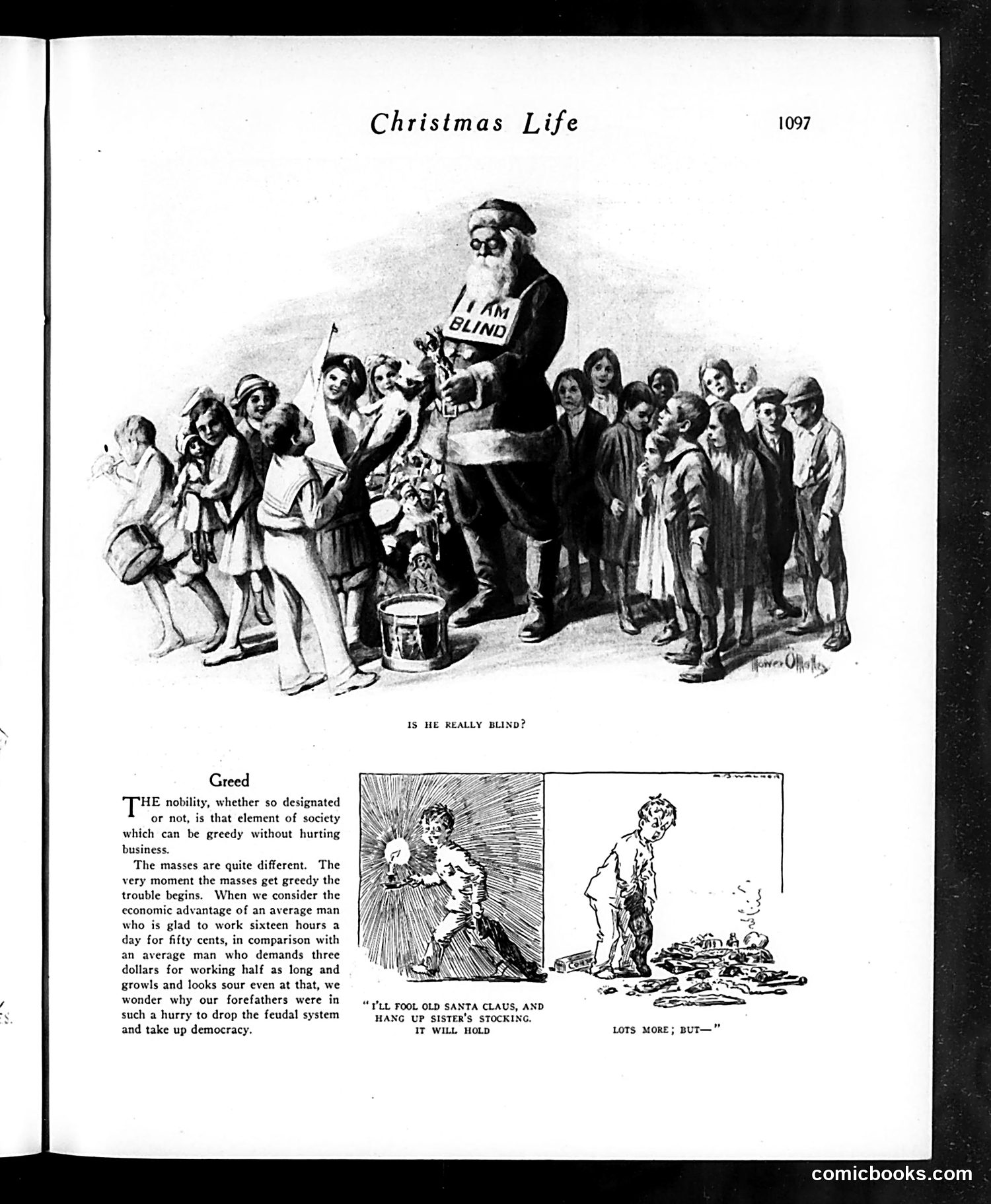
This satirical page critiques economic inequality through a Christmas lens. The main cartoon depicts Santa Claus—depicted as blind and labeled "I AM BLIND"—surrounded by children of varying economic circumstances, questioning whether he truly cannot see their disparities. Below, the essay "Greed" argues that wealthy elites can accumulate wealth without economic consequences, while working-class people are condemned for demanding fair wages. The author sarcastically suggests democracy was a mistake, implying feudalism better served the rich. The smaller cartoons show children plotting to exploit Santa's supposed blindness—one planning to stuff a stocking with excessive items. The satire suggests that capitalist greed pervades even childhood innocence and Christmas charity. The overall message: American society blindly accepts vast wealth inequality while punishing ordinary people's modest demands for fair compensation.
📄 Transcribed text from this page (OCR, searchable)
Machine-transcribed from the original scan — historical spelling and the odd misread are preserved.
Greed 'HE nobility, whether so designated or not, is that element of society which can be greedy without hurting business. The masses are quite different. The very moment the masses get greedy the trouble begins. When we consider the economic advantage of an average man who is glad to work sixteen hours a day for fifty cents, in comparison with an average man who demands three dollars for working half as long and growls and looks sour even at that, we wonder why our forefathers were in such a hurry to drop the feudal system and take up democracy. Christmas Life 1S HE REALLY BLIND? “LL FOOL OLD SANTA CLAUS, AND HANG UP SISTER'S STOCKING. IT WILL HOLD LOTS MORE; BUT—"" comicbooks.com