
Life, 1915-11-25 · page 19 of 44
Life — November 25, 1915 — page 19: what you’re looking at
What you’re looking at
This page satirizes two distinct topics: **"Thanksgiving of a Hyphenated American"** mocks wealthy immigrants or first-generation Americans who retain loyalty to their native countries while exploiting America for profit. The poem, attributed to Burgess Johnson, presents a speaker claiming to thank God for American freedom while simultaneously admitting indifference to national sacrifice ("I am half and half"), disdain for common citizens' concerns, and prioritizing personal gain over civic duty. The sarcastic tone exposes the hypocrisy of those claiming American identity while maintaining divided loyalties—a timely concern during World War I when many Americans questioned the patriotism of hyphenated ethnic identities. **"The Made-up Tale of Mons"** debunks the famous "Angels of Mons" legend—a WWI myth where witnesses claimed supernatural beings aided British forces. The piece reveals that writer Arthur Machen invented the story as fiction, yet it spread as fact because it matched public sentiment and religious desire for divine intervention. This satirizes both media credulity and humanity's willingness to believe comforting falsehoods during wartime.
📄 Transcribed text from this page (OCR, searchable)
Machine-transcribed from the original scan — historical spelling and the odd misread are preserved.
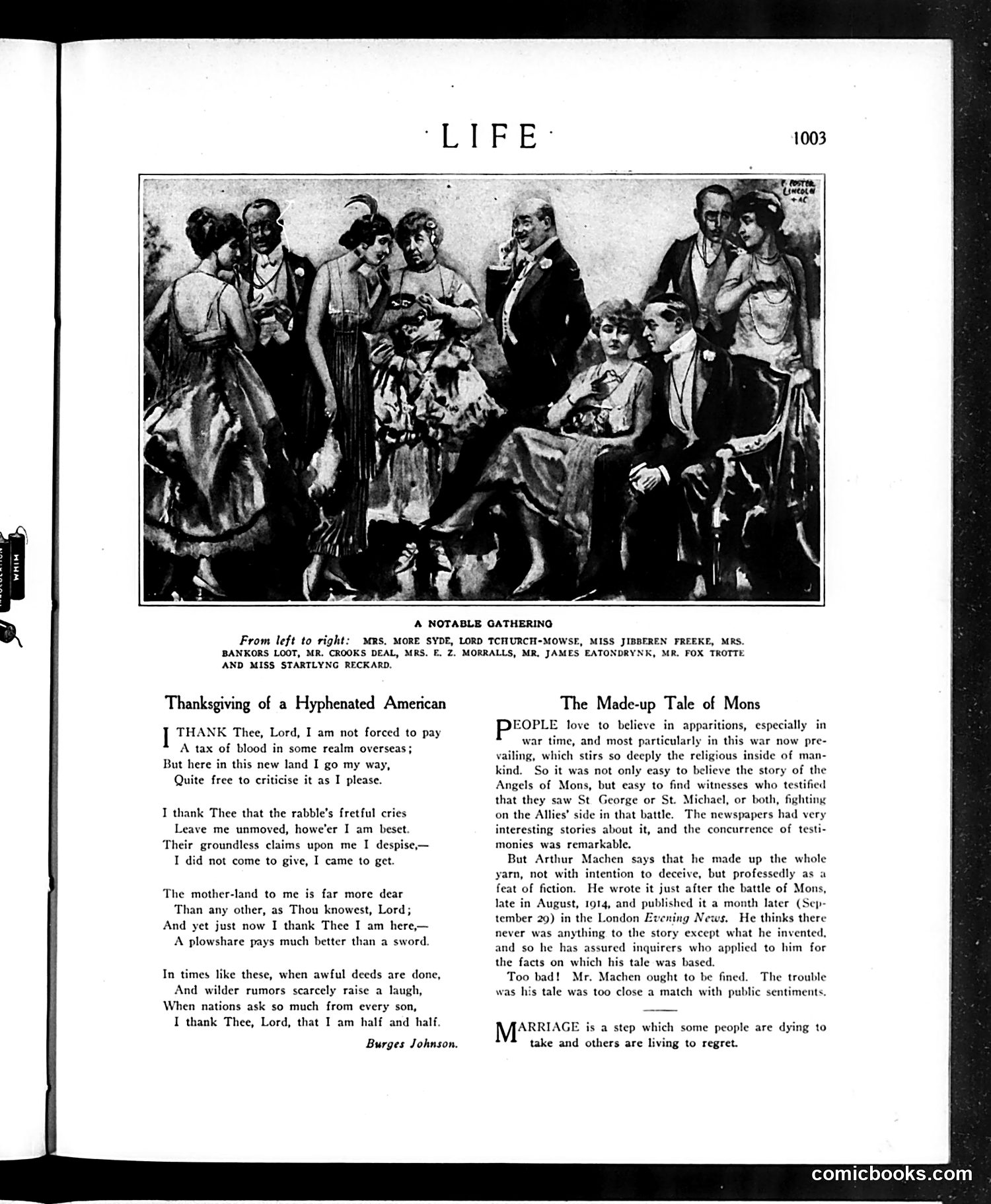
A NOTABLE GATHERING From left to right: ms, MORE SYDE, LORD TCHURCH-MOWSE, MISS JIBBERI BANKORS LOOT, MR. CROOKS DEAL, MRS. E. Z. MORRALLS, MR, JAMES EATONDRYN. AND MISS STARTLYNG RECKARD. Thanksgiving of a Hyphenated American THANK Thee, Lord, I am not forced to pay A tax of blood in some realm overseas; But here in this new land I go my way, Quite free to criticise it as I please. I thank Thee that the rabble’s fretful cries Leave me unmoved, howe'er I am beset. Their groundless claims upon me I despise— I did not come to give, I came to get. The mother-land to me is far more dear Than any other, as Thou knowest, Lord; And yet just now I thank Thee I am here— A plowshare pays much better than a sword. In times like these, when awful deeds are done, And wilder rumors scarcely raise a laugh, When nations ask so much from every son, I thank Thee, Lord, that Iam half and half, Burges Johnson. FREEKE, MRS. MR. FOX TROTTE The Made-up Tale of Mons P PLE love to believe in apparitions, especially in war time, and most particularly in this war now pre- vailing, which stirs so deeply the religious inside of man- kind. So it was not only easy to believe the story of the Angels of Mons, but easy to find witnesses who testified that they saw St George or St. Michael, or both, fighting on the Allies’ side in that battle. The newspapers had y interesting stories about it, and the concurrence of t monies was remarkable. But Arthur Machen says that he made up the whole yarn, not with intention to deceive, but professedly as a feat of fiction. He wrote it just after the battle of Mons, late in August, 1914, and published it a month later (Sep- tember 29) in the London Evening News. He thinks there never was anything to the story except what he invented, and so he has assured inquirers who applied to him for the facts on which his tale was based. Too bad! Mr. Machen ought to be fined. The trouble was his tale was too close a match with public sentiments. MARRIAGE is a step which some people are dying to take and others are living to regret. comicbooks.com