
Life, 1915-10-07 · page 11 of 52
Life — October 7, 1915 — page 11: what you’re looking at
What you’re looking at
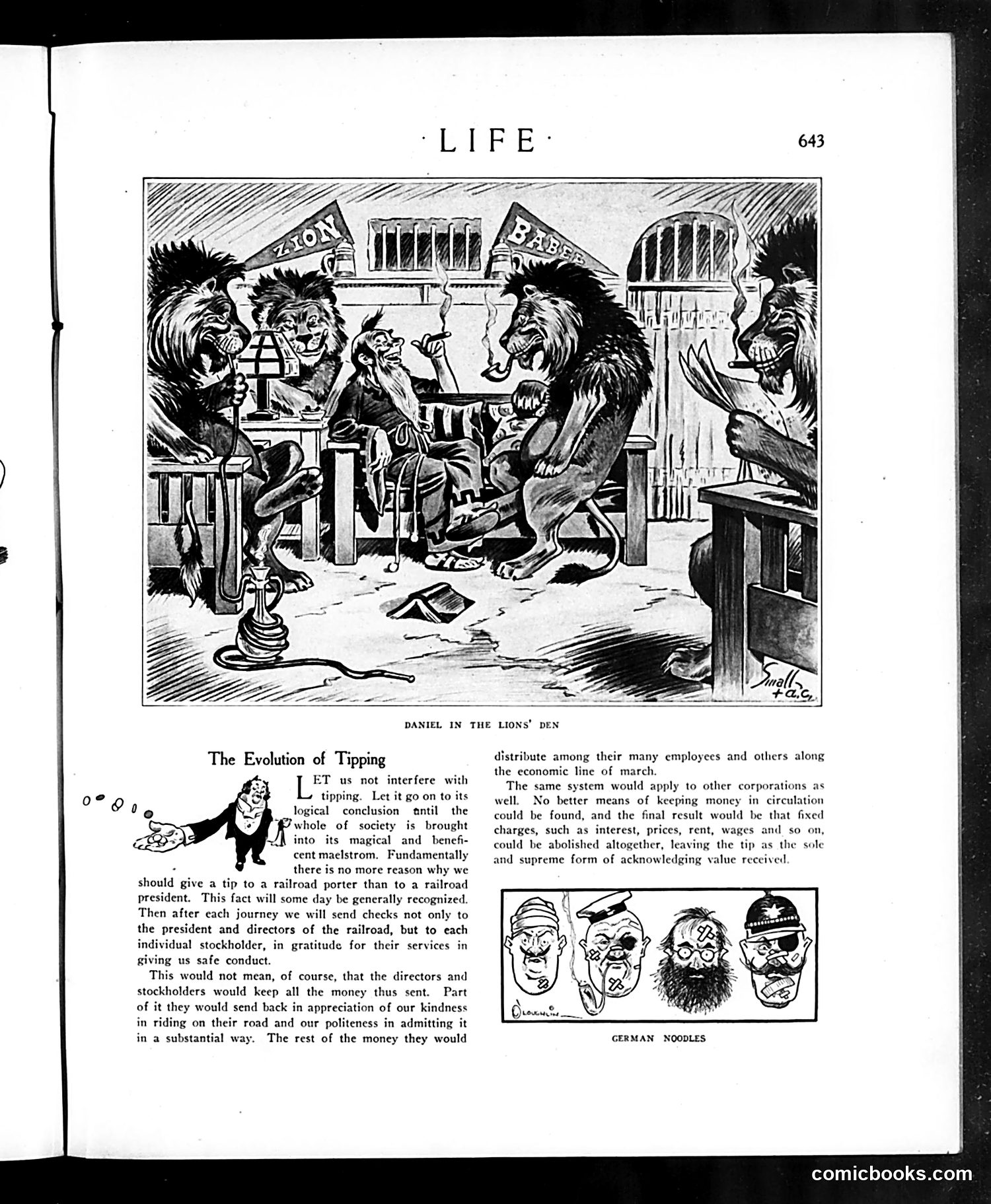
**Top Cartoon ("Daniel in the Lions' Den"):** A satirical scene depicting lions in formal business attire (wearing hats labeled "SALON" and "BARBER") operating what appears to be a barbershop or salon. The anthropomorphic lions surround a small human figure, parodying the biblical story of Daniel in the lion's den. This likely critiques predatory business practices or dangerous working conditions in early 20th-century commerce. **Article ("The Evolution of Tipping"):** The accompanying text argues that tipping should logically extend to railroad presidents and corporate directors, sarcastically following this practice to its absurd conclusion. The satire advocates abolishing tipping entirely, proposing fixed wages instead. **Bottom Panel ("German Noodles"):** Four caricatured male faces, likely ethnic stereotypes common to the era's satirical publications.
📄 Transcribed text from this page (OCR, searchable)
Machine-transcribed from the original scan — historical spelling and the odd misread are preserved.
DANIEL IN THE LIONS’ DEN The Evolution of Tipping distribute among their many employees and others along the economic line of march. :T us not interfere with The same system would apply to other corporations as tipping. Let it goon to its well, No better means of keeping money in circulation logical conclusion antil the could be found, and the final result would be that fixed whole of society is brought charges, such as interest, prices, rent, wages and so on, PAA into its magical and benefi- could be abolished altogether, leaving the tip cent maelstrom. Fundamentally and supreme form of acknowledging value received - there is no more reason why we should give a tip to a railroad porter than to a railroad president. This fact will some day be generally recognized. Then after each journey we will send checks not only to the president and directors of the railroad, but to each individual stockholder, in gratitude for their services in giving us safe conduct. This would not mean, of course, that the directors and stockholders would keep all the money thus sent. Part of it they would send back in appreciation of our kindness in riding on their road and our politeness in admitting it in a substantial way. The rest of the money they would GERMAN NOODLES comicbooks.com