
Life, 1915-05-27 · page 31 of 44
Life — May 27, 1915 — page 31: what you’re looking at
What you’re looking at
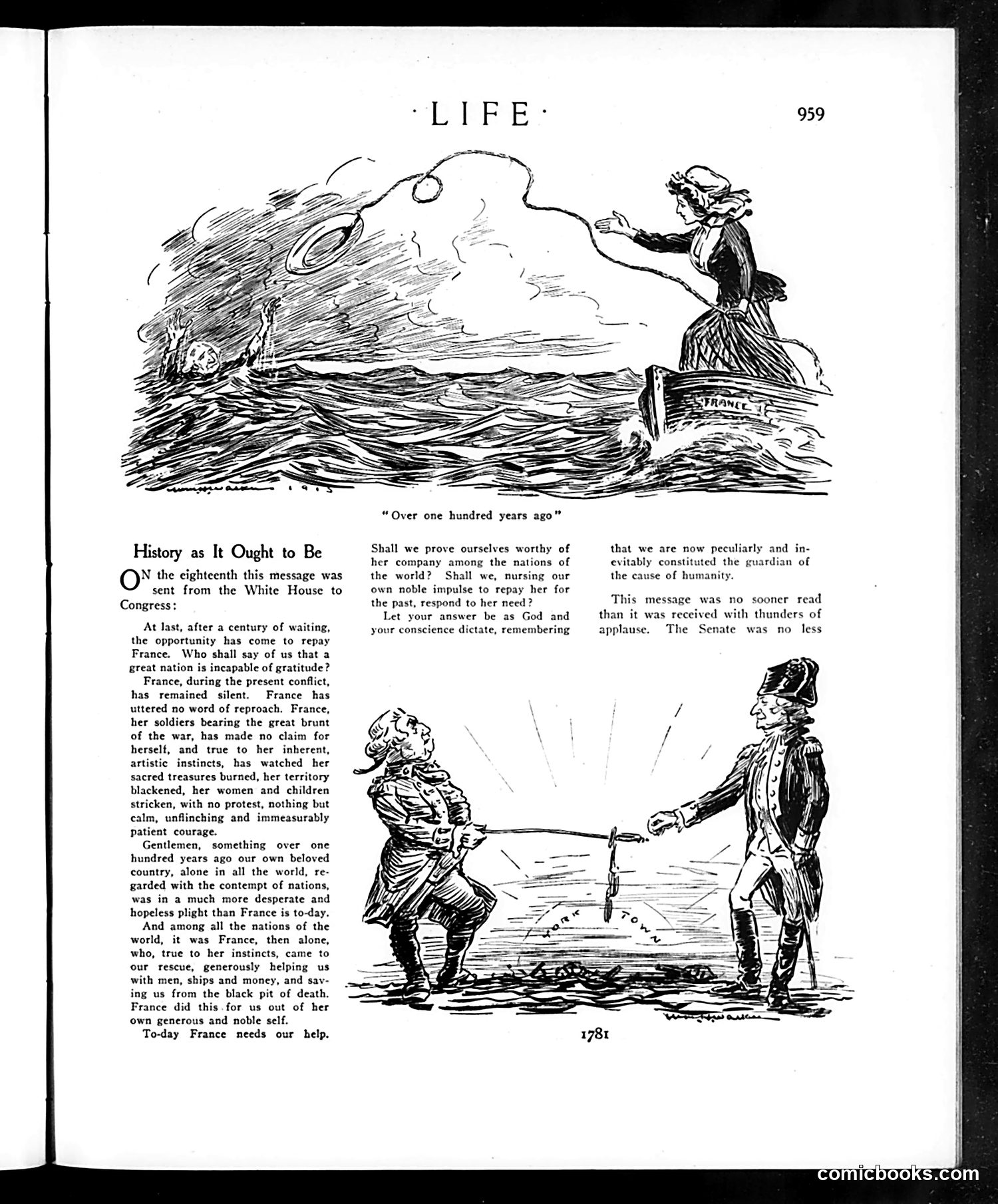
This 1918 Life magazine page satirizes American reluctance to aid France during World War I. The top cartoon shows a woman (representing France) drowning, reaching desperately for help. The bottom illustration depicts two military figures shaking hands, labeled "1781"—referencing the American Revolution when France saved the newborn United States. The accompanying text is a mock presidential message invoking historical debt: America owes France repayment for aid received "over one hundred years ago." The satire's point is clear—despite France's current suffering and past generosity, Congress hesitated to provide military support. By contrasting 1781 with the present moment, Life's cartoonists argue America should reciprocate, framing aid not as charity but as moral obligation and gratitude. The theatrical tone mocks both political rhetoric and American foot-dragging on intervention.
📄 Transcribed text from this page (OCR, searchable)
Machine-transcribed from the original scan — historical spelling and the odd misread are preserved.
History as It Ought to Be ON the eighteenth this message was sent from the White House to Congress: At last, after a century of waiting, the opportunity has come to repay France. Who shall say of us that a great nation is incapable of gratitude? France, during the present conflict, has remained silent. France has uttered no word of reproach. France, her soldiers bearing the great brunt of the war, has made no claim for herself, and true to her inherent, artistic instincts, has watched her sacred treasures burned, her territory blackened, her women and children stricken, with no protest, nothing but calm, unflinching and immeasurably patient courage. Gentlemen, something over one hundred years ago our own beloved country, alone in all the world, re- garded with the contempt of nations, was in a much more desperate and hopeless plight than France is to-day. And among all the nations of the world, it was France, then alone, who, true to her instincts, came to our rescue, generously helping us with men, ships and money, and sav- ing us from the black pit of death. France did this. for us out of her own generous and noble self. To-day France needs our help. “Over one hundred years ago” Shall we prove ourselves worthy of her company among the nations of the world? Shall we, nursing our own noble impulse to repay her for the past, respond to her need? Let your answer be as God and your conscience dictate, remembering that we are now peculiarly and in- evitably constituted the guardian of the cause of humanity. This message was no sooner read than it was received with thunders of applause. The Senate was no less