
Life, 1915-05-27 · page 21 of 44
Life — May 27, 1915 — page 21: what you’re looking at
What you’re looking at
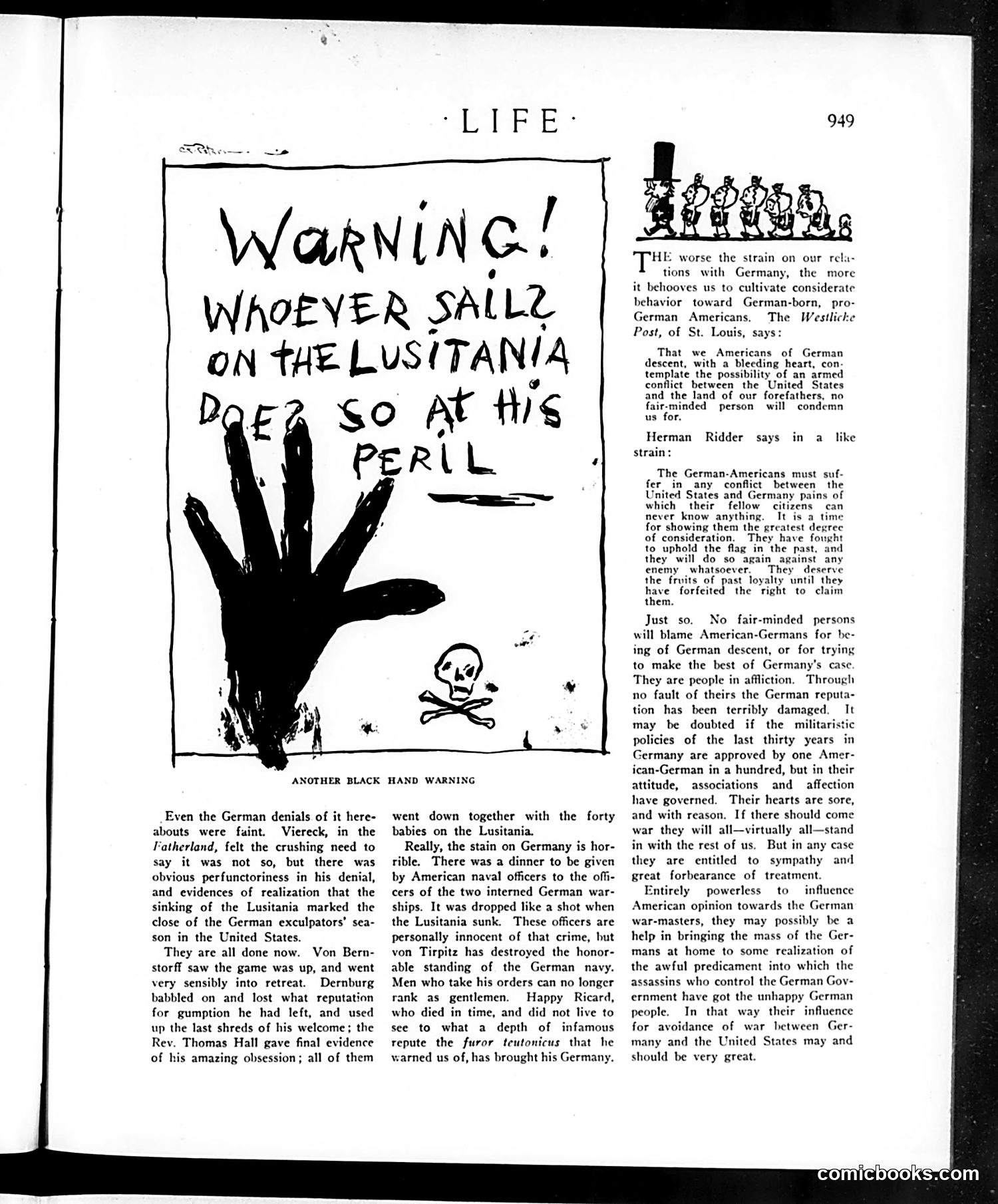
This 1915 *Life* magazine page addresses the sinking of the RMS Lusitania by a German U-boat (May 1915), which killed nearly 1,200 people including 128 Americans. The cartoon's "Black Hand Warning" depicts a skeletal hand emerging from the Lusitania's sinking, referencing the "Black Hand"—a symbol of German intimidation and threat. The warning caption sarcastically mocks German threats. The text acknowledges Germany's diplomatic damage but argues for compassion toward German-Americans, who faced suspicion and hostility. The magazine quotes German-American leaders defending their loyalty to the U.S. while sympathizing with Germany's plight, arguing they deserve fair treatment despite the crisis. The overall message: while condemning Germany's actions, Americans should distinguish between the German government and German-American citizens, treating the latter with consideration during this dangerous diplomatic moment.
📄 Transcribed text from this page (OCR, searchable)
Machine-transcribed from the original scan — historical spelling and the odd misread are preserved.
EEE AOEVER SALLZ ON THE LusiTAN/A ANOTHER BLACK HAND WARNING Even the German denials of it here- abouts were faint. Viereck, in the Fatherland, felt the crushing need to say it was not so, but there was obvious perfunctoriness in his denial, and evidences of realization that the sinking of the Lusitania marked the close of the German exculpators’ sea- son in the United States. They are all done now. Von Bern- storff saw the game was up, and went very sensibly into retreat. Dernburg babbled on and lost what reputation for gumption he had left, and used up the last shreds of his welcome; the Rev. Thomas Hall gave final evidence of his amazing obsession; all of them went down together with the forty babies on the Lusitania. Really, the stain on Germany is hor- rible. There was a dinner to be given by American naval officers to the offi- cers of the two interned German war- ships. It was dropped like a shot when the Lusitania sunk. These officers are personally innocent of that crime, but von Tirpitz has destroyed the honor- able standing of the German navy. Men who take his orders can no longer rank as gentlemen. Happy Ricard, who died in time, and did not live to see to what a depth of infamous repute the furor teutonicus that he warned us of, has brought his Germany. 949 HE worse the strain on our rela- tions with Germany, the more it behooves us to cultivate considerate behavior toward German-born, pro- German Americans, The Westlii Post, of St. Louis, says: That we Americans of German descent, with a bleeding heart, con- template the possibility of an armed conflict between the United States and the land of our forefathers, no fair-minded person will condemn us for. Herman Ridder says in a like strain: The German-Americans must suf- fer in any conflict between the United States and Germany pains of which ‘their fellow citizens can never know anything. It is a time for showing them the greatest degree of consideration. They have fought to uphold the flag in the past, and they will do so again against any enemy whatsoever. They deserve the fruits of past loyalty until they have forfeited the right to claim them. Just so, No fair-minded persons will blame American-Germans for be- ing of German descent, or for trying to make the best of Germany's case. They are people in affliction. Through no fault of theirs the German reputa- tion has been terribly damaged. It may be doubted if the militaristic policies of the last thirty years in Germany are approved by one Amer- ican-German in a hundred, but in their attitude, associations and affection have governed. Their hearts are sore, and with reason. If there should come war they will all—virtually all—stand in with the rest of us. But in any case they are entitled to sympathy and great forbearance of treatment. Entirely powerless to influence American opinion towards the German war-masters, they may possibly be a help in bringing the mass of the Ger- mans at home to some realization of the awful predicament into which the assassins who control the German Gov- ernment have got the unhappy German people. In that way their influence for avoidance of war between Ger- many and the United States may and should be very great.