
Life, 1915-05-06 · page 26 of 56
Life — May 6, 1915 — page 26: what you’re looking at
What you’re looking at
This satirical story critiques excessive meekness and passivity in the face of economic exploitation. The protagonist embodies Christian virtues of gentleness and trust—he believes in turning the other cheek, assumes politicians and trust magnates act benevolently, and accepts corporate price-gouging as necessary. The moral collapse comes when a banker refuses him a loan despite their long relationship, claiming the man is "too easy-going." This rejection awakens the protagonist to reality: his niceness has made him economically vulnerable and socially powerless. Only when he becomes angry and assertive—adopting a combative worldview and refusing to be exploited—does he gain influence and prosperity. The story satirizes both naive faith in the goodwill of the wealthy and the societal reward system that punishes meekness while elevating aggression and self-interest. The title's irony suggests that anger and self-preservation, not virtue, are what gods (or society) actually favor.
📄 Transcribed text from this page (OCR, searchable)
Machine-transcribed from the original scan — historical spelling and the odd misread are preserved.
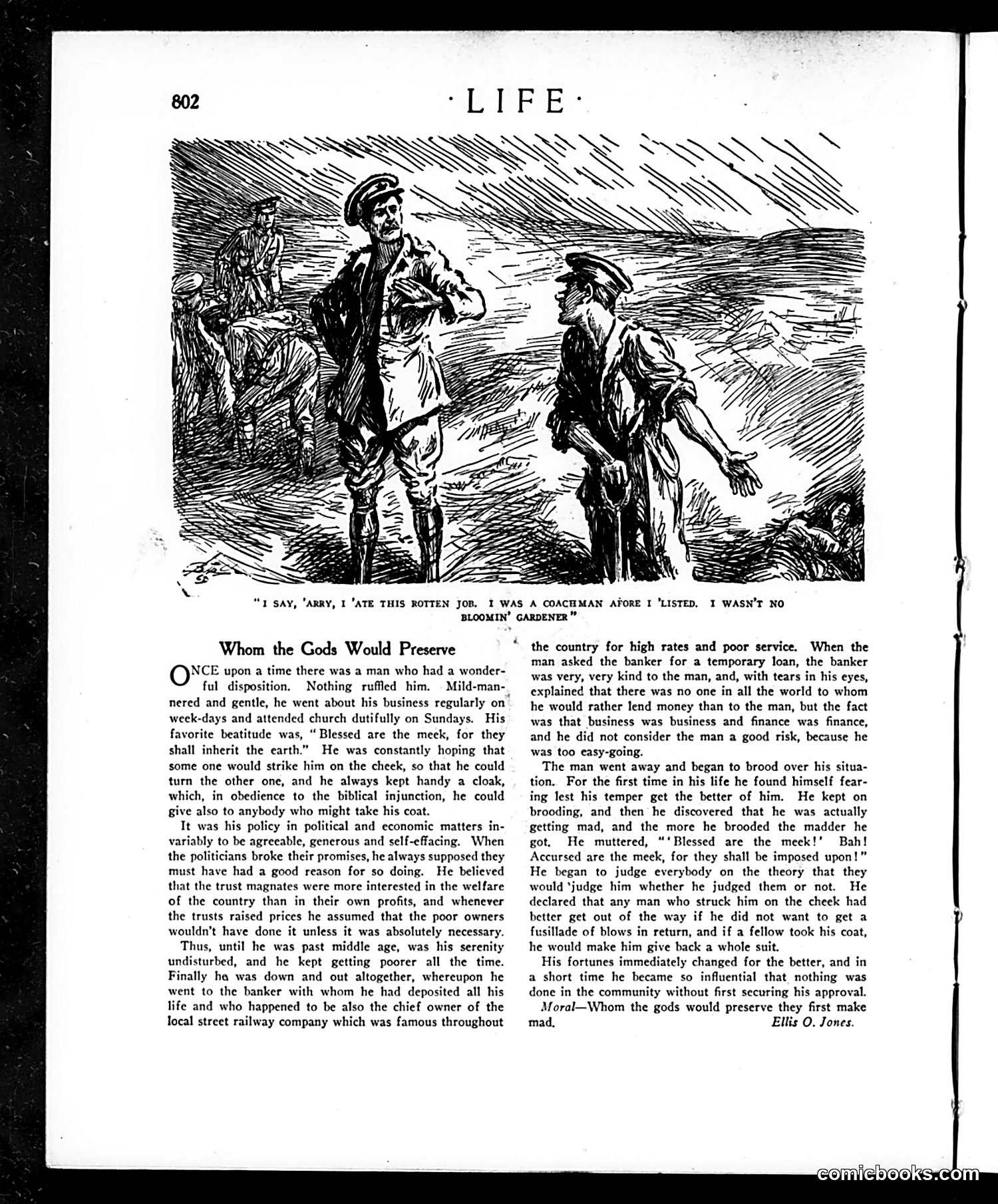
“I SAY, "ARRY, I 'ATE THIS ROTTEN JOB. I WAS A COACHMAN AFORE I LISTED. I WASN'T NO BLOOMIN’ GARDENER” Whom the Gods Would Preserve NCE upon a time there was a man who had a wonder- ful disposition. Nothing ruffled him. nered and gentle, he went about his business regularly on week-days and attended church dutifully on Sundays. His favorite beatitude was, “Blessed are the meek, for they shall inherit the earth.” He was constantly hoping that some one would strike him on the cheek, so that he could turn the other one, and he always kept handy a cloak, which, in obedience to the biblical injunction, he could give also to anybody who might take his coat. It was his policy in political and economic matters in- variably to be agreeable, generous and self-effacing. When the politicians broke their promises, he always supposed they must have had a good reason for so doing. He believed that the trust magnates were more interested in the welfare of the country than in their own profits, and whenever the trusts raised prices he assumed that the poor owners wouldn't have done it unless it was absolutely necessary. Thus, until he was past middle age, was his serenity undisturbed, and he kept getting poorer all the time. Finally ha was down and out altogether, whereupon he went to the banker with whom he had deposited all his life and who happened to be also the chief owner of the local street railway company which was famous throughout Mild-man- the country for high rates and poor service. When the man asked the banker for a temporary loan, the banker was very, very kind to the man, and, with tears in his eyes, explained that there was no one in all the world to whom he would rather lend money than to the man, but the fact was that business was business and finance was finance, and he did not consider the man a good risk, because he ‘was too easy-going. The man went away and began to brood over his situa- tion. For the first time in his life he found himself fear- ing lest his temper get the better of him. He kept on brooding, and then he discovered that he was actually getting mad, and the more he brooded the madder he got. He muttered, “‘Blessed are the meck!’ Bah! Accursed are the meek, for they shall be imposed upon!” He began to judge everybody on the theory that they would ‘judge him whether he judged them or not. He declared that any man who struck him on the cheek had better get out of the way if he did not want to get a fusillade of blows in return, and if a fellow took his coat, he would make him give back a whole suit. His fortunes immediately changed for the better, and in a short time he became so influential that nothing was done in the community without first securing his approval. Moral—Whom the gods would preserve they first make mad, Ellis O. Jones.