
Life, 1915-02-25 · page 25 of 44
Life — February 25, 1915 — page 25: what you’re looking at
What you’re looking at
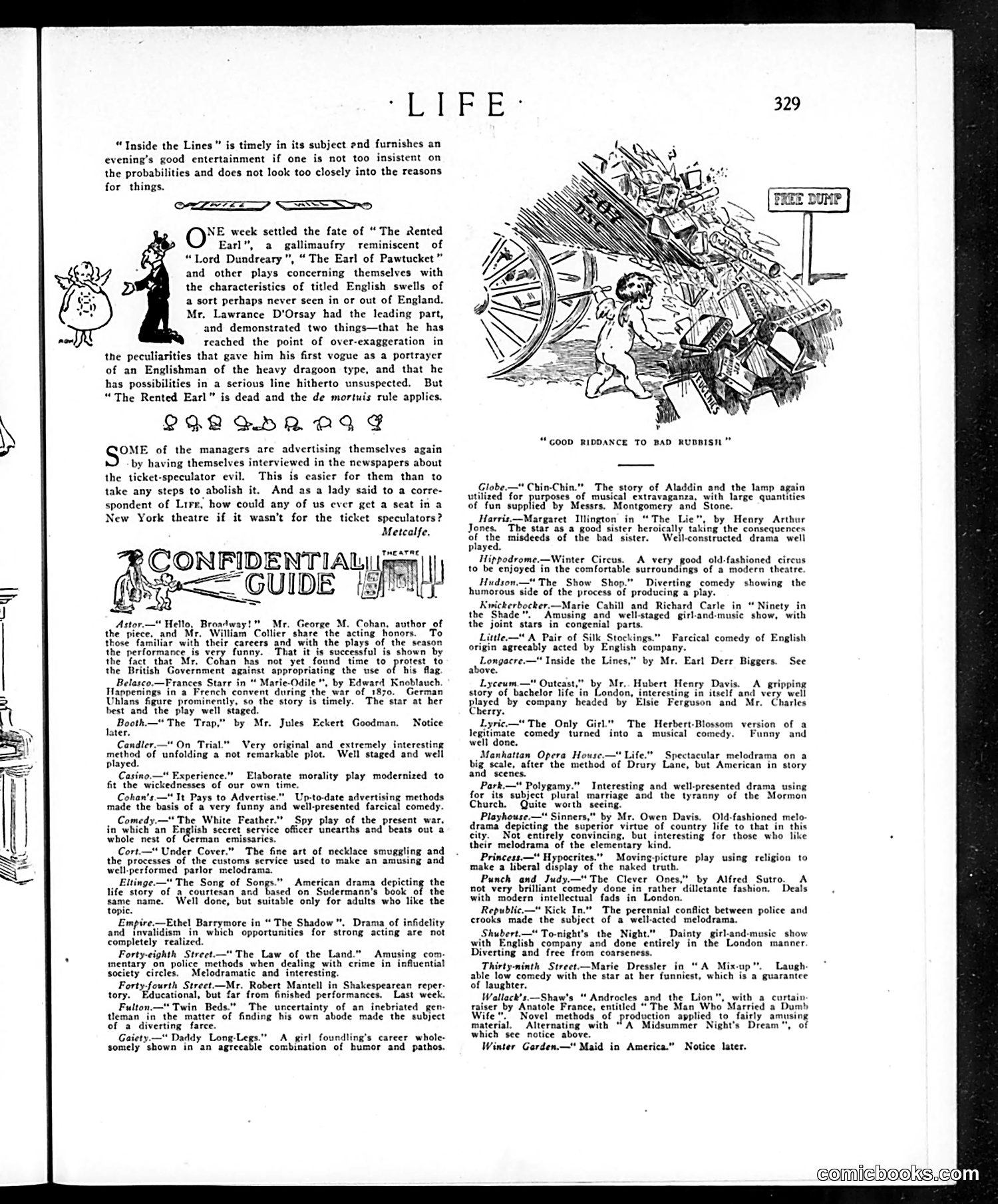
This page contains theater reviews from Life magazine's "Confidential Guide" section, critiquing Broadway productions. The small cartoon at top left shows a portly gentleman in formal dress—likely representing a theater patron or impresario. The main content satirizes theater managers who publicly claim to fight ticket scalpers while doing nothing substantive. The text includes a pointed quote from a woman noting the hypocrisy: managers couldn't fill theaters without scalpers, so their public protests are merely self-serving publicity stunts. The reviews themselves catalog current Broadway shows, mixing praise with pointed criticism of acting styles and subject matter. References to "spy plays of the present war" and German antagonists reflect WWI-era anxieties. The tone is sophisticated, assuming readers know theater conventions and current events.
📄 Transcribed text from this page (OCR, searchable)
Machine-transcribed from the original scan — historical spelling and the odd misread are preserved.
ee lpReE “Inside the Lines” is timely in its subject end furnishes an evening’s good entertainment if one is not too insistent on the probabilities and does not look too closely into the reasons for things. OEE > E week settled the fate of “The ented Earl”, a gallimaufry reminiscent of “Lord Dundreary", “The Earl of Pawtucket” and other plays concerning themselves with the characteristics of titled English swells of ‘a sort perhaps never seen in or out of England. Mr. Lawrance D'Orsay had the leading part, and demonstrated two things—that he has reached the point of over-exaggeration in the peculiarities that gave him his first vogue as a portraycr of an Englishman of the heavy dragoon type, and that he has possibilities in a serious line hitherto unsuspected. But “The Rented Earl” is dead and the de mortuis rule applies. OBAWWPVbDRADdEG OME of the managers are advertising themselves again by having themselves interviewed in the newspapers about the ticket-speculator evil. This is easier for them than to take any steps to abolish it. And as a lady said to a corre- spondent of Lire, how could any of us ever get a seat in a New York theatre if it wasn’t for the ticket speculators? Metcalfe. GONFIDENTIAL 51 ex GUIDE [sft Astor — Hello, Broadway!" Mr. George M. Cohan, author of the piece, and Mr. William Collier share the acting honors. To those familiar with their careers and with the plays of the season the performance is very funny. That it is successful is shown by the fact, that Mr. Cohan has not yet found time to protest, to the British Government against appropriating the use of his flag Belasco.—Frances Starr in “ Marie-Odile", by Edward Knoblauch. Happenings in a French convent during the war of 1870. German Unlans figure prominently, so the story is timely. The star at her best and the play well staged. pBooth—" The Trap.” by Mr. Jules Eckert Goodman. later. Candler.—" On Trial." Very original and extremely interesting method of unfolding a not remarkable plot. Well staged and well played. Casino.—" Experience.” Elaborate morality play modernized to fit the wickednesses of our own time. Cohan’s—" It Pays to Advertise.” Up-to-date advertising methods made the basis of a very funny and well-presented farcical comedy. Comedy.—" The White Feather.” Spy play of the present war, in which’ an English secret service officer unearths and beats out a whole nest of German emissaries. Cort.—" Under Cover.” The fine art of necklace smuggling and the processes of the customs service used to make an amusing and well-performed parlor melodrama. Eviinge— The Song of Songs." | American drama depicting the life story of a courtesan and based on Sudermann’s book of the same name. Well done, but suitable only for adults who like the topic. Empire.—Ethel Barrymore in “ The Shadow", Drama of infidelity and invalidism in, which opportunities for strong acting are not completely realized. Forty-eighth Street.—" The Law of the Land.” Amusing com: mentary on police methods when dealing with crime in influential society circles. Melodramatic and interesting. Forty-fourth Street—Mr. Robert Mantell in Shakespearean reper- tory. Educational, but far from finished performances. Last week. Fulton.—" Twin Beds." The uncertainty of an inebriated gen: tleman in the matter of finding his own abode made the subject of a diverting farce. Gaiety.—“ Daddy Long-Legs.” A. girl foundling’s career whole- somely shown in an agreeable combination of humor and pathos. Notice “GOOD RIDDANCE TO BAD RUBBISH” Globe-—" Chin-Chin.” The story of Aladdin and the lamp a utilized for Papas, of musical extravaganza, with large quantities of fun supplied by Messrs. Montgomery Stone. Harris.—Margaret Mlington in “The Lie", by Henry Arthur Jones. The star as a good sister heroically taking the consequences of the misdeeds of the bad sister. Well-constructed drama well played. Hippodrome.—Winter Circus. A very good old-fashioned circus to be enjoyed in the comfortable surroundings of a modern theatre. Hudson.—" The Show Shop.” Diverting comedy showing the humorous side of the process of producing a play. Kwickerbocker—Marie Cabill and Richard Carle in “ Ninety in the Shade". Amusing and well-staged girland-musie show, with the joint stars in congenial parts. Little —" A Pair of Silk Stockings.” Farcical comedy of English origin agreeably acted by English company. Longacre.—" Inside the Lines,” by Mr. Earl Derr Biggers. above. Lyceum —" Outcast,” b; story of bachelor life in played Cherry. Lyric—" The Only Girl legitimate comedy turned well done. Manhattan Opera House.—"' Life.” Spectacular melodrama on a big scale, after the method of Drury Lane, but American in story and scenes. Par Polygamy.” Interesting and well-presented drama using for its subject plural marriage and the tyranny of the Mormon Church. Quite worth seeing. Playhouse.—" Sinners,” by Mr. Owen Davis, Old-fashioned melo: drama depicting the superior virtue of country life to that in this city. Not entirely convincing, but interesting for those who like their melodrama of the elementary kind. Princess.—" Hypocrites.” Moving-picture play using religion to make a liberal display of the naked truth. Punch and Judy.—" The Clever Ones," by Alfred Sutro. A not very brilliant comedy done in rather ‘dilletante fashion. Deals with modern intellectual fads in London. Republi Kick In.” The perennial conflict between police and crooks made the subject of a well-acted melodrama. Shubert.— To-night's the Night.” Dainty girl-and-music show with English company and done entirely in the London manner Diverting and free from coarseness. Thirty-minth Street.—Marie Dressler in “A Mixup". Laugh able low comedy with the star at her funniest, which is a guarantee of laughter. Wallack's.—Shaw's “ Androcles and the Lion, with a curtain raiser by Anatole France, entitied The Man Who Married a Du Wife”. Novel methods of production applied to fairly amusing material. Alternating with “A Midsummer Night's Dream”, of which see notice above. Winter Gerden.—" Maid in America.” See Mr.. Hubert Henry Davis. A. gripping London, interesting in itself and very well by company headed by Elsie Ferguson and Mr. Charles " The Herbert-Blossom version of a into a musical comedy. Funny and Notice later. comichooks.