
Life, 1914-10-08 · page 13 of 44
Life — October 8, 1914 — page 13: what you’re looking at
What you’re looking at
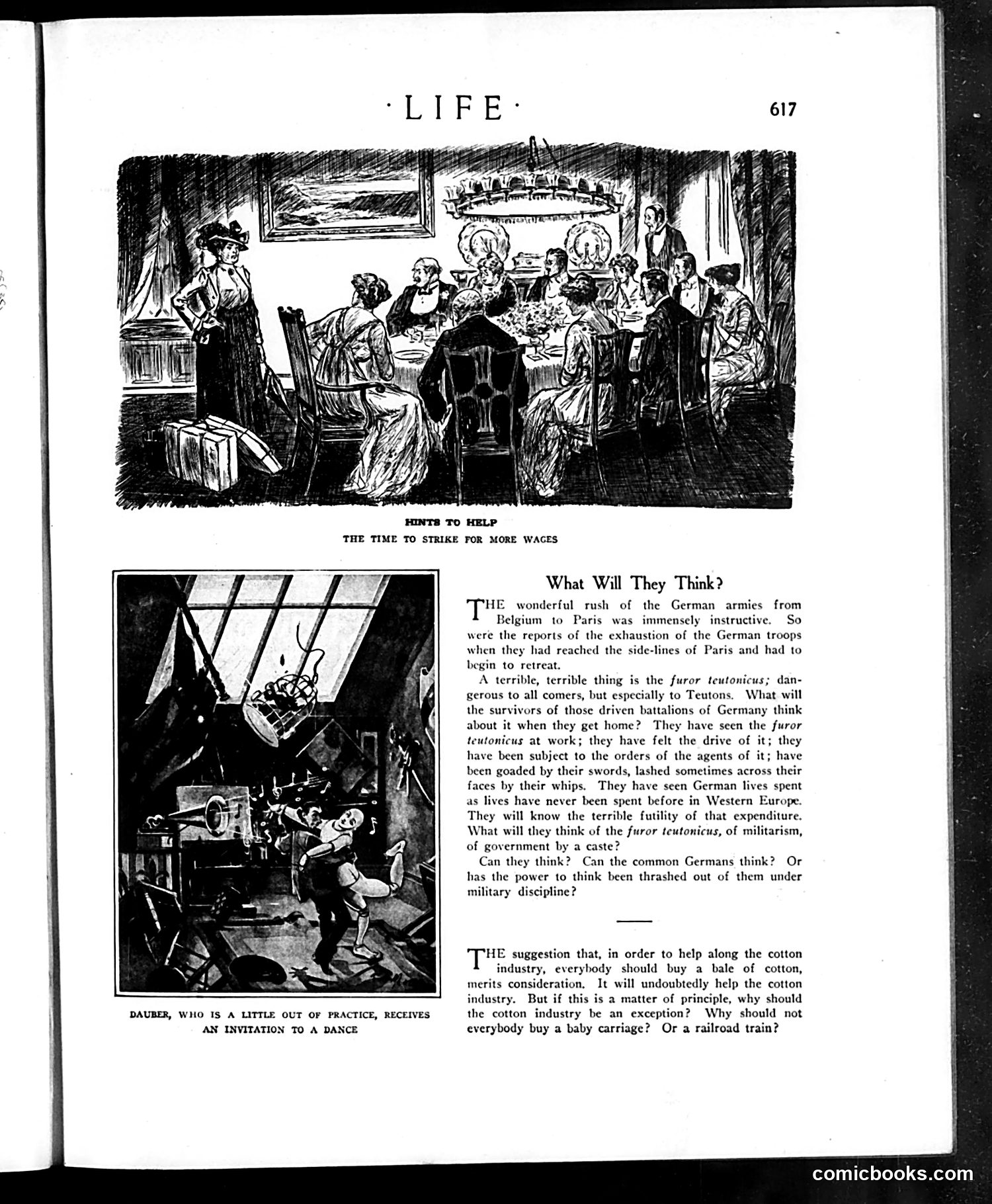
This page contains two satirical cartoons and accompanying editorial text criticizing German militarism and domestic labor movements during World War I. The top cartoon depicts wealthy individuals at a dinner party, captioned "HINTS TO HELP THE TIME TO STRIKE FOR MORE WAGES"—sarcastically suggesting the wealthy are inadvertently encouraging workers to demand raises. The lower cartoon, titled "DAUBEE, WHO IS A LITTLE OUT OF PRACTICE, RECEIVES AN INVITATION TO A DANCE," shows a figure in what appears to be a wartime factory or industrial setting, likely mocking someone unprepared for manual labor. The accompanying editorial discusses German soldiers' experiences and questions whether German citizens will accept militaristic rule. It also critiques proposals that everyone should buy cotton to support American industry, questioning why some industries deserve special treatment over others.
📄 Transcribed text from this page (OCR, searchable)
Machine-transcribed from the original scan — historical spelling and the odd misread are preserved.
THE TIME TO STRIKE FOR MORE WAGES — DAUBER, WHO IS A LITTLE OUT OF PRACTICE, RECEIVES AN INVITATION TO A DANCE What Will They Think? HE wonderful rush of the German armies from Belgium to Paris was immensely instructive. So were the reports of the exhaustion of the German troops when they had reached the side-lines of Paris and had to begin to retreat. A terrible, terrible thing is the furor teutonicus; dan- gerous to all comers, but especially to Teutons. What will the survivors of those driven battalions of Germany think about it when they get home? They have seen the furor teutonicus at work; they have felt the drive of it; they have been subject to the orders of the agents of it; have been goaded by their swords, lashed sometimes across their faces by their whips, They have seen German lives spent as lives have never been spent before in Western Europe. They will know the terrible futility of that expenditure. What will they think of the furor teutonicus, of militarism, of government by a caste? Can they think? Can the common Germans think? Or has the power to think been thrashed out of them under military discipline? HE suggestion that, in order to help along the cotton industry, everybody should buy a bale of cotton, merits consideration, It will undoubtedly help the cotton industry. But if this is a matter of principle, why should the cotton industry be an exception? Why should not everybody buy a baby carriage? Or a railroad train? comicbooks.com