
Life, 1914-09-24 · page 25 of 45
Life — September 24, 1914 — page 25: what you’re looking at
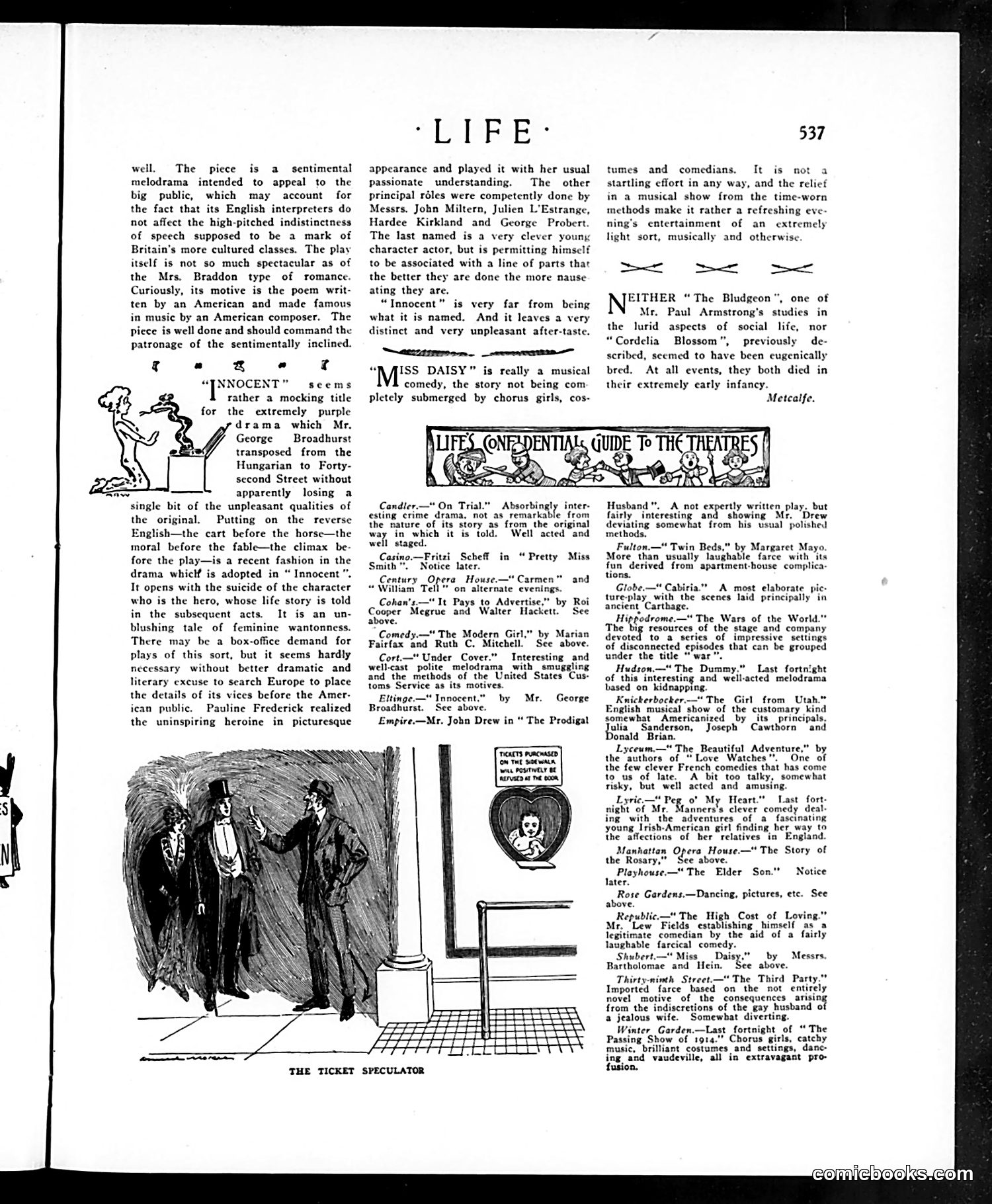
What you’re looking at
The cartoon depicts a scene of theatrical commerce in the early 20th century. Two men in formal attire appear to be conducting a transaction—likely a ticket broker ("speculator") selling theater tickets to a patron at an inflated price. The sketch shows the parasitic practice of ticket scalping, where middlemen would purchase tickets and resell them for profit, a practice that exploited both theaters and eager theatergoers. This satirizes the widespread problem of ticket speculation during this era of popular theater. The surrounding text reviews various Broadway productions, establishing the context: theater was highly sought-after entertainment, making tickets valuable commodities. The cartoon mocks those who profited from artificially inflating ticket prices, a practice Life magazine apparently viewed as morally questionable profiteering from public demand.
📄 Transcribed text from this page (OCR, searchable)
Machine-transcribed from the original scan — historical spelling and the odd misread are preserved.
well. The piece is a sentimental melodrama intended to appeal to the big public, which may account for the fact that its English interpreters do not affect the high-pitched indistinctness of speech supposed to be a mark of Britain's more cultured classes. The play itself is not so much spectacular as of the Mrs. Braddon type of romance. Curiously, its motive is the poem writ- ten by an American and made famous in music by an American composer. The piece is well done and should command the patronage of the sentimentally inclined. a . ¢ NNOCENT” seems rather a mocking title the extremely purple drama which Mr, George Broadhurst transposed from the Hungarian to Forty- second Street without apparently losing a single bit of the unpleasant qualities of the original. Putting on the reverse English—the cart before the horse—the moral before the fable—the climax be- fore the play—is a recent fashion in the drama whiclf is adopted in “ Innocent”. It opens with the suicide of the character who is the hero, whose life story is told in the subsequent acts. It is an un- blushing tale of feminine wantonncss. There may be a box-office demand for plays of this sort, but it seems hardly necessary without better dramatic and literary excuse to search Europe to place the details of its vices before the Amer- ican public. Pauline Frederick realized the uninspiring heroine in picturesque aa) al Go) hae appearance and played it with her usual passionate understanding. The other principal réles were competently done by Messrs. John Miltern, Julien L’Estrange, Hardee Kirkland and Geor, Probert The last named is a very clever youny character actor, but is permitting himself to be associated with a line of parts that the better they are done the more nause ating they are. “Innocent” is very far from being what it is named. And it leaves a very distinct and very unpleasant after-taste. ee “KISS DAISY” is really a musical comedy, the story not being com: pletely submerged by chorus girls, cos- Candler. —" On Trial.” | Absorbingly inter. esting crime drama, not as remarkable from the nature of its story as from the original way in which it is told. Well acted “and well staged. Casino.—Fritzi Scheff in Smith.” Notice later. Century Opera House.—" Carmen” and “William Tell” on alternate evenings. Cohan’s—" It Pays to Advertise.” by Roi Cooper Megrue and Walter Hackett. See above. Comedy.—" The Modern Girl,” by Marian Fairfax and Ruth C, Mitchell.’ See above. Cort.—" Under Cover.” Interesting and well-cast polite melodrama with | smuggling and the methods of the United States Cus- toms Service as its motives. Eltinge.—" Innocent.” by Broadhurst. See above. Empire.—Mr. John Drew in “ The Prodigat “Pretty Miss Mr. George THE TICKET SPECULATOR 537 tumes and comedians. [t is not a startling effort in any way, and the relief in a musical show from the time-worn methods make it rather a refreshing eve- ning’s entertainment of an extremely light sort, musically and otherwise. == lO OT ei <= EITHER “The Bludgeon”, one of Mr, Paul Armstrong's studies in the lurid aspects of social life, nor “Cordelia Blossom", previously de- scribed, seemed to have been cugenically bred. At all events, they both died in their extremely early infancy. Metcalfe. Husband", A not expertly written play. but fairly interesting and showing Mr. Drew deviating somewhat from his usual polished methods, Fulton.—" Twin Beds," by Margaret Mayo. More than usually laughable farce with its fun derived from apartment-house complica- tions. Globe.—"* Cal A most elaborate pic: ture-play with the scenes laid principally in ancient, Carthage. Hippodrome.—" The Wars of the World." The big resources of the stage and company devoted to a series of impressive settings of disconnected episodes that can be grouped under the title “war”. Hudson.—" The Dumm: of this interesting and well based on kidnapping. Knickerbocker.—" The Girl from Utah." sh musical show of the customary kind somewhat Americanized by its principals. julia’ Sanderson, Joseph Cawthorn and jonald Brian. Lyceum.—" The Beautiful Adventure,” by the authors of “Love Watches”. One of the few clever French comedies that has come to us of late. A bit too talky, somewhat risky, but well acted and amusing. Lyric. —" Peg ot My Heart." Last fort. night of Mr. Manners's clever comedy deal: ing with the adventures of a fascinating young Irish-American girl finding her way to the affections of her relatives in England. Manhattan Opera House—" The Story of the Rosary,” See above. Playhouse.—"" The Elder Son." later. Rose Gardens.—Dancing, pictures, etc. See above. Republic." The High Cost of Lovi Mr. Lew Fields establishing himself as a legitimate comedian by the aid of a fairly laughable farcical comedy. Shubert.—" Miss Daisy,” —_ by Bartholomae and Hein. See above. Thirty-ninth Street—" The Third Party.” Imported farce based on the not entirely novel motive of the consequences arisinj from the indiscretions of the gay husband o a jealous wife. Somewhat diverting. Winter Garden.—Last fortnight of “ The Passing Show of 1914." Chorus girls, catchy music, brilliant costume ing and vaudeville, all in extra fusion. Last fortnight cted_ melodrama Notice Messrs.