
Life, 1914-09-24 · page 17 of 45
Life — September 24, 1914 — page 17: what you’re looking at
What you’re looking at
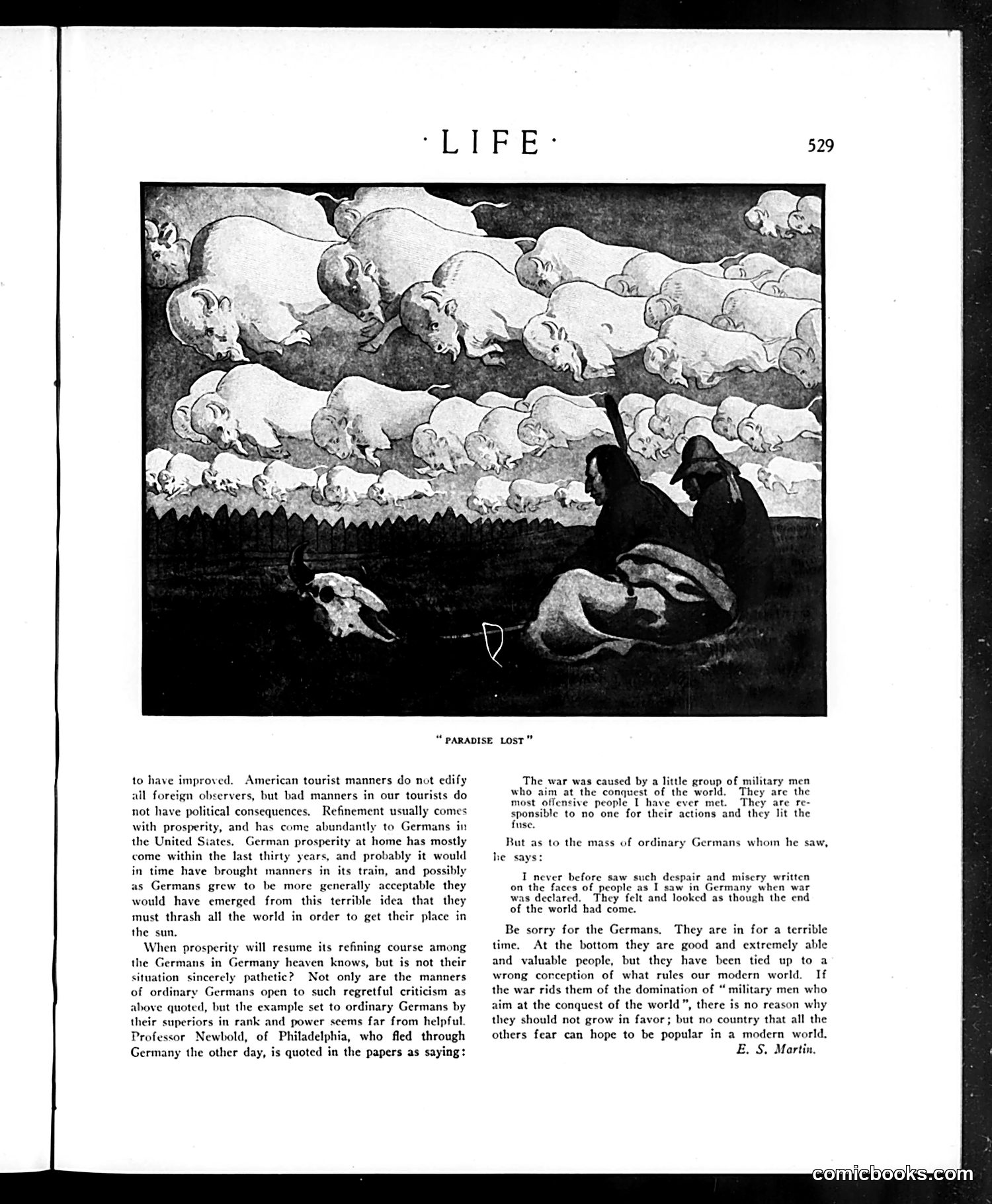
This cartoon illustrates post-World War I commentary on Germany's collapse. The image shows two figures in dark silhouette observing a nightmarish vision of sleeping, cherubic babies arranged in rows—a surreal, grotesque inversion of innocence that suggests ruined dreams or lost hope. The accompanying text by E.S. Martin discusses German culpability for the war while expressing sympathy for ordinary German citizens. Martin argues that a small military elite ("military men who aim at the conquest of the world") dragged Germany into catastrophic war, leaving the general population devastated. He quotes Professor Newbold's firsthand observations of German despair immediately after war's declaration. The cartoon's title "Paradise Lost" reinforces this message: Germany's former prosperity and potential for civilized development has been destroyed by militarist ambitions. The satire suggests that Germany's militaristic leadership has condemned an entire nation to suffering, transforming what might have been a peaceful, prosperous future into nightmare.
📄 Transcribed text from this page (OCR, searchable)
Machine-transcribed from the original scan — historical spelling and the odd misread are preserved.
“ PARADISE Lost” to have improved. American tourist manners do not edify ail foreign observers, but bad manners in our tourists do not have political consequences, Refinement usually comes with prosperity, and has come abundantly to Germans in the United Siates. German prosperity at home has mostly come within the last thirty years, and probably it would in time have brought manners in its train, and possibly as Germans grew to be more generally acceptable they would have emerged from this terrible idea that they must thrash all the world in order to get their place in the sun. When prosperity will resume its refining course among the Germans in Germany heaven knows, but is not their situation sincerely pathetic? Not only are the manners of ordinary Germans open to such regretful criticism as above quoted, but the example set to ordinary Germans by their superiors in rank and power seems far from helpful Professor Newbold, of Philadelphia, who fled through Germany the other day, is quoted in the papers as saying: The war was caused by a little group of military men who aim at the conquest of the world. They ate the most offensive people I have ever met. They are re- sponsible to no one for their actions and they lit the fuse. But as to the mass of ordinary Germans whom he saw, he says: I never before saw such despair and misery written on the faces of people as I saw in Germany when war was declared. They felt and looked as though the end of the world had come. Be sorry for the Germans, They are in for a terrible time. At the bottom they are good and extremely able and valuable people, but they have been tied up to a wrong conception of what rules our modern world. If the war rids them of the domination of “ itary men who aim at the conquest of the world”, there is no reason why they should not grow in favor; but no country that all the others fear can hope to be popular in a modern world. E. S. Martin.