
Life, 1914-09-24 · page 16 of 45
Life — September 24, 1914 — page 16: what you’re looking at
What you’re looking at
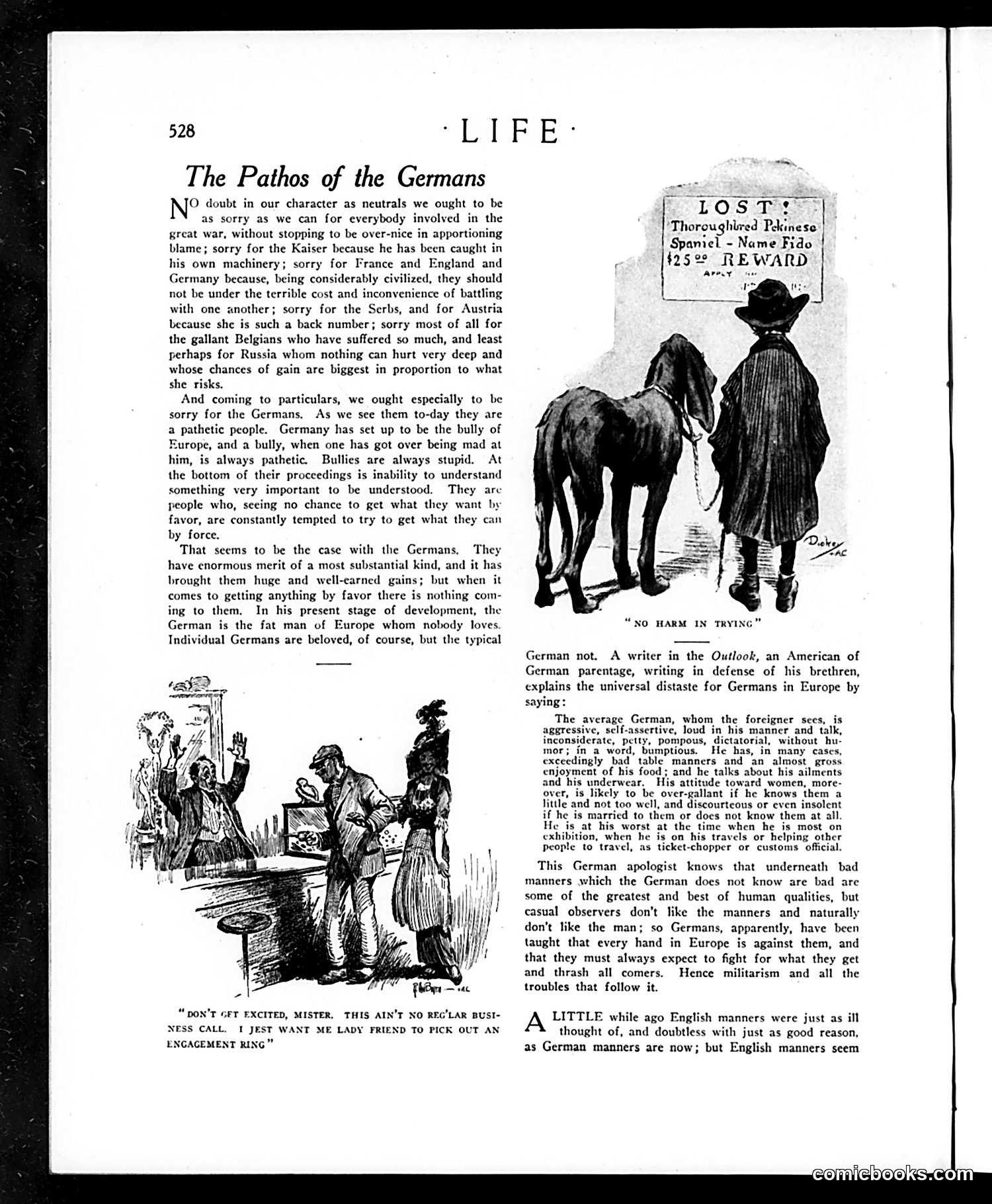
This World War I-era satirical article criticizes German national character as seen by outsiders. The text presents a backhanded "defense" of Germans: acknowledging their substantial qualities while explaining why Europeans dislike them. The key argument: Germans appear aggressive, loud, inconsiderate, and bumptious—with poor table manners and inappropriate behavior toward women. A German-American writer quoted here argues these *manners* cause the distaste, not inherent badness. However, Life suggests Germans have been taught that Europe opposes them, leading to their militarism. The two cartoons illustrate German social clumsiness: the upper sketch shows someone rudely demanding a lady friend help pick an engagement ring; the lower depicts a customs official's inappropriate behavior. The satire mocks both German behavior and the defensive apology for it—suggesting Germany's international isolation stems from poor deportment rather than innocence.
📄 Transcribed text from this page (OCR, searchable)
Machine-transcribed from the original scan — historical spelling and the odd misread are preserved.
528 The Pathos of the Germans N° doubt in our character as neutrals we ought to be $s sorry as we can for everybody involved in the great war, without stopping to be over-nice in apportioning blame; sorry for the Kaiser because he has been caught in his own machinery; sorry for France and England and Germany because, being considerably civilized, they should not be under the terrible cost and inconvenience of battling with one another; sorry for the Serbs, and for Austria because she is such a back number; sorry most of all for the gallant Belgians who have suffered so much, and least perhaps for Russia whom nothing can hurt very deep and whose chances of gain are biggest in proportion to what she risks. And coming to particulars, we ought especially to be sorry for the Germans. As we see them to-day they are a pathetic people. Germany has set up to be the bully of Europe, and a bully, when one has got over being mad at him, is always pathetic. Bullies are always stupid. At the bottom of their proceedings is inability to understand something very important to be understood. They arc people who, seeing no chance to get what they want by favor, are constantly tempted to try to get what they can by force. That seems to be the case with the Germans, They have enormous merit of a most substantial kind, and it has brought them huge and well-earned s; but when it comes to getting anything by favor there is nothing com- ing to them. In his present stage of development, the German is the fat man of Europe whom nobody loves. Individual Germans are beloved, of course, but the typical “DON'T GET EXCITED, MISTER. THIS AIN'T NO REG'LAR BUSI- NESS CALL, I JEST WANT ME LADY FRIEND TO PICK OUT AN ENGAGEMENT RING” “ERE. * “LOST? >: Thoroughlred Pekinese | Spaniel - Name Fido #252 REWARD Arey ne German not, A writer in the Outlook, an American of German parentage, writing in defense of his brethren, explains the universal distaste for Germans in Europe by saying: The average German, whom the foreigner sees, is aggressive, sclf-assertive, loud in his manner and talk, inconsiderate, petty, pompous, dictatorial, without hu: mor; in a word, bumptious. ‘He has, in many cases, exceedingly bad’ table manners and an almost. gross enjoyment of his food; and he talks about his ailments and his underwear, His attitude toward women, more- over, is likely to be over-gallant if he knows them a little and not too well, and discourteous or even insolent if he is married to them or does not know them at all He is at his worst at the time when he is most on exhibition, when he is on his travels or helping other people to travel, as ticket-chopper or customs official. This German apologist knows that underneath bad manners which the German does not know are bad are some of the greatest and best of human qualities, but casual observers don’t like the manners and naturally don’t like the man; so Germans, apparently, have been taught that every hand in Europe is against them, and that they must always expect to fight for what they get and thrash all comers. Hence militarism and all the troubles that follow it. A LITTLE while ago English manners were just as ill thought of, and doubtless with just as good reason, as German manners are now; but English manners seem