
Life, 1914-09-10 · page 27 of 48
Life — September 10, 1914 — page 27: what you’re looking at
What you’re looking at
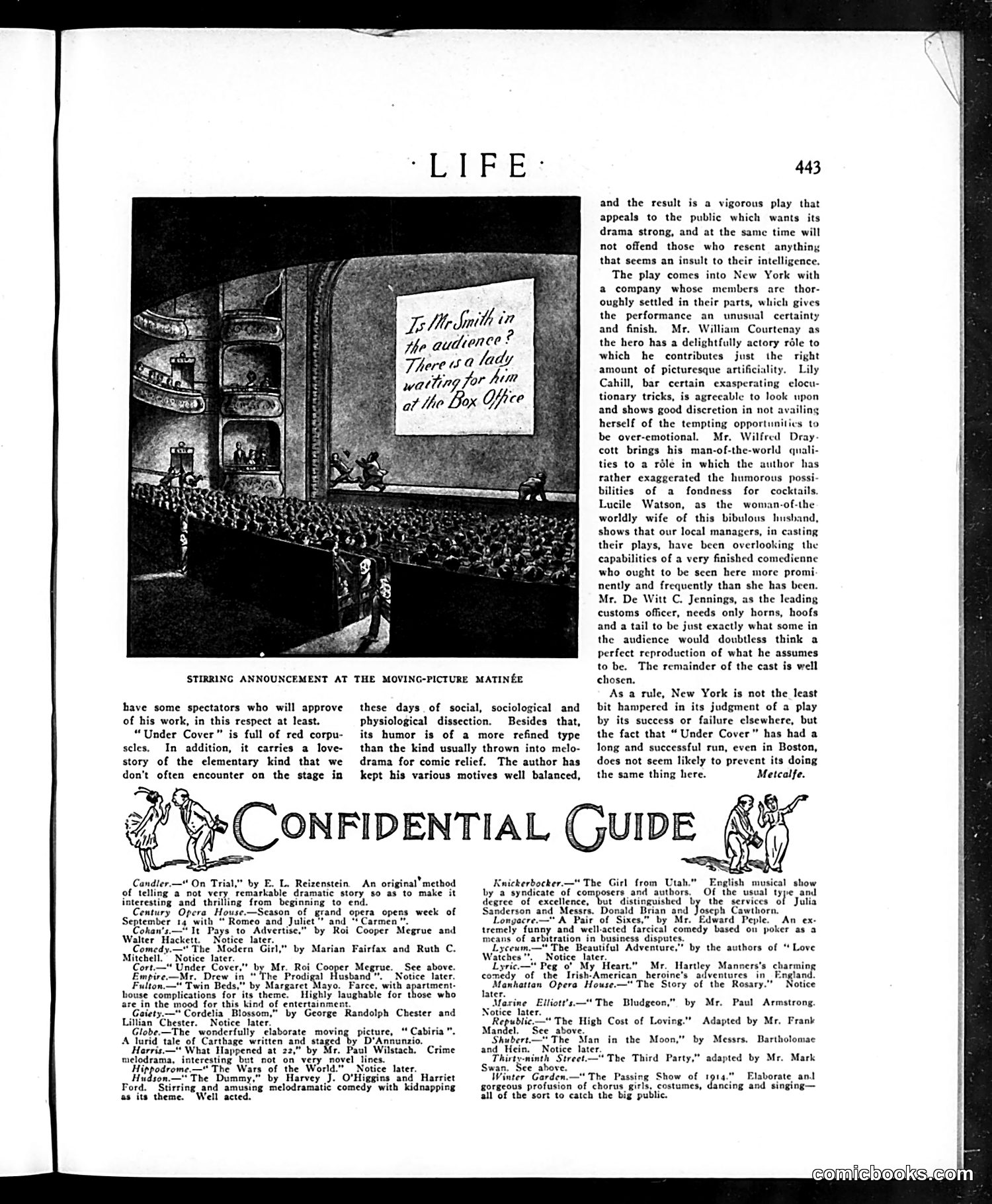
This page reviews New York theater productions. The prominent illustration shows a theater announcement board at a moving-picture matinee, with a sign reading "Is Mr Smith in the audience? There is a lady waiting for him at the Box Office" — a humorous public service announcement typical of early cinema, when theaters would deliver messages to patrons during shows. The joke relies on the suggestive implication that this message might be scandalous or embarrassing to receive publicly. The accompanying review discusses the play "Under Cover," praising its balance of drama, humor, and romance while noting it avoids being offensive to intelligent audiences. The "Confidential Guide" section below provides capsule reviews of current theatrical offerings, mixing praise and criticism of various productions' merit and entertainment value.
📄 Transcribed text from this page (OCR, searchable)
Machine-transcribed from the original scan — historical spelling and the odd misread are preserved.
There tS @ lady By acting for fim i ar Me Box Office STIRRING ANNOUNCEMENT AT THE MOVING-PICTURE MATINEE have some spectators who will approve of his work, in this respect at least. “Under Cover” is full of red corpu- scles. In addition, it carries a love- story of the elementary kind that we don’t often encounter on the stage in Candter.— On Trial,” by E. L. Reizenstein of telling a not very remarkable dramatic story so as to make it interesting and thrilling from beginning to end. Century Opera House-—Season of grand opera opens week of September 14 with “ Romeo and Juliet’ and ‘* Carmen". Roi Cooper Megrue and Cohan’s.—" It Pays to Adve: by Walter Hackett, Notice late Comedy.—" The Modern Gi Mitchell. Notice later. Cort.—" Under Cover,” by Mr. Roi ire—Mr. Drew ii house complications for’ its theme. Ge —** Corde] Lillian Chester. Notice later. The wonderfully elaborate movin) tale of Carthage written and staged Harris.—' Wars of the World. *The Dummy,” by Harvey J. O'Higgins and’ Harriet Ford. Stirring and amusing melodramatic comedy with kidnapping as its theme. Well acted. by Marian Fairfax and Ruth C. Cooper Megrue. ‘The Prodigal Husband by Margaret Mayo, Farce, with apartment. Highly laughable for those who the mood for this kind of entertainment. Blossom,” by George Randolph Chester and What Happened at 22,” by Mr. Paul Wilstach. Crime melodrama, interesting but not on very novel lines. these days of social, sociological and physiological dissection. Besides that, its humor is of a more refined type than the kind usually thrown into melo- drama for comic relief. The author has kept his various motives well balanced, An original’ method Sanderson an Longacre. means of a Lyceum. Watches" See above. Lyric. Notice later. later. Marine Elliott's. Notice later. “ Cabiria ". Mandel. Shubert. and Hein, picture, D'Annunzio. Swan. See above. ‘otice later. Winter Gard Knickerbocker —" The Girl from Utah." by a syndicate of com degree of excellence, Messrs. Donald Brian and Jos A Pair of Sixes,” by Mr. Edward Peple. tremely funny and well-acted farcical comedy based on poker as a tration in business disputes. he Beautiful Adventure,” by the authors of “ Love iT later. Peg o' My Heart.” Mr. comedy of the Irish:America Manhattan Opera House- Republic.—" The High Cost of Lovi See above. The Man in the Moon,” by Messrs. Notice later. Thirty-ninth Street "The Passing Show of tot gorgeous profusion of chorus girls, costumes, all of the sort to catch the big public. 443 and the result is a vigorous play that appeals to the public which wants its drama strong, and at the same time will not offend those who resent anything that seems an insult to their intelligence. The play comes into New York with a company whose members are thor- oughly settled in their parts, which gives the performance an unusual certainty and finish, Mr. William Courtenay as the hero has a delightfully actory réle to which he contributes just the right amount of picturesque artificiality. Lily Cahill, bar certain exasperating elocu- tionary tricks, is agreeable to look upon and shows good discretion in not availing herself of the tempting opportunities to be over-emotional. Mr. Wilfred Dray- cott brings his man-of-the-world quali- ties to a rdle in which the author has rather exaggerated the humorous possi- bilities of a fondness for cocktails. Lucile Watson, as the woman-of-the worldly wife of this bibulous husband, shows that our local managers, in casting their plays, have been overlooking the capabilities of a very finished comedienne who ought to be seen here more promi nently and frequently than she has been. Mr. De Witt C. Jennings, as the leading customs officer, needs only horns, hoo! and a tail to be just exactly what some in the audience would doubtless think a perfect reproduction of what he assumes to be. The remainder of the cast is well chosen, As a rule, New York is not the least bit hampered in its judgment of a play by its success or failure elsewhere, but the fact that “Under Cover” has had a long and successful run, even in Boston, does not seem likely to prevent its doing the same thing here. Metcalfe. English musical show Of the usual type and the services of Julia oseph Cawthorn. An ex: posere and authors, ut distinguished bj Manners's charming England. Notice Hartley heroine's aifventures in The Story of the Rosary.” by Mr. Paul ” Adapted by Mr. Frank The Bludgeon,” Armstrong. Bartholomae “The Third Party," adapted by Mr. Mark Elaborate anJ ncing and singing—