
Life, 1914-09-10 · page 15 of 48
Life — September 10, 1914 — page 15: what you’re looking at
What you’re looking at
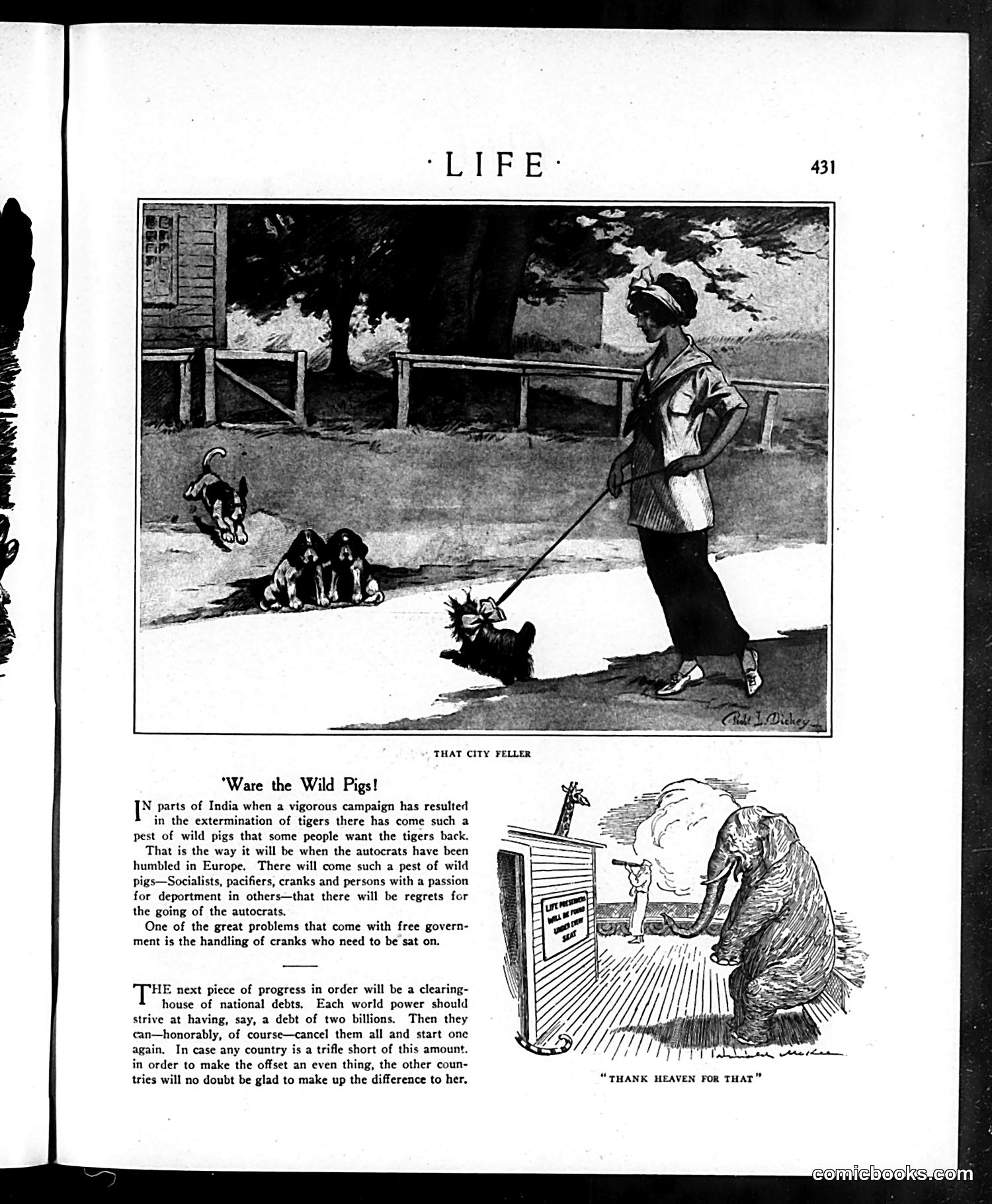
The page contains two satirical pieces from Life magazine, likely post-WWI. **"Ware the Wild Pigs!"** uses an India tiger-to-wild-pig analogy to argue that eliminating European autocrats will create worse problems: a "pest" of Socialists, pacifists, and cranks who interfere in others' affairs. The satire warns that free government brings troublesome ideological activists—implying the author views them as pests requiring suppression, comparable to dangerous animals. **"Thank Heaven for That"** (cartoon) depicts a large bear at a door marked "Life Insurance," apparently relieved. This likely satirizes post-war debt relief proposals—the accompanying text proposes a system where all nations cancel debts equally, which the cartoonist mocks as an absurd financial scheme. Both pieces reflect conservative skepticism toward progressive post-war reforms: suspicion of radical political movements and cynicism about international debt forgiveness schemes.
📄 Transcribed text from this page (OCR, searchable)
Machine-transcribed from the original scan — historical spelling and the odd misread are preserved.
THAT CITY FELLER “Ware the Wild Pigs! N parts of India when a vigorous campaign has resulted in the extermination of tigers there has come such a pest of wild pigs that some people want the tigers back. That is the way it will be when the autocrats have been humbled in Europe. There will come such a pest of wild pigs—Socialists, pacifiers, cranks and persons with a passion for deportment in others—that there will be regrets for the going of the autocrats. One of the great problems that come with free govern- ment is the handling of cranks who need to be sat on. THE next piece of progress in order will be a clearing- house of national debts, Each world power should strive at having, say, a debt of two billions. Then they can—honorably, of course—cancel them all and start one again. In case any country is a trifle short of this amount. in order to make the offset an even thing, the other coun- tries will no doubt be glad to make up the difference to her. “THANK HEAVEN FOR THAT”