
Life, 1914-07-30 · page 19 of 40
Life — July 30, 1914 — page 19: what you’re looking at
What you’re looking at
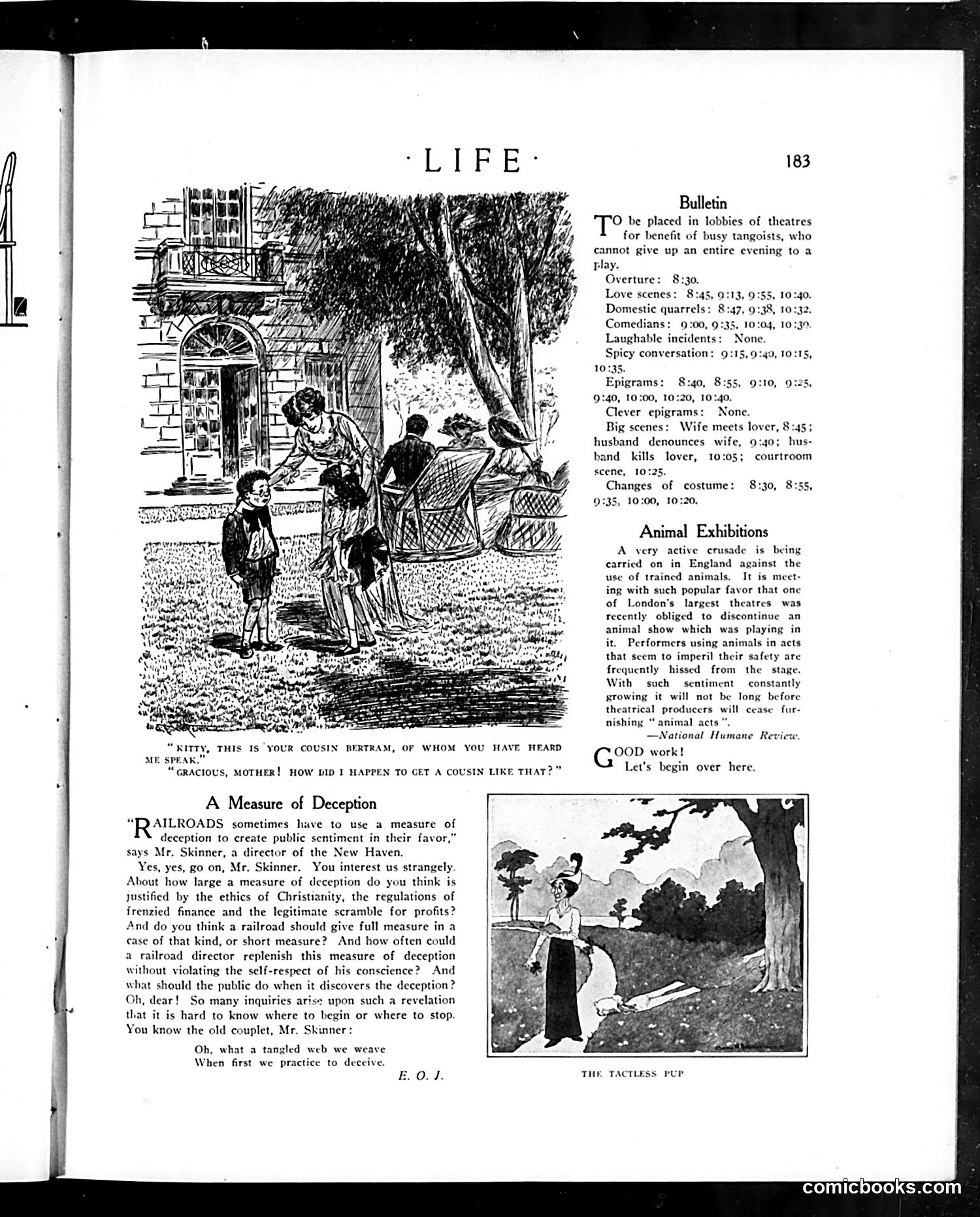
This *Life* magazine page (page 183) contains three satirical pieces: **"Bulletin"** mocks theatergoers obsessed with the "tango" (a trendy dance craze of the era) by creating a playbill listing only the brief dramatic moments worth watching—suggesting tango enthusiasts care only about excitement, not art. **"Animal Exhibitions"** reports on England's anti-animal-cruelty campaign gaining momentum, predicting theatrical producers will abandon animal acts due to public pressure and humane sentiment. **"A Measure of Deception"** attacks railroad executive Mr. Skinner (New Haven Railroad) who publicly admitted railroads use deception to manipulate public opinion. The satirist sardonically questions whether deception is ethically justified by "Christianity" and "frenzied finance" (reckless capitalism), then quotes the old moral adage about tangled webs from practicing deception—scorching corporate dishonesty.
📄 Transcribed text from this page (OCR, searchable)
Machine-transcribed from the original scan — historical spelling and the odd misread are preserved.
183 Bulletin T° be placed in lobbies of theatres for benefit of busy tangoists, who cannot give up an entire evening to a play. Overture: 8:30. Love scenes: Domestic quarrel Comedians: 9:00, 9 10:04, 10:39. Laughable incidents: None. Spicy conversation: 9:49, 10:15, 10:35 Epigrams: 9:10, 9 9:40, 10:00, 10:20, 10:40. Clever epigrams: None. Big scenes: Wife meets lover, 8:45; husband denounces wife, 9:40; hus- band kills lover, 10:05; courtroom scene, 10:25. Changes of costume: 8:30, 8:55, 9:35, 10:00, 10:20, Animal Exhibitions A very active crusade is being carried on in England against the use of trained animals. It is meet- ing with such popular favor that one of London's largest theatres was recently obliged to discontinue an animal show which was playing in it. Performers using animals in acts that seem to imperil their safety are frequently hissed from the stage. With such sentiment constantly growing it will not be long before theatrical producers will cease fur- nishing “ animal acts”. —National Humane Review. ¥, THIS IS YOUR COUSIN BERTRAM, OF WHOM YOU HAVE HEARD OOD work! “GRACIOUS, MOTHER! HOW DID I HAPPEN TO GET A COUSIN LIKE THAT?” Let's begin over here. A Measure of Deception “RAIEROADS sometimes have to use a measure of deception to create public sentiment in their favor,” says Mr. Skinner, a director of the New Haven. Yes, yes, go on, Mr. Skinner. You interest us strangely. About how large a measure of deception do you think is justified by the ethics of Christianity, the regulations of frenzied finance and the legitimate scramble for profits? And do you think a railroad should give full measure in a case of that kind, or short measure? And how often could a railroad director replenish this measure of deception without violating the self-respect of his conscience? And what should the public do when it discovers the deception? Oh, dear! So many inquiries arise upon such a revelation that it is hard to know where to begin or where to stop. You know the old couplet, Mr. Skinner: Oh, what a tangled web we weave When first we practice to deceive. E.O.J. THE TACTLESS PUP