
Life, 1914-05-28 · page 24 of 44
Life — May 28, 1914 — page 24: what you’re looking at
What you’re looking at
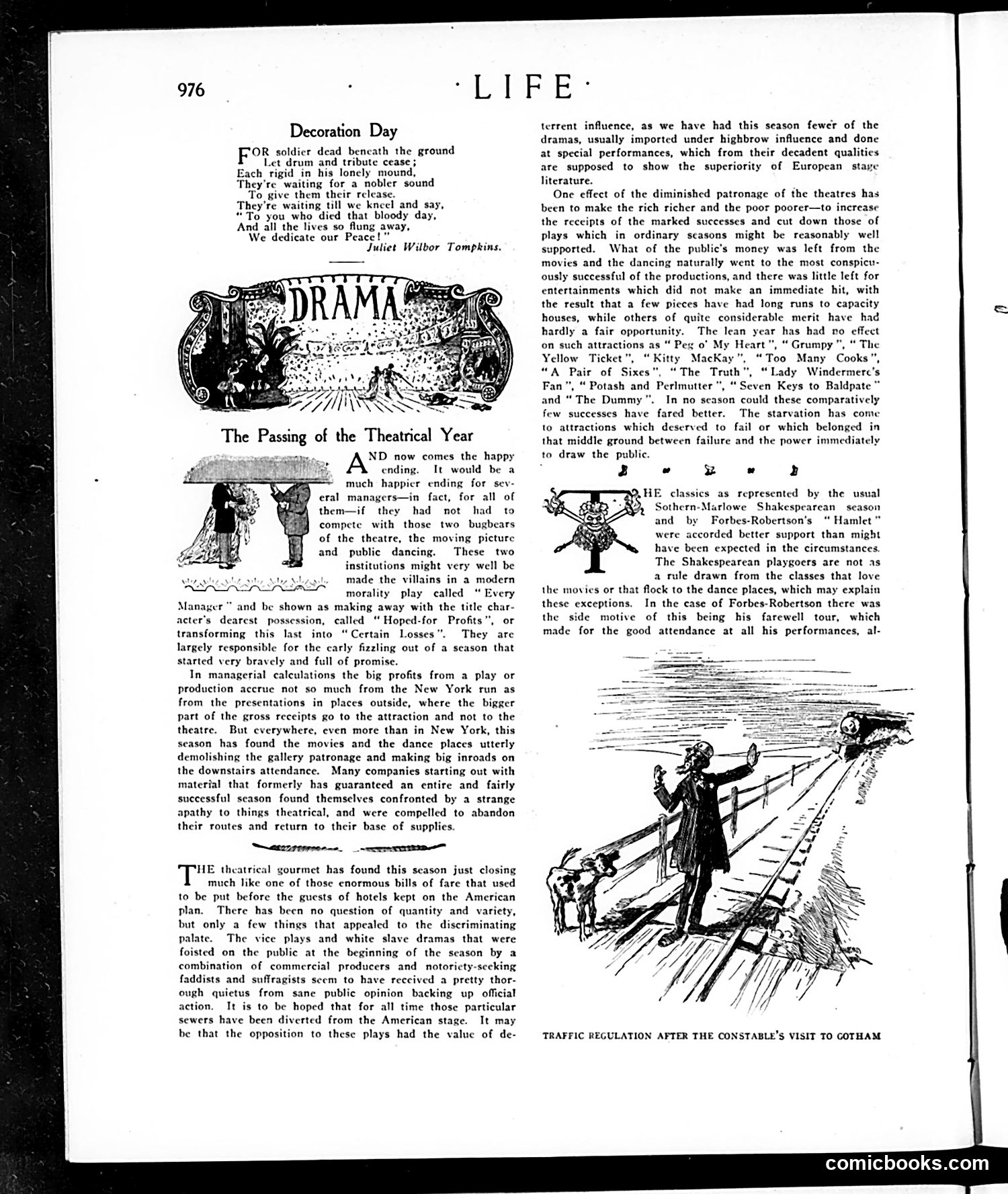
This page from Life magazine discusses the theatrical season's decline, blaming two modern rivals: **moving pictures (cinema) and public dancing venues**. The text presents these as villains in a "morality play" destroying theater managers' profits—particularly in touring circuits outside New York, where theaters relied on box office revenue. The article notes that successful shows like "Peg o' My Heart" and "Grumpy" thrived while others struggled, as audiences abandoned live theater for cheaper movie houses and dance halls. The writer laments that "vice plays" and European avant-garde dramas received less patronage, viewing this as a silver lining. The bottom illustration, "Traffic Regulation After the Constable's Visit to Gotham," appears to be a separate satirical drawing about urban management, though its specific reference is unclear. The **Decoration Day poem** at top honors war dead—likely referencing recent WWI veterans—calling for peace as their true memorial.
📄 Transcribed text from this page (OCR, searchable)
Machine-transcribed from the original scan — historical spelling and the odd misread are preserved.
a a) Decoration Day FFOR soldicr dead beneath the ground Let drum and tribute cease; Each rigid in his lonely mound, They're waiting for a nobler sound To give them their release. They're waiting till we kneel and say, “To you who died that bloody day, And all the lives so flung away, We dedicate our Peace!" Juliet Wilbor Tompkins. The Passing of the Theatrical Year ND now comes the happy ending. It would be a much happicr ending for sev- eral managers—in fact, for all of them—if they had not had to compete with those two bugbears of the theatre, the moving picture and public dancing. These two institutions might very well be made the villains in a modern morality play called “ Every Manager “ and be shown as making away with the title char- acter’s dearest possession, called ‘ Hoped-for Profits", or transforming this last into “Certain Losses They are largely responsible for the carly fizzling out of a season that started very bravely and full of promise. In managerial calculations the big profits from a play or production accrue not so much from the New York run as from the presentations in places outside, where the bigger part of the gross receipts go to the attraction and not to the theatre. But everywhere, even more than in New York, this season has found the movies and the dance places utterly demolishing the gallery patronage and making big inroads on the downstairs attendance. Many companies starting out with material that formerly has guaranteed an entire and fairly successful season found themselves confronted by a strange apathy to things theatrical, and were compelled to abandon their routes and return to their base of supplies. enectiirresne _-cormeee HE theatrical gourmet has found this season just closing much like one of those cnormous bills of fare that used to be put before the guests of hotels kept on the American plan. There has been no question of quantity and variety, but only a few things that appealed to the discriminating palate. The vice plays and white slave dramas that were foisted on the public at the beginning of the season by a combination of commercial producers and_notoricty-secking faddists and suffragists scem to have received a pretty thor- ough quictus from sane public opinion backing up official action. It is to be hoped that for all time those particular sewers have been diverted from the American stage. It may be that the opposition to these plays had the valuc of de- terrent influence, as we have had this season fewer of the dramas, usually imported under highbrow influence and done at special performances, which from their decadent qualitics are supposed to show the superiority of European staye literature. One effect of the diminished patronage of the theatres has been to make the rich richer and the poor poorer—to increase the receipts of the marked successes and cut down those of plays which in ordinary seasons might be reasonably well supported. What of the public's money was left from the movies and the dancing naturally went to the most conspicu- ously successful of the productions, and there was little left for entertainments which did not make an immediate hit, with the result that a few pieces have had long runs to capacity houses, while others of quite considerable merit have had hardly a fair opportunit: The lean year has had ro effect on such attractions “Peg o' My Heart”, “ Grumpy”, “ The Yellow Ticket”, “Kitty MacKay”, “Too Many Cooks”, “A Pair of Sixes", “The Truth”, “Lady Windermerc’s Fan", “ Potash and Perlmutter”, “ Seven Keys to Baldpate “ and “The Dummy”. In no season could these comparatively few successes have fared better. The starvation has come to attractions which deserved to fail or which belonged in that middle ground between failure and the power immediately to draw the public. o B « 2 HE classics as represented by the usual Sothern-Marlowe Shakespearean season and by Forbes-Robertson’s “ Hamlet ” were accorded better support than might have been expected in the circumstances. The Shakespearean playgoers are not as a rule drawn from the classes that love the movies or that flock to the dance places, which may explain these exceptions. In the case of Forbes-Robertson there was the side motive of this being his farewell tour, which made for the good attendance at all his performances, al- TRAFFIC REGULATION AFTER THE CONSTABLE’S VISIT TO GOTHAM. comicbooks.com