
Life, 1914-05-14 · page 24 of 44
Life — May 14, 1914 — page 24: what you’re looking at
What you’re looking at
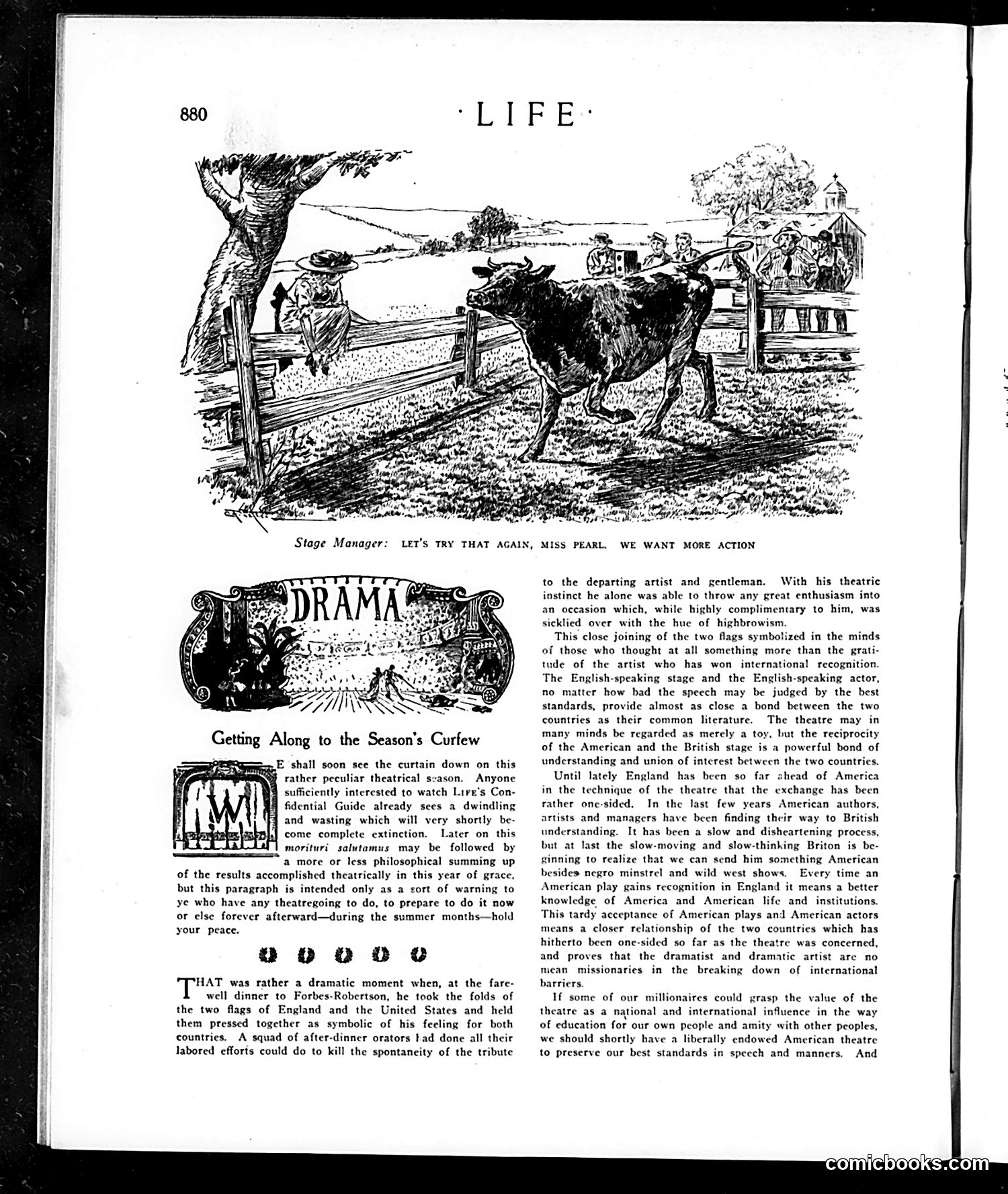
The cartoon depicts a theatrical stage manager demanding "more action" from actors performing a rural scene with a cow. The accompanying article celebrates actor Johnston Forbes-Robertson's farewell dinner, where he symbolically held together British and American flags. The satire criticizes the theatrical establishment: the stage manager represents producers demanding sensationalism over substance. Meanwhile, the serious article argues that theatre serves as genuine cultural diplomacy between nations. Forbes-Robertson's spontaneous gesture supposedly outshone stiff formal speeches—illustrating how authentic artistry transcends pretension. The broader point: American theatre was gaining respect abroad (previously dismissed as mere "wild west shows"), strengthening Anglo-American relations through shared dramatic culture. The author advocates wealthy Americans should fund national theatre to maintain speech standards and international goodwill. The contrast between the frivolous cartoon demand and the weighty cultural argument underscores Life's satirical editorial voice on theatrical and national concerns.
📄 Transcribed text from this page (OCR, searchable)
Machine-transcribed from the original scan — historical spelling and the odd misread are preserved.
Stage Manager: Let's TRY THAT AGAIN, Getting Along to the Season's Curfew E shall soon sce the curtain down on this rather peculiar theatrical s:ason. Anyone sufficiently interested to watch Live's Con- fidential Guide already sees a dwindling and wasting which will very shortly be- come complete extinction. Later on this morituri salutamus may be followed by a more or less philosophical summing up of the results accomplished theatrically in this year of grace, but this paragraph is intended only as a sort of warning to ye who have any theatregoing to do, to prepare to do it now or else forever afterward—during the summer months—hold your peace, ®@ 02 08 D0 @ 'HAT was rather a dramatic moment when, at the fare- well dinner to Forbes-Robertson, he took the folds of the two flags of England and the United States and held them pressed together as symbolic of his feeling for both countries. A squad of after-dinner orators tad done all their labored efforts could do to kill the spontaneity of the tribute MISS PEARL, WE WANT MORE ACTION to the departing artist and gentleman. With his theatric instinct he alone was able to throw any great enthusiasm into an occasion which, while highly complimentary to him, was sicklied over with the hue of highbrowism. This close joining of the two flags symbolized in the minds of those who thought at all something more than the grati- tude of the artist who has won international recognition. The English-speaking stage and the English-speaking actor, no matter how bad the speech may be judged by the best standards, provide almost as close a bond between the two countries as their common literature. The theatre may in many minds be regarded as merely a toy, but the reciprocity of the American and the British stage is a powerful bond of understanding and union of interest between the two countries. Until lately England has been so far ahead of America in the technique of the theatre that the exchange has been rather one-sided. In the last few years American authors, artists and managers have been finding their way to British understanding. It has been a slow and disheartening process, but at last the slow-moving and slow-thinking Briton is be- ginning to realize that we can send him something American besides negro minstrel and wild west shows. Every time an American play gains recognition in England it means a better knowledge of America and American life and institutions. This tardy acceptance of American plays and American actors means a closer relationship of the two countries which has hitherto been one-sided so far as the theatre was concerned, and proves that the dramatist and dramatic artist are no mean in the breaking down of international barriers. If some of our millionaires could grasp the value of the theatre as a national and international influence in the way of education for our own people and amity with other peoples, we should shortly have a liberally endowed American theatre to preserve our best standards in speech and manners. And missionaries