
Life, 1914-04-02 · page 41 of 68
Life — April 2, 1914 — page 41: what you’re looking at
What you’re looking at
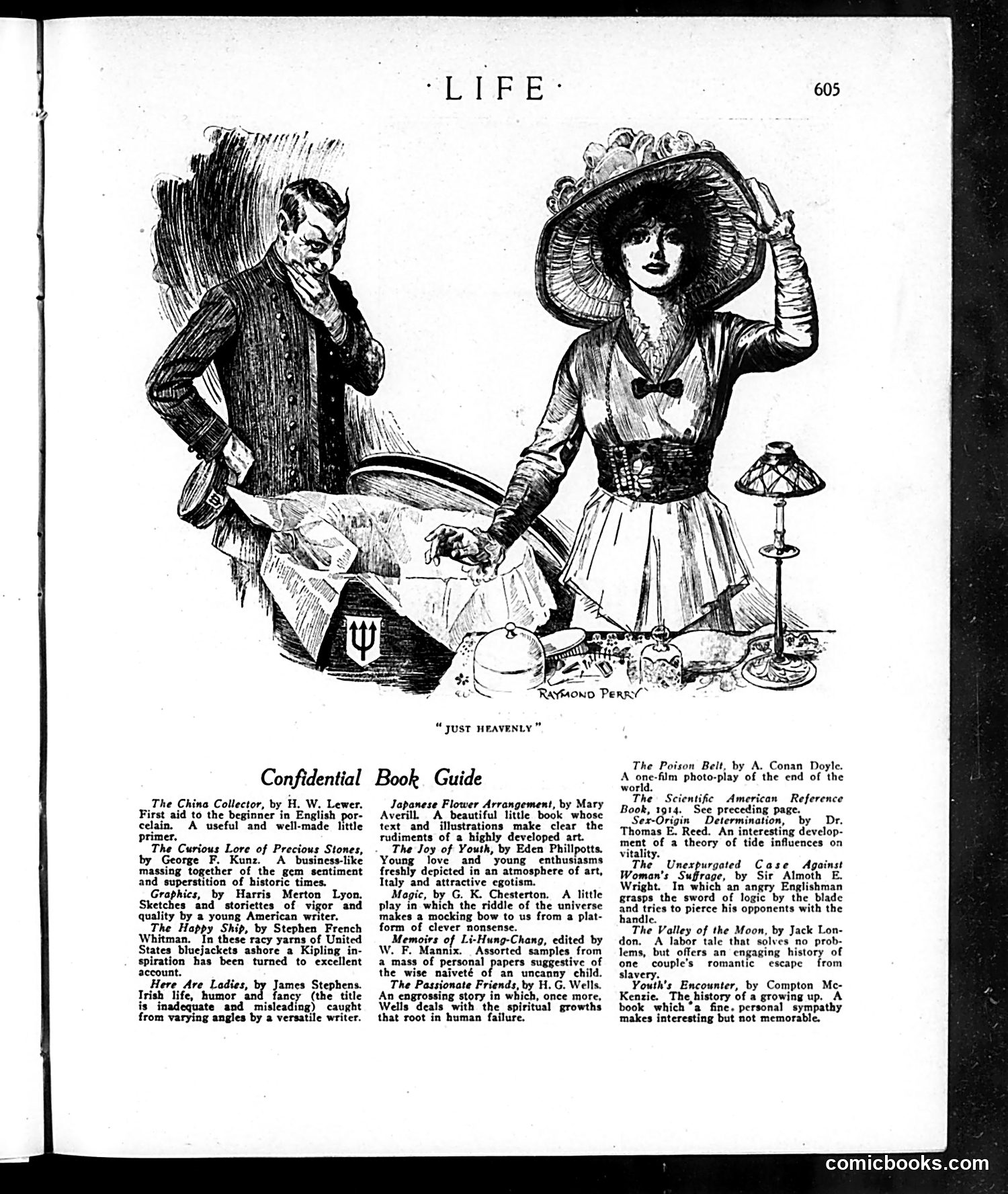
This cartoon, credited to Raymond Perry, depicts a domestic scene satirizing gender roles and marital dynamics of the early 1900s. A man stands behind a woman adjusting an enormous, elaborate hat adorned with feathers and decorations. The title "Just Heavenly" is ironic—the woman appears pleased with her extravagant headwear while the man's expression suggests bemused tolerance or resignation. The satire targets two contemporary concerns: the absurd expense and impracticality of fashionable women's hats of the Edwardian era, and the husband's role as financial provider obliged to indulge his wife's costly tastes. The cartoon pokes fun at both the exaggerated fashion standards women faced and the financial burden this placed on men—a common theme in satirical magazines of this period.
📄 Transcribed text from this page (OCR, searchable)
Machine-transcribed from the original scan — historical spelling and the odd misread are preserved.
“ JUST HEAVENLY ” Confidential Book Guide The China Collector, by. H.W. Lewer. sie aid to the beginner in English por- A useful and well-made little Pepe The Curious Lore of Precious Stones, by George F. Kunz. A_ business-like massing together of the gem sentiment and superstition of historic times. Graphics, by Harris Merton Lyon. Sketches and storiettes of vigor and quality by a young American writer. The Happy Ship, by Stephen French Whitman. In these racy yarns of United States bluejackets ashore a Kipling in- spiration has been turned to excellent account. Here Are Ladies, James Stephens. Irish life, humor and fancy (the title is inadequate and misleading) caught from varying angles by a versatile writer. Japanese Flower Arrangement, by Mary Averill. A beautiful little book whose text and illustrations make clear the rudiments of a highly developed art. The Joy of Youth, by Eden Phillpotts. Young Jove and young enthusiasms freshly depicted in an atmosphere of art, Italy and attractive egotism. Magic, by G. K. Chesterton. A little play in which the riddle of the universe makes a mocking bow to us from a plat- form of clever nonsense. Memoirs of Li-Hung-Chang, edited by W. F. Mannix. Assorted samples from a ae of personal pavers suggestive of the wise naiveté of an uncanny child. The Passionate Friends, by H.G. Wells. An engrossing story in which, once more, Wells deals with the spiritual growths that root in human failure. The Poison Belt, by A. Conan Doyle. A one-film photo-play of the end of the world. The Scientific American Reference Book, 1914. See preceding page. ‘Sex-Origin Determination, by Dr. Thomas E. Reed. An interesting develop- ment of a theory of tide influences on vitality. The Unexpurgated Case Against Woman's Suffrage, by Sir Almoth E. Wright. In which an angry Englishman grasps the sword of logic by the blade and tries to pierce his opponents with the andle. The Valley of the Moon, by Jack Lon- don. A labor tale that solves no prob- lems, but offers an engaging history of one couple's romantic escape from slavery. Youth's Encounter, by Compton Mc- Kenzie. The, history of a growing up. A book which *a fine. personal sympathy makes interesting but not memorable. comicbooks.com