
Life, 1914-02-05 · page 25 of 44
Life — February 5, 1914 — page 25: what you’re looking at
What you’re looking at
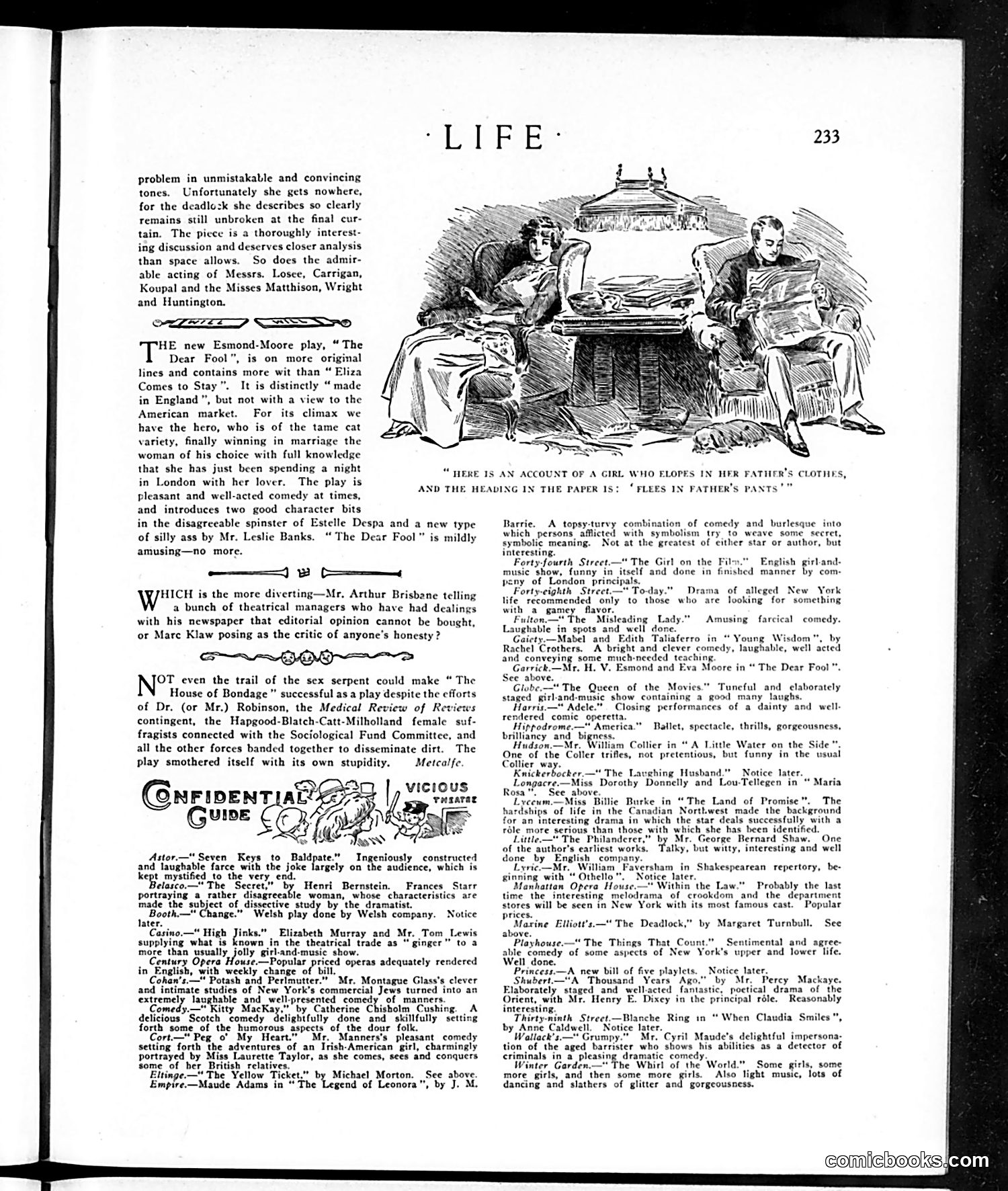
This page from *Life* magazine contains a single cartoon with an obvious visual pun. The illustration shows a girl who has eloped wearing her father's clothes, heading toward a newspaper office. The joke centers on the newspaper's headline: "FLIES IN FATHER'S PANTS." The humor relies on the double meaning of "flies"—both the verb meaning "runs away hastily" and the noun referring to the trouser opening. Modern readers would recognize this as a play on words common to early 20th-century satirical humor. The caption explicitly spells out the setup, suggesting the magazine expected readers might miss the wordplay otherwise—a telling indication of how comedy conventions have shifted over a century.
📄 Transcribed text from this page (OCR, searchable)
Machine-transcribed from the original scan — historical spelling and the odd misread are preserved.
problem in unmistakable and convincing tones. Unfortunately she gets nowhere, for the deadlozk she describes so clearly remains still unbroken at the final cur- tain. The picce is a thoroughly interest- ing discussion and deserves closer analysis than space allows. So does the admir- able acting of Messrs. Losce, Carrigan, Koupal and the Misses Mathison, Wright and Huntington. OEE SSS HE new Esmond-Moore play, “ The Dear Fool”, is on more original lines and contains more wit than “ Eliza Comes to Stay”. It is distinctly “ made in England”, but not with a view to the American market. For its climax we have the hero, who is of the tame cat variety, finally winning in marriage the woman of his choice with full knowledge that she has just been spending a night London with her lover. The play is pleasant and well-acted comedy at times, and introduces two good character bits in the disagreeable spinster of Estelle Despa and a new type of silly ass by Mr. Leslie Banks. “The Dear Fool” is mildly amusing—no more. —_—=J 2 HICH is the more diverting—Mr. Arthur Brisbane telling a bunch of theatrical managers who have had dealings with his newspaper that editorial opinion cannot be bought, or Marc Klaw posing as the critic of anyone's honesty? OT even the trail of the sex serpent could make “ The House of Bondage ” successful as a play despite the efforts of Dr. (or Mr.) Robinson, the Medical Review of Reviews contingent, the Hapgood-Blatch-Catt-Milholland female suf- fragists connected with the Sociological Fund Committee, and all the other forces banded together to disseminate dirt. The play smothered itself with its own stupidity. Metcalfe ‘G vicious vesarar Astor.—" Seven Keys to Baldpate.” Ingeniously constructed and laughable farce with the joke largely on the audience, which is kept mystified to the very end. elasco.—" The Secret," by Henri Bernstein. Frances Starr portraying a rather disagreeable woman, whose characteristics are made the subject of dissective study by ‘the dramatist. aZaoth—" Change.” Welsh play done by Welsh company. Notice ater. Casino.—" High Jinks.” Elizabeth Murray and Mr. Tom Lewis supplying what is known in the theatrical trade as “ginger” to a more than usually jolly girl-and-music show. _ Century Opera House.—Popular priced operas adequately rendered in English, with weekly change of bill, Cohan’ Potash and Perlmutter.” |Mr. Montague Glass’s clever ard intimate studies of New York's commercial Jews turned into an extremely laughable and well-presented comedy of manners. Comedy.—" Kitty MacKay.” by, Catherine Chisholm Cushing. A delicious Scotch comedy delightfully done and skillfully setting forth some of the humorous aspects of the dour folk. Cort.—" Peg o' My Heart.” Mr. Manners’s pleasant comedy setting forth the adventures of an Irish-American girl, charmingly portrayed by Miss Laurette Taylor, as she comes, sees and conquers some of her, British relatives. Eltinge.—" The Yellow Ticket.” by Michael Morton. See above. Empire—Maude Adams in “The Legend of Leonora”, by J. M. “HERE IS AN ACCOUNT OF A GIRL WHO ELOPES IN HER FATHER'S CLOTHES, AND THE HEADING IN THE PAPER 1S: ‘FL! ES IN FATHER'S PANTS Barrie. A topsy-turvy combination of comedy and burlesque into which persons afflicted with symbolism try to weave some secret, symbolic meaning. Not at the greatest of either star or author, but interesting. Forty-fourth Street—" The Girl on the Fi music show, funny in itself and done in peny of London principals. Forty-eighth Street.—" To-day." Drama of alleged New York life recommended only to those who are looking for something with a gamey flavor. Fulton he Misleading Lady.” Laughable in spots and well done. Gaicty.—Mabel and Edith Taliaferro in Rachel Crothers. A bright and clever comed: and conveying some much-needed teaching. Garrick.—Mr. H. V, Esmond and Eva Moore in“ The Dear Fool See above. Globe.—* The Queen of the Movies.” Tuneful and elaborately staged girl-and-music show containing a good many laughs. Harris.—" Adele.” Closing performances of a dainty and well- rendered comic operetta Hippodrome.—" America.” brilliancy and bigness. Hudson.—Mr. William Collier in “A Little Water on the Side One of the Coiler trifles, not pretentious, but funny in the w Collier way. Knickerbocker —" The Lavehing Husband." Notice later. Longacre.—Miss Dorothy Donnelly and Lou-Tellegen in“ Maria Rosa". See above Lycewm.—Miss Billie Burke in “The Land of Promise”. The hardships of life in the Canadian Northwest made the background for an interesting drama in which the star deals successfully with a réle more serious than those with which she has been identified. Little—" The Philanderer,” by Mr. George Bernard Shaw. “One of the author's earliest works. Talky, but witty, interesting and well done by English company. Lyrie,—Mr., William, Faversham in Shakespearean repertory, be- ginning with “Othello”. Notice later. Manhattan Opera House.—" Within the Law." Probably the last time the interesting melodrama of crookdom and the department stores will be seen in New York with its most famous cast. Popular prices. Marine Elliot's —" The Deadlock,” by Margaret Turnbull. See above. Playhouse.—" The That Count." Sentimental and agree- able comedy of some aspects of New York's upper and lower life. Well done. Princess—A new bill of five playlets. | Notice later. Shubert—"A Thousand Years Ago.” by Mr. Percy Mackaye. Elaborately staged and well-acted fantastic, poetical drama of the Orient, with Mr. Henry E. Dixey in the principal réle, Reasonably interesting. Thirty-ninth Street,—Blanche Ring in “ When Claudia Smiles”, by Anne Caldwell. Notice later. : Wallack’s.—" Grumpy." Mr. Cyril Maude's delightful impersona- tion of the aged barrister who shows his abilities as a detector of criminals in a pleasing dramatic comedy, Winter Garden.—" The Whirl of the World.” Some girls, some more girls, and then some more girls. Also light music, lots of dancing and slathers of glitter and gorgeousness. English girland- ed manner by com Amusing farcical comedy. Young Wisdom", by laughable, well acted Ballet, spectacle, thrills, gorgeousness,