
Life, 1913-09-18 · page 21 of 44
Life — September 18, 1913 — page 21: what you’re looking at
What you’re looking at
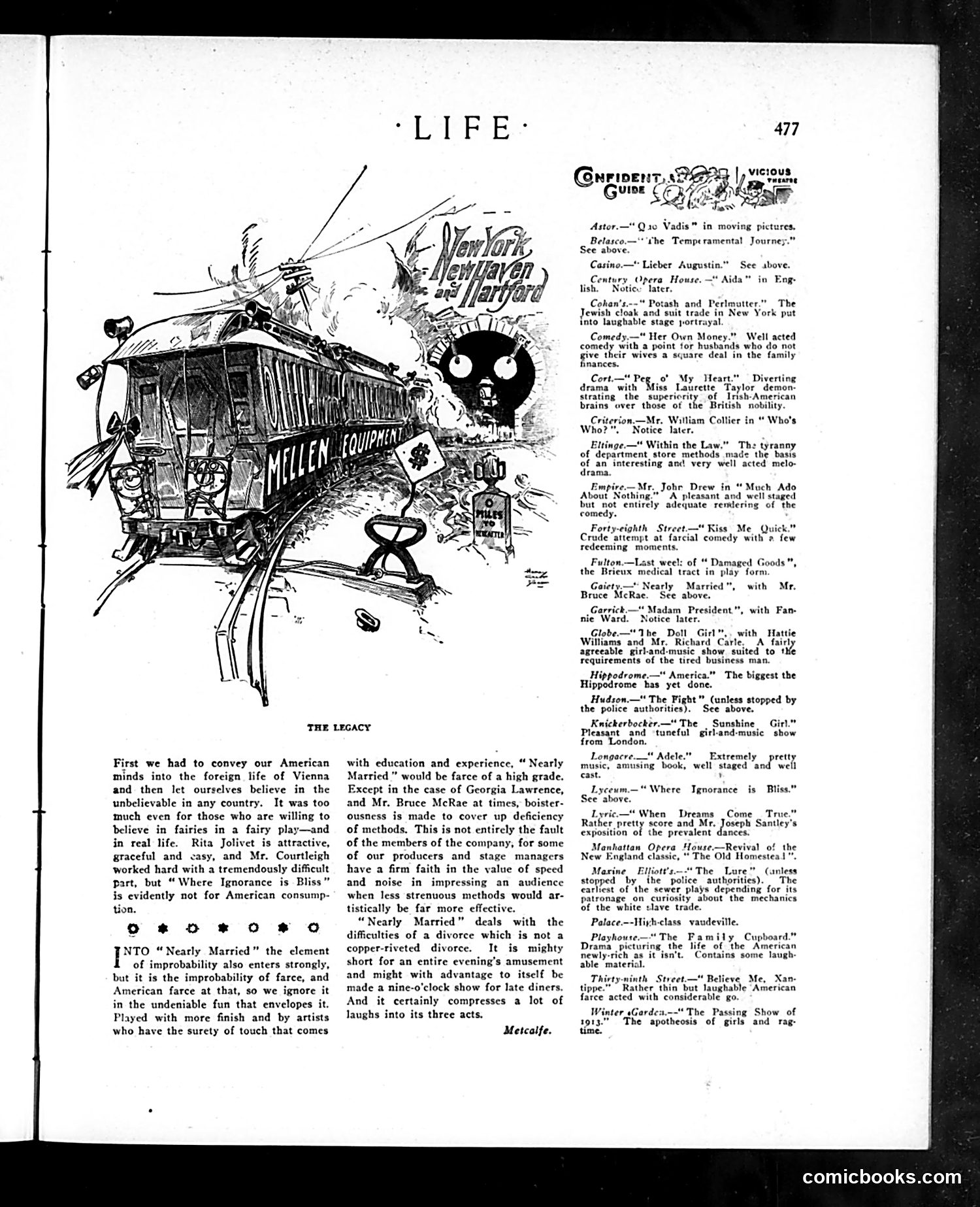
This page reviews theatrical productions on Broadway, circa 1910s. The prominent cartoon depicts a derailed "Millen Equipment" train—a visual metaphor for the failure of the play "Where Ignorance is Bliss," which the reviewer (Metcalfe) critiques severely. **Key points:** The review argues that American audiences cannot suspend disbelief for European-set stories like this Viennese drama, finding it implausible. By contrast, American farces—even improbable ones—work because audiences accept their conventions. "Nearly Married," a farce about divorce complications, succeeds through American humor despite weak acting and excessive noise covering poor technique. The reviewer suggests it's too short for a full evening and would work better as a late-dinner show. The cartoon's train wreck visualizes the play's commercial and artistic collision. The reviews throughout reflect early 20th-century theatrical standards: plot coherence, adequate acting, and appropriate venue-matching matter more than spectacle.
📄 Transcribed text from this page (OCR, searchable)
Machine-transcribed from the original scan — historical spelling and the odd misread are preserved.
THE LEGACY First we had to convey our American minds into the foreign life of Vienna and then let ourselves believe in the unbelievable in any country. It was too much even for those who are willing to believe in fairies in a fairy play—and in real life. Rita Jolivet is attractiv graceful and casy, and Mr. Courtleigh worked hard with a tremendously difficul part, but “Where Ignorance is Bliss is evidently not for American consump- tion. o* D> ® 0 # 0 NTO “Nearly Married” the element of improbability also enters strongly, but it is the improbability of farce, and American farce at that, so we ignore it in the undeniable fun that envelopes it. Played with more finish and by artists who have the surety of touch that comes with education and experience, “ Nearly Married " would be farce of a high grade. Except in the case of Georgia Lawrence, and Mr. Bruce McRae at times, boister- ousness is made to cover up deficiency of methods. This is not entirely the fault of the members of the company, for some of our producers and stage managers have a firm faith in the value of speed and noise in impressing an audience when less strenuous methods would ar- tistically be far more effective. Nearly Married” deals with the difficulties of a divorce which is not a copper-riveted divorce. It is mighty short for an entire evening’s amusement and might with advantage to itself be made a nine-o’clock show for late diners. And it certainly compresses a lot of laughs into its three acts. Metcalfe. 477 vicious Creer alee ea a Astor.—" Qo Vadis" in moving pictures, Belasco.—"'the Temperamental Journey. See above. Casino.—" Lieber Augustin.” See above. Century Opera House. —" Aida” in Engy lish. Noticc’ later. Cohan’s.-- Potash and. Perlmutter.” The Jewish cloak and suit trade in New York put into laughable stage portrayal. Comedy.—" Her Own Money.” Well acted comedy with a point for husbands who do not give their wives a square deal in the family finances. Cort —" Peg ot My Heart." | Diverting drama with Miss Laurette Taylor demon- strating the superiority of Irish-American brains over those of the British nobility. —Mr. William Collier in * Who's Notice later. “ Within the Law.” The tyranny of department. store methods made the basis af an interesting and! very well acted melo- drama. Empire.—Mr. Johr Drew in “Much Ado About Not! A pleasant and well staged but not entirely adequate remlering of the comedy. Forty-eighth Street.—" Kiss. Me Quick.” Crude ‘attempt at farcial comedy with few redeeming moments. Fulton.—Last weel: of “ Damaged Goods", the Brieux medical tract in play form. Goiety.— Nearly Married", with Mr. Bruce McRae. See above. Garrick. nie Ward. Notice later. Globe.—" The Doll Girl",. with Hattie Williams a: Mr. Richard Carle, A_ fairl agreeable girl-and-music show suited to 1! requirements of the tired business man. Hippodrome.—" America.” The biggest the Hippodrome bas yet done. Hudson.—" The Fight” (unless stopped by the police authorities See above. Knickerbocker—" The | Sunshine Girl.” Pleasant and ‘tuneful girl-and-music show from London. Longacre." Adele." Extremely music, amusing book, well staged ai cast. , ret: well Lyceum.—“ Where Ignorance is Bliss.” See above. Lyric —* When Dreams Rather pretty score and Mr. exposition of the prevalent Come _ True. joseph Santley’s fances. Manhattan Opera House.—Revival of the New England classic, “ The Old Homestea! Marine Elfiott’s—""The Lure” (anless stopped by the police authorities). The earliest of the sewer plays depending for its patronage on curiosity about the mechanics of the white tlave trade. Palace.--Hiyh-class vaudeville. Playhoure—"The Family Cupboard. Drama picturing the life of the American newly-rich as it isn't. Contains some laugh- able material. Thirty-ninth Street.—" Believe Me, Xan- tippe.””" Rather thin but laughable American farce acted with considerable go. Winter «Gardea.—-" The Passing Show of 1913." The apotheosis of girls and rag- time. comicbooks.com