
Life, 1913-09-04 · page 17 of 40
Life — September 4, 1913 — page 17: what you’re looking at
What you’re looking at
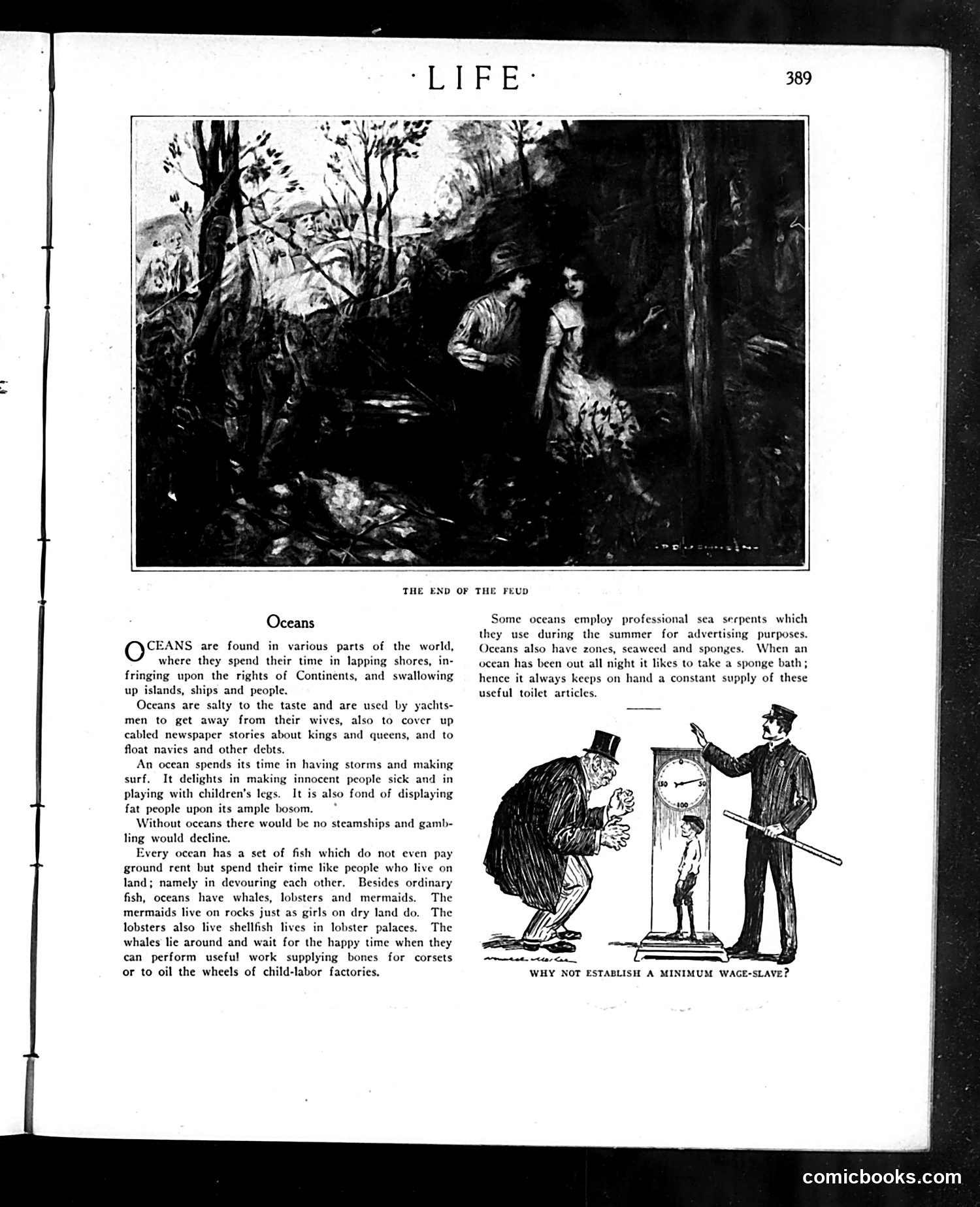
This Life magazine page contains satirical humor typical of early 20th-century American satire. The main article mockingly describes oceans and their inhabitants in absurdist terms—claiming oceans "swallow up islands," that yachtsmen use them "to get away from their wives," and that they "delight in making innocent people sick." The cartoon below, captioned "Why Not Establish a Minimum Wage-Slave?", depicts a well-dressed figure (appearing to represent wealth or authority) presenting a skeletal, malnourished person to another man, suggesting the exploitation of the desperately poor. The satire critiques labor practices where impoverished workers accept subsistence wages out of desperation—essentially becoming "slaves" to minimum compensation. The juxtaposition mocks both the absurdity of nature descriptions and real social injustice regarding workers' rights and fair wages—concerns prominent in Progressive Era America (early 1900s).
📄 Transcribed text from this page (OCR, searchable)
Machine-transcribed from the original scan — historical spelling and the odd misread are preserved.
THE END OF THE FEUD Oceans CEANS are found in various parts of the world, where they spend their time in lapping shores, in- fringing upon the rights of Continents, and swallowing up islands, ships and people. Oceans are salty to the taste and are used by yachts- men to get away from their wives, also to cover up cabled newspaper stories about kings and queens, and to float navies and other debts. An ocean spends its time in having storms and making surf. It delights in making innocent people sick and in playing with children’s legs. It is also fond of displaying fat people upon its ample bosom. Without oceans there would be no steamships and gamb- ling would decline. Every ocean has a set of fish which do not even pay ground rent but spend their time like people who live on land; namely in devouring each other. Besides ordinary fish, oceans have whales, lobsters and mermaids. The mermaids live on rocks just as girls on dry land do. The lobsters also live shellfish lives in lobster palaces. The whales lie around and wait for the happy time when they can perform useful work supplying bones for corsets or to oil the wheels of child-labor factories. Some oceans employ professional sea serpents which they use during the summer for advertising purposes. Oceans also have zones, seaweed and sponges. When an ocean has been out all night it likes to take a sponge bath; hence it always keeps on hand a constant supply of these useful toilet articles. WHY NOT ESTABLISH A MINIMUM WAGE-SLAVE? comicbooks.com