
Life, 1913-04-24 · page 19 of 48
Life — April 24, 1913 — page 19: what you’re looking at
What you’re looking at
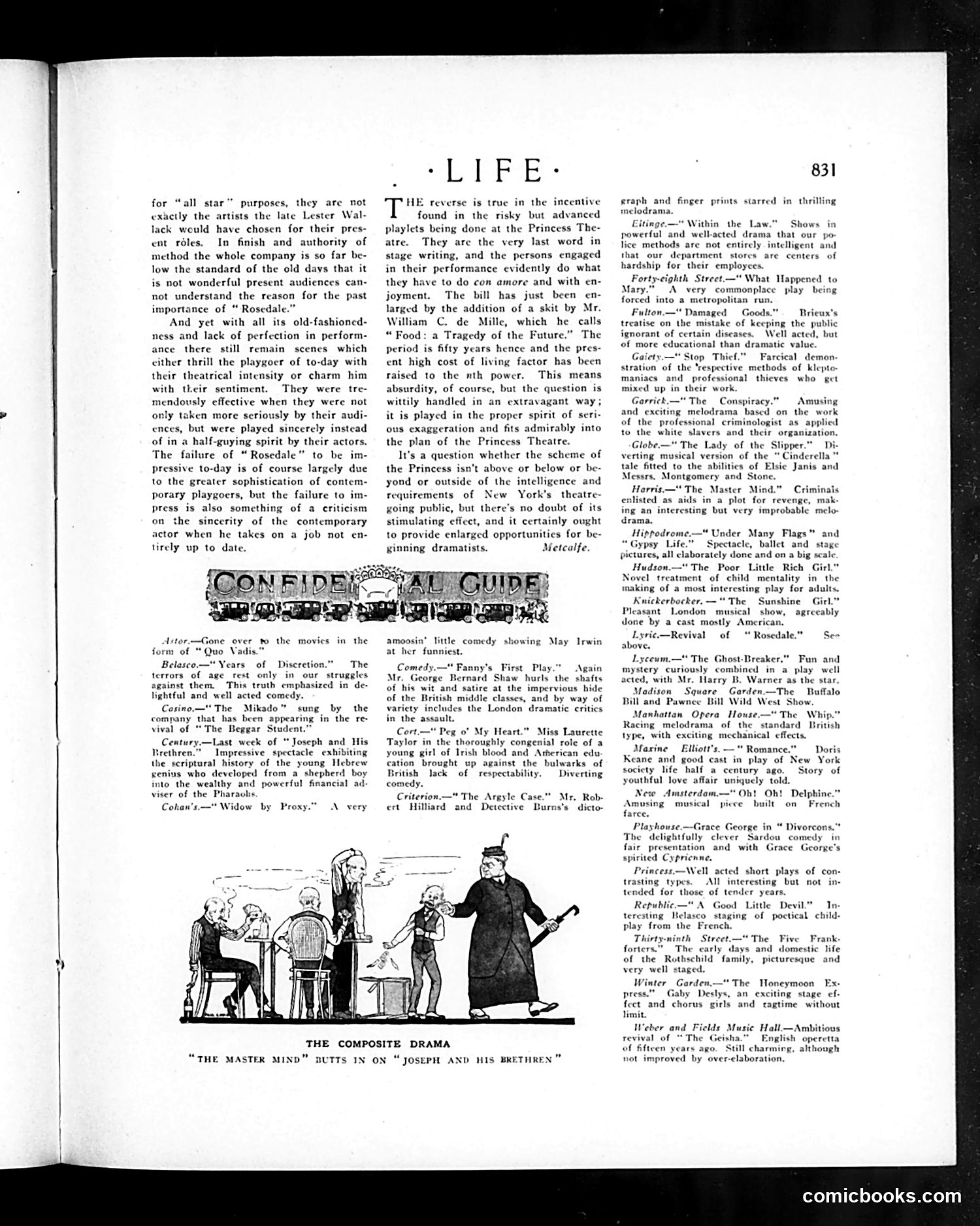
The cartoon titled "The Master Mind Butts In on Joseph and His Brethren" depicts a domestic scene where a stern-looking man in formal dress interrupts a family tableau. The image appears to satirize theatrical direction or domestic authority—likely mocking how authority figures intrude upon or disrupt staged family scenes or sentimental moments. The surrounding text reviews various theater productions, suggesting this cartoon critiques contemporary theater's loss of sincerity. The reviews repeatedly lament that modern actors perform with insufficient earnestness compared to earlier generations. The cartoon likely illustrates this point: the "master mind" figure represents overbearing direction or modern cynicism that undermines genuine emotional performance, much like how reviewers claim contemporary actors "half-gu[y]" serious scenes rather than playing them sincerely. The reference to "Joseph and His Brethren" (a biblical spectacle mentioned in the reviews) anchors the satire in theater criticism specifically.
📄 Transcribed text from this page (OCR, searchable)
Machine-transcribed from the original scan — historical spelling and the odd misread are preserved.
for “all star” purposes, they are not exactly the artists the late Lester Wal- lack would have chosen for their pres- ent réles. In finish and authority of method the whole company is so far be- low the standard of the old days that it is not wonderful present audiences can- not understand the reason for the past importance of “Rosedale.” And yet with all its old-fashioned- ness and lack of perfection in perform- ce there still remain scenes which cither thrill the playgoer of to-day with their theatrical intensity or charm him with their sentiment. They were tre- mendously effective when they were not only taken more seriously by their audi- ences, but were played sincerely instead of in a half-guying spirit by their actors. The failure of “Rosedale” to be pressive to-day is of course largely due to the greater sophistication of contem- porary playgocrs, but the failure to im- press is also something of a criticism on the sincerity of the contemporary actor when he takes on a job not en- lirely up to date. im- Gone over to the movies in the of “Quo Vadis.” Belasco.—" Years of Discretion.” The terrors of age rest only in our struggles against them. This truth emphasized in de- lightful and well acted comedy. Cosino.—" The Mikado” su company that has been appearin vival of The Beggar Student.” by the in the re- Century.—Last week of “Joseph and His Urethren.” Impressive spectacle exhibiting the scriptural history of the young Hebrew genius who developed from a. shepherd boy into the wealthy and powerful financial ad viser of the Pharaohs Cohan’s.—" Widow by Proxy.” A. very eh EME : HE reverse is true in the incentive found in the risky but advanced playlets being done at the Princess The- atre. They are the very last word in stage writing, and the persons engaged in their performance evidently do what they have to do con amore and with en- joyment. The bill has just been en- larged by the addition of a skit by Mr. William C. de Mille, which he calls “Food: a Tragedy of the Future.” The period is fifty years hence and the pres- ent high cost of living factor has been raised to the nth power. This means absurdity, of course, but the question i wittily handled in an extravagant way ; it is played in the proper spirit of seri- ous exaggeration and fits admirably into the plan of the Princess Theatre. It’s a question whether the scheme of the Princess isn’t above or below or be- yond or outside of the intelligence and requirements of New York's theatre- going public, but there’s no doubt of its stimulating effect, and it certainly ought to provide enlarged opportunities for be- ginning dramatists. amoosin’ little comedy showing May Irwin at her funniest. Comedy.—" Fanny's First Again Mr. George Bernard Shaw hurls the shafts of his wit and satire at the impervious hide of the British middle classes, and by way of variety includes the London’ dramatic critics in the assault, Cort.—" Peg o' My Heart.” Miss Laurette Taylor in the thoroughly congenial role of a young girl of Trish blood and Arherican edu cation brought up against the bulwarks of British lack of respectability. Diverting comedy. Criterion.—" The Argyle Case.” Mr. Rob- ert Hilliard and Detective Burns's dicto- THE COMPOSITE DRAMA “THE MASTER MIND” BUTTS IN ON JOSEPH AND HIS BRETHRE 831 graph and finger prints starred in thrilling melodrama. Eitinge.—* Within the Law.” powerful and wellacted drama that our po: lice methods are not entirely intelligent and that our department stores are centers of hardship for their employces. Forty-cighth Street.—" What Happened to Shows in Mary.” A very commonplace play being forced into a metropolitan run. iton.—"" Damaged Goods. Brieux’s treatise on the mistake of keeping the pub ignorant of certain diseases. Well acted, but of more educational than dramatic value. Gaiety.—" Stop Thief.” Farcical_ demon: stration of the ‘respective methods of klepto- maniacs and professional thieves who get mixed up in their work Garrick." The Conspiracy." Amusing and exciting melodrama based on the work of the professional criminologist as applied to the white slavers and their organization. Globe-—" The Lady of the Slipper.” Di- verting musical version of the “ Cinderella” tale fitted to the abilities of Elsie Janis and Messrs. Montgomery and Stone. Horris.—" The Master Mind.” Criminais isted_as aids in a plot for revenge, mak- ing an interesting but very improbable melo- drama, Hippodrome. nder Many Flags” and “ Gypsy Life.” Spectacle, ballet and stage pictures, all claborately done and on a big scale Hudson.—" The Poor Little Rich Girl Novel treatment of child mentality in th aking of a most interesting play for adults. Knickerbocker. —" The Sunshine Girl.” Pleasant London musical show, agreeably done by a cast mostly American. Lyri¢.—Revival of above, Lyceum.—" The Ghost-Breaker.” Fun and mystery curiously combined in a play well acted, with Mr. Harry B. Warner as the star Madison Square Garden.—The Buffalo Bill and Pawnee Bill Wild West Show. Manhattan Opera House.—" The Whip.” Racing melodrama of the standard British type, with exciting mechanical effects. Marine Elliott's. —" Romance.” Do: Keane and good cast in play of New Yo: society life half a century ago. S youthful love affair uniquely told. New Amsterdam.—" Oh! Oh! Delphine.” Amusing musical picce built’ on French farce. Rosedall See ory of Playhouse.—Grace George in The delightfully clever Sarde fair presentation and with spirited Cyprienne, “ Divorcons.”* Princess.—Well acted short plays of con- trasting types. All interesting but not ins tended for those of tender years, cfublic—" 8 Good Little Devil.” In teresting Helasco staging of poctical child- play from the French, Thin inth forters.” The Street.—* The Five Frank: early days and domestic life of the Rothschild family, picturesque nd very well stage Winter Garden.—" The Woneymoon Ex- press.” Gaby Deslys, an exciting stage ¢ fect and chorus girls and ragtime without limit. Weber and Fields Music Hall—Ambi revival of “The Geisha.” English operetta of fifteen years ago. Still charming, although not improved by over-elaboration. comicbooks.com