
Life, 1913-03-27 · page 29 of 60
Life — March 27, 1913 — page 29: what you’re looking at
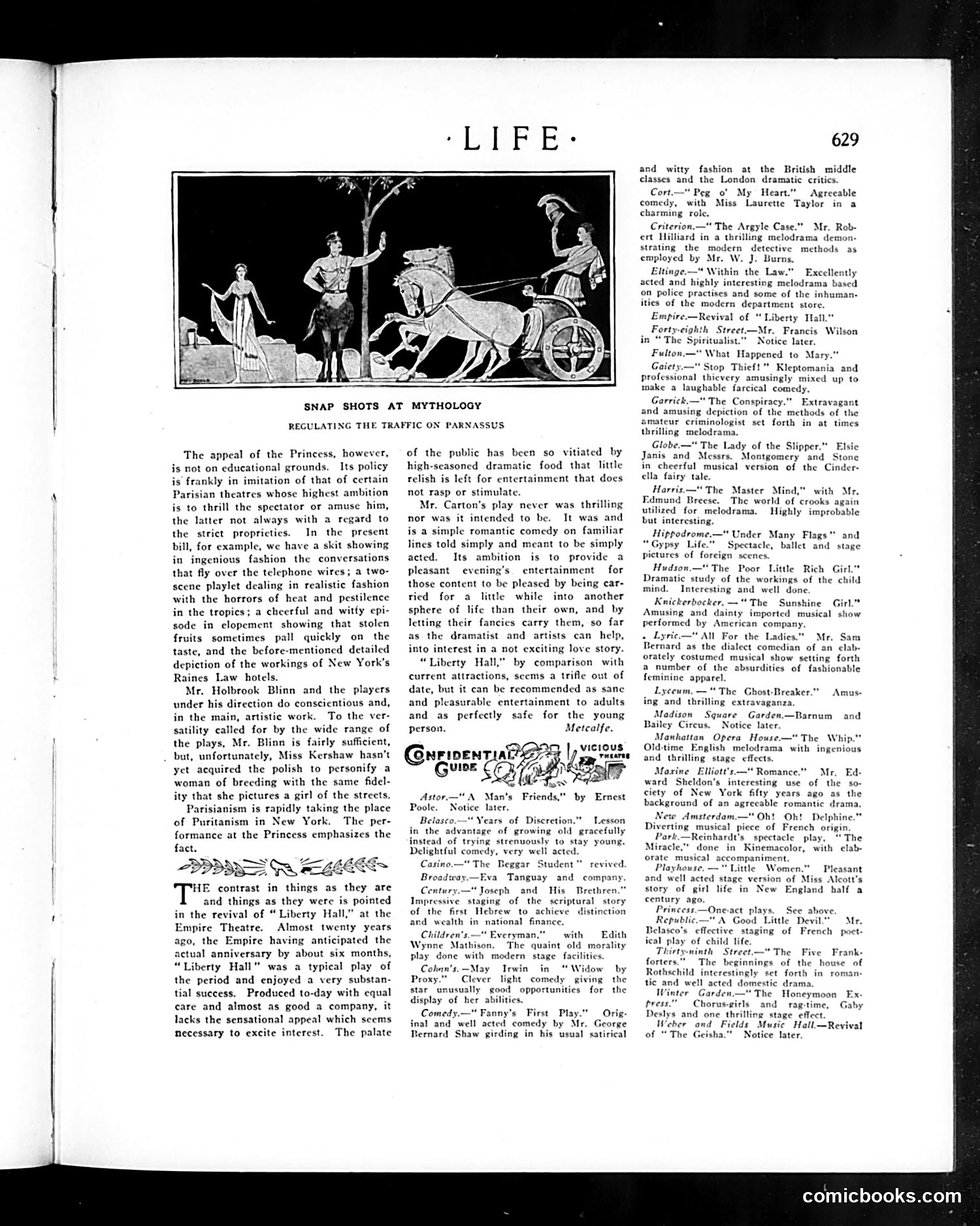
What you’re looking at
The cartoon depicts classical mythological figures (suggesting Mount Parnassus, home of the Muses) in modern contexts—likely representing theatrical productions and entertainment trends. The title suggests satire about how contemporary theater is "regulating" or reshaping classical artistic standards. The accompanying text criticizes the Princess Theatre's programming for prioritizing sensationalism over substance. The reviewer argues that New York audiences have become so accustomed to "high-seasoned dramatic food" that they've lost appetite for genteel entertainment. The piece contrasts this with the revival of "Liberty Hall"—a twenty-year-old romantic comedy now seeming quaint by comparison. The satire targets the shift from Puritan restraint toward "Parisianism"—meaning Continental decadence—in American theater, reflecting anxieties about changing cultural values and audience taste becoming corrupted by vulgar spectacle rather than elevated art.
📄 Transcribed text from this page (OCR, searchable)
Machine-transcribed from the original scan — historical spelling and the odd misread are preserved.
SNAP SHOTS AT MYTHOLOGY REGULATING THE TRAFFIC ON PARNASSUS The appeal of the Princess, however, is not on educational grounds. Its policy is frankly in imitation of that of certain Parisian theatres whose highest ambition is to thrill the spectator or amuse him, the latter not always with a regard to the strict proprictics. In the present bill, for example, we have a skit showing in ingenious fashion the conversations that fly over the telephone wires; a two- scene playlet dealing in realistic fashion with the horrors of heat and pestilence in the tropics; a cheerful and witty epi- sode in eclopement showing that stolen fruits sometimes pall quickly on the taste, and the before-mentioned detailed depiction of the workings of New York's Raines Law hotels. Mr. Holbrook Blinn and the players under his direction do conscientious and, in the main, artistic work. To the ver- satility called for by the wide range of the plays, Mr. Blinn is fairly sufficient, but, unfortunately, Miss Kershaw hasn't yet acquired the polish to personify a woman of breeding with the same fidel- ity that she pictures a girl of the strects. Parisianism is rapidly taking the place of Puritanism in New York. The per- formance at the Princess emphasizes the fact. APPDIBS REBKKS ‘HE contrast in things as they are and things as they were is pointed in the revival of “Liberty Hall,” at the Empire Theatre. Almost twenty years ago, the Empire having anticipated the actual anniversary by about six months, “Liberty Hall” was a typical play of the period and enjoyed a very substan- tial success. Produced to-day with equal care and almost as good a company, it lacks the sensational appeal which seems necessary to excite interest. The palate of the public has been so vitiated by high-seasoned dramatic food that little relish is left for entertainment that does not rasp or stimulate. Mr. Carton’s play never was thrilling nor was it intended to be. It was and is a simple romantic comedy on familiar lines told simply and meant to be simply acted. Its ambition is to provide a pleasant evening’s entertainment for those content to be pleased by being car- ried for a little while into another sphere of life than their own, and by letting their fancies carry them, so far as the dramatist and artists can help, into interest in a not exciting love story. “Liberty Hall,” by comparison with current attractions, scems a trifle out of date, but it can be recommended as sane and pleasurable entertainment to adults and as perfectly safe for the young person. Metcalfe. vicious Greer ee ie a Astor —"‘A Man's Friends," by Ernest Poole. Notice later. Belasco.—" Years of Discreti Lesson in the advantage of growing old gracefully instead of trying strenuously to stay young. Delightful comedy, very well acted. Casino.—" The Beggar Student” revived Broadway.—Ewa Tanguay and company Contury.—" Joseph and His Brethren.” Impressive staging of the scriptural story of the first Hebrew to achieve distinction and wealth in national finance, Children’s.—" Everyman,” with Edith Wynne Mathison. The quaint old morality play done with modern stage facilities. Cohan's.—May Irwin in “Widow by Proxy.” Clever light comedy giving the star unusually good opportunities for the display of her abilities, Comedy.—" Fanny's First. Play.” Orig- inal and well acted comedy by Mr. George Rernard Shaw girding in his usual satirical 629 the British middle London dramatic critics. Cort.—" Peg ot My Heart.” Agreeable comedy, with Miss Laurette Taylor in a charming role. Criterion.—" The Argyle Case.” Mr. Rob- ert Hilliard in a thrilling melodrama demon- strating the modern detective methods as employed by Mr. W. J. Burns, Eltinge,—" Within the Law.” Excellently acted and highly interesting melodrama based ‘on police practises and some of the inhuman- ities of the modern department store, Empire.—Revival of “ Liberty Hall.” Forty-eighth Street—Mr. Francis W in “ The Spiritualist.” Notice later. Fulton.— What Happened to Mar: Goiety,—" Stop Thief!" Kleptomania and professional thievery amusingly mixed up to make a laughable farcical comedy. Garrick.—" The Conspiracy.” Extravagan! and amusing depiction of the methods of the amateur criminologist set forth in at ti thrilling melodrama. Globe-— The Lady of the Slipper.” Elsi Janis and Messrs. Montgomery and Stone in cheerful musical version of the C ella fairy tale, Harris.— The Master Mind,” with Mr. Edmund Breese. The world of crooks again utilized for melodrama. Highly improbable but interesting. Hippodrome.—" Under Many Flags" and “Gypsy Life.” Spectacle, ballet and stage pictures of foreign scenes Hudson.—" The Poor Little Rich Girl." Dramatic study of the workings of the child mind. Interesting and well done. Knickerbocker. “The Sunshine Girl." Amusing and dainty imported musical show performed by American company, + Lyri¢.—" All For the Ladies." Mr. S Bernard as the dialect come orately costumed a number of th feminine apparel. Lyceum, —" The Ghost-Breaker.”” Amus- ing and thrilling extravaga Madison Square Garden.—Barnum and Bailey Circus. Notice later. Manhattan Opera House-—“ The Whip.” Old-time lish melodrama with ingenious and thrilling stage effects. Maxine Elliott's — Romance.” Mr, Ed- ward Sheldon’s interesting use of the so- ciety of New York fifty years ago as the background of an agreeable romantic drama New Amsterdam.—"“ Oh! Oh! Delphine.” Diverting musical piece of French origin Park.—Reinhardt’s spectacle play, “ The Miracle," done in Kinemacolor, with elab- orate musical accompani Playhouse. —“ Little W and well acted stage versio story of girl life in New century ago. Princess.—One-act plays. See above. Republic.—" A Good Little Devil." Mr. lasco’s effective wing of French poet- al play of child life. Thirty-ninth Street.—“ The Five Frank: forters.” The beginnings of the house of Rothschild interestingly set forth in roman. tic and well acted domestic drama. Winter Garden—" The Honeymoon Ex- tress.” Chorus-girls and rag-time, Gaby Deslys and one thrilling stage effect. Weber Fields: Music Hall.—Revival of “The Geisha.” Notice later. and witty fashion at classes and th ma jan of an elab- nusical show setting forth surdities of fashionable omen.” Pleasant of Miss Alcott’s England half a comicbooks.com