
Life, 1913-02-20 · page 23 of 48
Life — February 20, 1913 — page 23: what you’re looking at
What you’re looking at
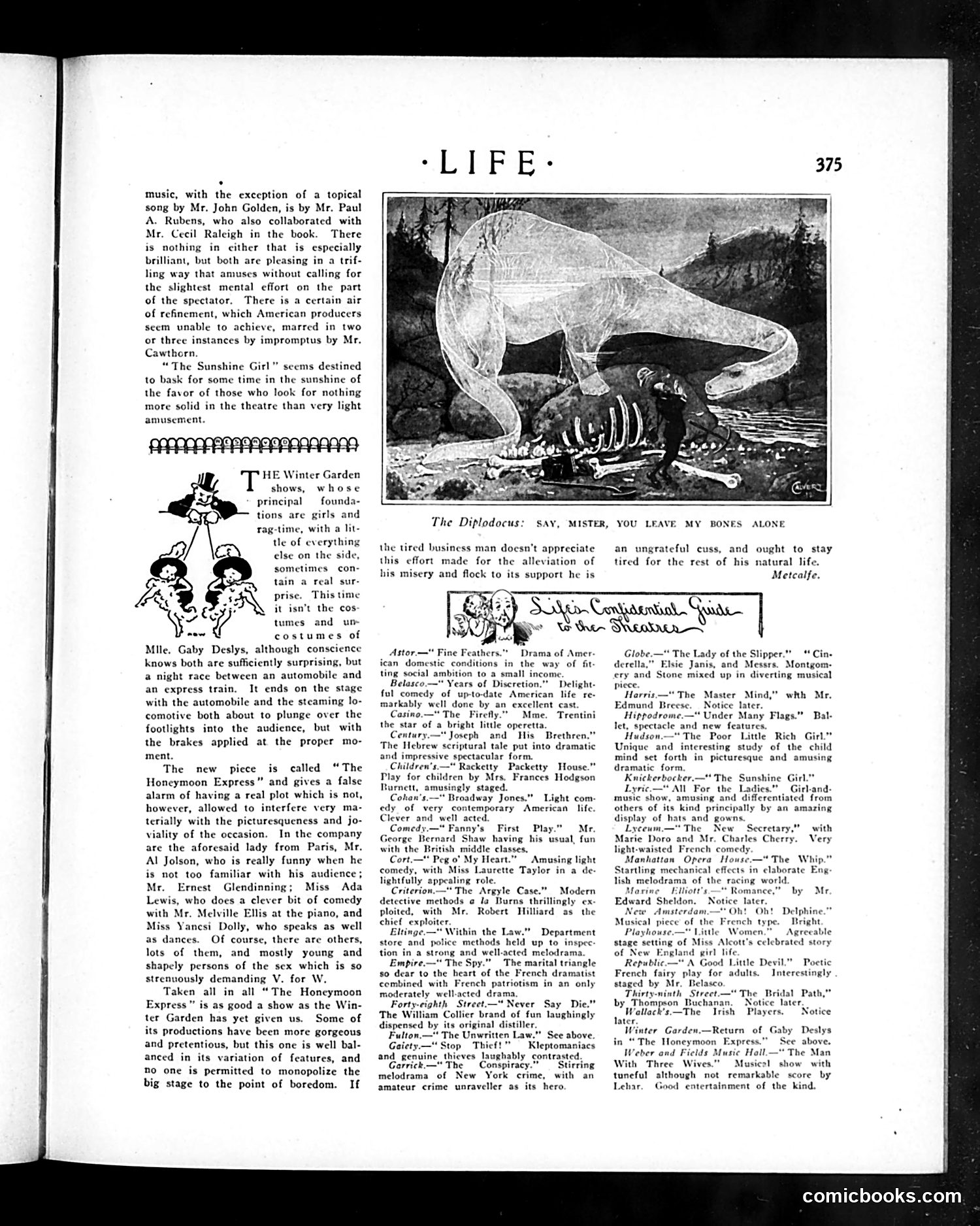
This page features a theatrical review with a cartoon showing a dinosaur skeleton (labeled "The Diplodocus") speaking to a man. The dinosaur says, "Say, Mister, you leave my bones alone"—an ungrateful complaint, the text notes, as the tired businessman should appreciate efforts made for his entertainment and support the theater. The joke is a visual pun: the dinosaur represents something ancient and extinct, metaphorically comparing the theatrical productions discussed (described as light amusement without substance) to fossils. The cartoon satirizes how audiences take entertainment for granted, while also gently mocking the "tired business man"—a stock figure of the era—who sought escapist theater. The dinosaur humorously demands respect for providing distraction, though it's literally dead and buried.
📄 Transcribed text from this page (OCR, searchable)
Machine-transcribed from the original scan — historical spelling and the odd misread are preserved.
music, with the exception of a topical song by Mr. John Golden, is by Mr. Paul A. Rubens, who also collaborated with Mr. Cecil Raleigh in the book. There is nothing in either that is especially brilliant, but both are pleasing in a trif- ling way that amuses without calling for htest’ mental effort on the part of the spectator. There is a certain air of refinement, which American producers seem unable to achieve, marred in two or three instances by impromptus by Mr. Cawthorn. “The Sunshine Girl” scems destined to bask for some time in the sunshine of the favor of those who look for nothing more solid in the theatre than very light amusement. ROBES PARA AAA AS T HE Winter Garden shows, whose principal founda- tions are girls and rag-time, with a lit- tle of everything else on the side, sometimes con- tain a real sur- prise. This time it isn’t the cos tumes and un costumes of / co ae Mile, Gaby Deslys, although conscience knows both are sufficiently surprising, but a night race between an automobile and an express train. It ends on the stage with the automobile and the steaming lo- comotive both about to plunge over the footlights into the audience, but with the brakes applied at the proper mo- ment. The new piece is called “The Honeymoon Express” and gives a false alarm of having a real plot which is not, however, allowed to interfere very ma- terially with the picturesqueness and jo- viality of the occasion. In the company are the aforesaid lady from Paris, Mr. Al Jolson, who is really funny when he is not too familiar with his audience; Mr. Ernest Glendinning; Miss Ada Lewis, who does a clever bit of comedy with Mr. Melville Ellis at the piano, and Miss Yancsi Dolly, who speaks as well as dances. Of course, there are others, lots of them, and mostly young and shapely persons of the sex which is so strenuously demanding V. for W. Taken all in all “The Honeymoon Express" is as good a show as the Win- ter Garden has yet given us. Some of its productions have been more gorgeous and pretentious, but this one is well bal- anced in its variation of features, and no one is permitted to monopolize the big stage to the point of boredom. If The Diplodocus: Say, MISTER, the tired business man doesn’t appreciate this effort made for the alleviation of his misery and flock to its support he is Astor.—" Fine Feathers." Drama of Amer- ican domestic conditions in the way of fi ting social ambition to a small income. Belasco.—" Years of Discretion.” Delight: ful comedy of up-to-date American life re- markably well done by an excellent cast. Casino.—" The Firefly.” Mme. Trentini the star of a bright little operetta, Century." Joseph and His Brethren. ‘The Hebrew scriptural tale put into dramatic and impressive spectacular form. Children's. —" Racketty Packetty Play for children by Mrs. Rurnett, amusingly staged. Cohan's.—* Broadway Jones.” edy of very contemporary Clever and well acted. Comedy.—" Fanny's First Play." Mr. George Bernard Shaw having his usual, fun with the British middle classes. Cort.—* Peg o' My Heart.” Amusing light comedy, with Miss Laurette Taylor in a de- lightfully appealing role. Criterion.—" The Argyle Case.” Modern detective methods @ Ja Burns thrillingly ex ploited, with Mr. Robert Hilliard as the chief exploi Eltinge.—" Within the Law.” Department store and police methods held up to inspec. tion in a strong and well-acted melodrama, Empire.— The Spy.” ‘The marital triangle so dear to the heart of the French dramatist combined with French patriotism in an only moderately well-acted drama, Forty-eighth Street.—" Never Say Die.” The William Collier brand of fun laughingly dispensed by its original distiller. Fulton.—" The Unwritten Law.” See above. Gaiety.—“ Stop Thief! Kleptomaniacs and genuine, thieves laughably contrasted. Garrick.—"The Conspiracy.” Stirring melodrama of New York crime, with an amateur crime unraveller as its hero. House.” Frances Hodgson Light com- American life. YOU LEAVE MY BONES ALONE an ungrateful cuss, and ought to stay tired for the rest of his natural life. Metcalfe. Globe.—" The Lady of the Slipper.” “Cin derella,” Elsie Janis, and Messrs. Montgom- ery and Stone mixed up in diverting musical piece, Harris.—" The Master Edmund Breese. Notice later. Hippodrome.—" Under Many Flags.” let, spectacle and new features. Hudson.—" The Poor Little Rich Girl.” Unique and interesting study of the child mind set forth in picturesque and amusing dramatic form. Knickerbocker.—" The Sunshine Girl.” Lyric —" All For the Ladies.” Girl-and- music show, amusing and differentiated from others of its kind principally by an amazing display of hats and gowns. Lyceum—"The New Secretary,” Marie Doro and Mr. Charles Cherr light-waisted French comedy. Manhattan Opera House—* The Whip.” Startling mechanical effects in elaborate Eng lish melodrama of the racing world. Marine Elliott's —" Romance,” by Edward Sheldon. Notice later. Ne Amsterdam.—" Oh! Ob Musical piece of the French type. Bright Playhouse.—" Little Women,” — Agreeable Stage setting of Miss Alcott’s celebrated story of New Eny id girl life Republic.—" A Good Little Devil.” Poetic French fairy play for adults. Interestingly staged by Mr. Belasco. Thirty-ninth Street—" The Bridal Path, by Thompson Buchanan. Notice later Wallack’s.—The Irish Players. later Winter Garden,—Return of Gaby Deslys in “The Honeymoon Express.” Sce above. Weber and Fields Music Hall. *The Man With Three Wives.” Musicel show with tuneful although not remarkable score by Lehar. Good entertainment of the kind. Mind,” whh Mr. Bal- Mr. Delphine.”* Notice comicbooks.com