
Life, 1913-01-30 · page 9 of 36
Life — January 30, 1913 — page 9: what you’re looking at
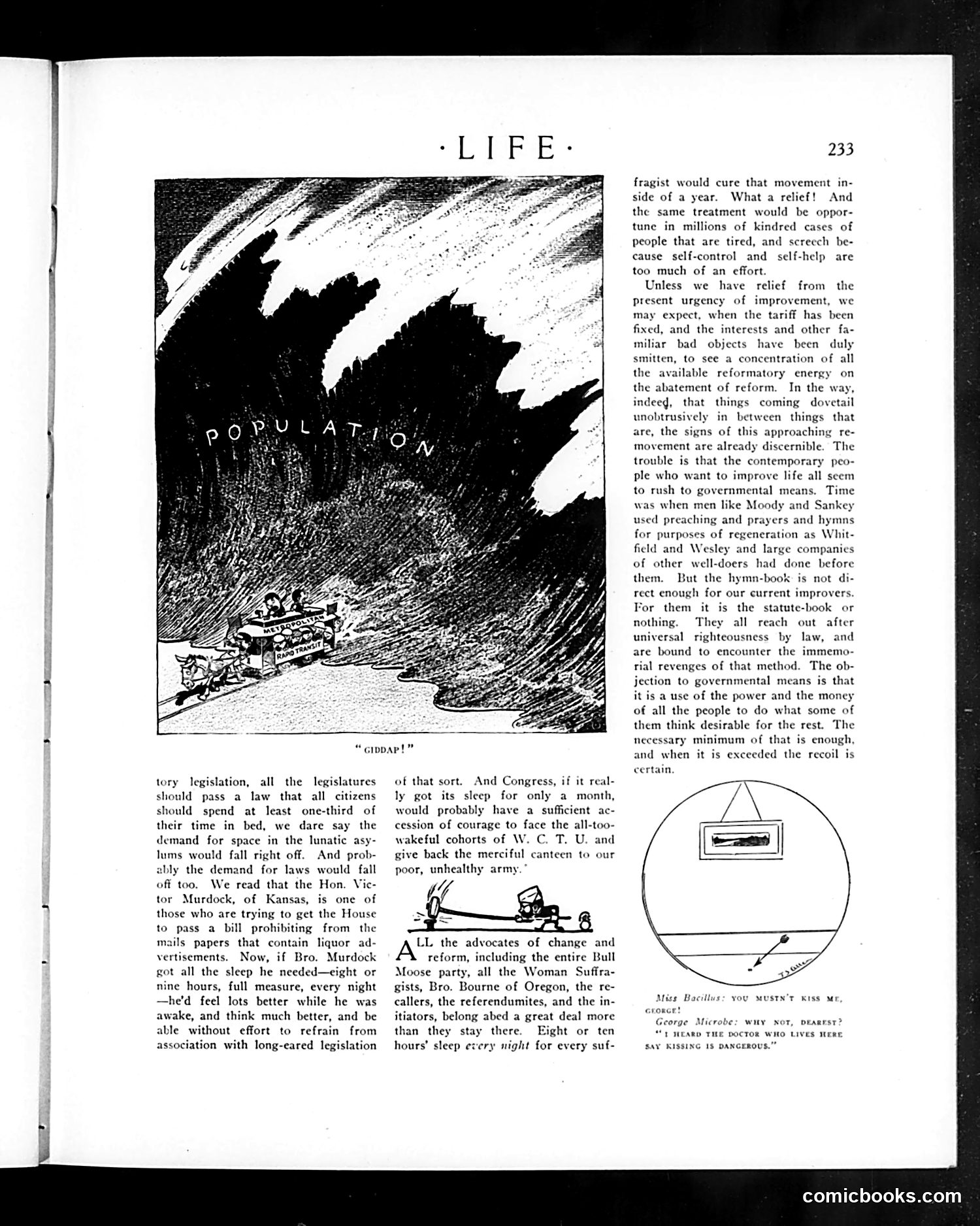
What you’re looking at
The main cartoon, titled "GIBBAP!" depicts a massive wave labeled "POPULATION" threatening tiny human figures below. The satire criticizes those advocating governmental intervention to solve social problems. The text argues that reformers—including "the Bull Moose party, all the Woman Suffragists, Bro. Bourne of Oregon, the recall advocates, and the initiators"—naively believe legislation alone can address population pressures and improve living conditions. The piece suggests their proposed governmental measures are inadequate against such overwhelming demographic forces. The small figures helplessly facing the enormous wave represent humanity's powerlessness against population growth, mocking reformers' optimism that laws and political changes can meaningfully solve systemic social problems. The cartoon expresses skepticism toward Progressive Era reform movements.
📄 Transcribed text from this page (OCR, searchable)
Machine-transcribed from the original scan — historical spelling and the odd misread are preserved.
“cippap!” tory legislation, all the legislatures should pass a law that all citizens should spend at least one-third of their time in bed, we dare say the demand for space in the lunatic asy lums would fall right off. And prob- ably the demand for laws would fall off too. We read that the Hon. Vic- tor Murdock, of Kansas, is one of those who are trying to get the House to pass a bill prohibiting from the mails papers that contain liquor ad- vertisements. Now, if Bro. Murdock got all the sleep he needed—eight or nine hours, full measure, every night —he'd feel lots better while he was awake, and think much better, and be able without effort to refrain from association with long-eared legislation of that sort. And Congress, if it real- ly got its sleep for only a month, would probably have a sufficient ac- cession of courage to face the all-too- wakeful cohorts of W. C. T. U. and give back the merciful canteen to our poor, unhealthy army.” LL the advocates of change and A reform, including the entire Bull Moose party, all the Woman Suffra- gists, Bro. Bourne of Oregon, the r callers, the referendumites, and the in- itiators, belong abed a great deal more than they stay there. Eight or ten hours’ sleep every night for every suf- 233 fragist would cure that movement in- side of a year. What a relief! And the same treatment would be oppor- tune in millions of kindred cases of people that are tired, and screech be- cause self-control and self-help are too much of an effort. Unless we have relief from the present urgency of improvement, we may expect, when the tariff has been fixed, and the interests and other fa- miliar bad objects have been duly smitten, to see a concentration of all the available reformatory energy on the abatement of reform. In the indeed, that things coming dovetail unobtrusively in between things that are, the signs of this approaching re- movement are already discernible. The trouble is that the contemporary peo- ple who want to improve life all seem to rush to governmental means. Time was when men like Moody and Sank used preaching and prayers and hymns for purposes of regeneration as Whit- field and Wesley and large companies of other well-doers had done before them. But the hymn-book is not di- rect enough for our current improvers. For them it is the statute-book or nothing. They all reach out after universal righteousness by law, and are bound to encounter the immemo- rial revenges of that method. The ob- jection to governmental means is that it is a use of the power and the money of all the people to do what some of them think desirable for the rest. The necessary minimum of that is enough, and when it is ex led the recoil is certain, Miss Bacillus croxce! MUSTN'T KISS Mr George Microbe: wuy Not, peaRrst? “1 HEARD THE pocToR WHO Lives Meee SAY KISSING 1S DANGEROUS. comicbooks.com