
Life, 1913-01-30 · page 17 of 36
Life — January 30, 1913 — page 17: what you’re looking at
What you’re looking at
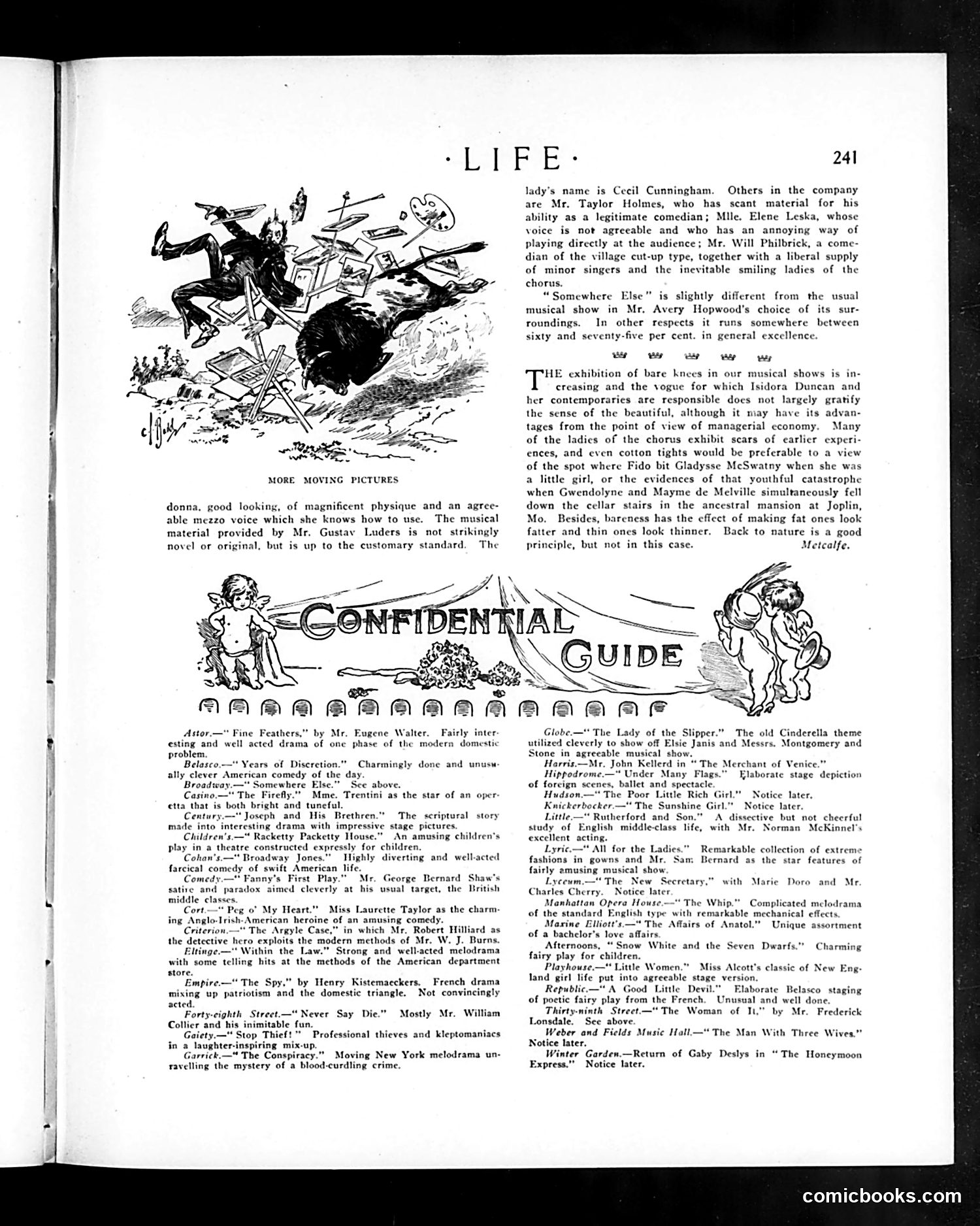
This page contains theater reviews and advertisements from Life magazine's "Confidential Guide" section. The main illustrated cartoon shows chaotic musical performance imagery—performers tumbling amid sheet music and instruments—satirizing the quality of contemporary Broadway musical productions. The text critiques several shows, particularly "Somewhere Else," praising some elements while mocking others. A notable satirical passage targets the increasing trend of female chorus performers displaying bare legs, influenced by Isadora Duncan's modern dance movement. The critic (Metcalfe) sarcastically suggests this "back to nature" approach reveals unflattering physical imperfections—scars, bruises, obesity—and argues that cotton tights would be more aesthetically preferable. This reflects early 20th-century anxieties about changing social mores and female performers' bodies becoming more visible on stage. The surrounding reviews assess various Broadway productions with mixed opinions on acting quality, material, and staging.
📄 Transcribed text from this page (OCR, searchable)
Machine-transcribed from the original scan — historical spelling and the odd misread are preserved.
as MORE MOVING PICTURES donna, good looking, of magnificent physique and an agree- able mezzo voice which she knows how to use. The musical material provided by Mr. Gustav Luders is not strikingly novel or original, but is up to the customary standard. The “LIFE: 24 lady’s name is Cecil Cunningham. Others in the company are Mr. Taylor Holmes, who has scant material for his ability as a legitimate comedian; Mlle. Elene Leska, whose voice is not agreeable and who has an annoying way of playing directly at the audience; Mr. Will Philbrick, a come- dian of the village cut-up type, together with a liberal supply of minor singers and the inevitable smiling ladies of the chorus. “Somewhere Else” is slightly different from the usual musical show in Mr, Avery Hopwood’s choice of its sur- roundings. In other respects it runs somewhere between sixty and seventy-five per cent. in general excellence. we wee HE exhibition of bare knees in our musical shows is in- creasing and the vogue for which Isidora Duncan and her contemporaries are responsible does not largely gratify the sense of the beautiful, although it may have its advan- tages from the point of view of managerial economy. Many of the ladies of the chorus exhibit scars of earlier experi- ences, and even cotton tights would be preferable to a view of the spot where Fido bit Gladysse McSwatny when she was a little girl, or the evidences of that youthful catastrophe when Gwendolyne and Mayme de Melville simultaneously fell down the cellar stairs in the ancestral mansion at Joplin, Mo. Besides, bareness has the effect of making fat ones look fatter and thin ones look thinner. Back to nature is a good principle, but not in this case. Metcalfe. Astor.—" Fine Feathers,” by Mr. Eugene Walter. Fairly inter esting and well acted drama of one phase of the modern domestic problem. Belasco.- Years of Discretion.” Charmingly done and unusw ally clever American comedy of the day. Broadway.—" Somewhere Else." See above. Casino.—" The Firefly.” Mme. Trentini as the star of an oper: etta that is both bright and tuneful. Century.—"" Joseph and His Brethren. made into interesting drama with impressive stage pictures Children’s.—" Racketty Packetty House.” An amusing children’s play in a theatre constructed expressly for children. Cohan's.—" Broadway Jones.” Highly diverting and well-acted farcical comedy of swift American life. Comedy.—" Fanny's First Play.” Mr. George Bernard Shaw's satire and paradox aimed cleverly at his usual target, the Hritish middle classes. Cort.“ Peg o’ My Heart.” Miss Laurette Taylor as the charm: ing Anglo-Irish-American heroine of an amusing comedy. Criterion.—" The Argyle Case,” in which Mr. Robert Hilliard as the detective hero exploits the modern methods of Mr. W. J. Burns. Eltinge.—" Within the Law." Strong and well-acted melodrama with some telling hits at the methods of the American department store. Empire-—" The Spy," by Henry Kistemaeckers, French drama mixing up patriotism and the domestic triangle. Not convincingly acted Forty-cighth The scriptural story Street.—" Never Say Die." Mostly Mr. William imitable fun. “Stop Thief!" Professional thieves and kleptomaniacs spiring mix-up. ‘The Conspiracy.” Moving New York melodrama un- ravelling the mystery of a blood-curdling crime. Collier and his i Gaiety, Globe.—" The Lady of the Slipper.” The old Cinderella theme utilized cleverly to show off Elsie Janis and Messrs. Montgomery and Stone in agreeable musical show. Harris.—Mr. Jobn Kellerd in The Merchant of Venice.” Hippodrome.—" Under Many Flags.” Elaborate stage depiction of forcign scenes, ballet and spectacle Hudson.—" The Poor Little Rich Girl."" Notice later. Knickerbocker—" The Sunshine Girl." Notice later. Little —" Rutherford and Son.” A dissective but not cheerful study of English middle-class life, with Mr. Norman McKinnel’s excellent acting. Lyric." All for the Ladies." Remarkable collection of extreme fashions in gowns and Mr. Sam Bernard as the star features of fairly emusing musical show Lyceum.—" The New Secretary,” with Marie Doro and Mr. Charles Cherry. Notice lat Manhattan Opera House.—-" The Whip.” Complicated melodrama of the standard English type with remarkable mechanical effects. Marine Eliiott's.—“ The Affairs of Anatol.” Unique assortment of a bachelor’s love affairs. Afternoons, “Snow White and the Seven Dwarfs.” Charming fairy play for children. Playhouse.—" Little Women.” Miss Alcott’s classic of New Eng- land girl life put into agreeable stage version, Republic.—* A Good Little Devil.” Elaborate Belasco. staging of poetic fairy play from the French. Unusual and well done. Thirty-ninth Street.—" The Woman of Ii." by Mr. Frederick Lonsdale. See above Weber and Fields Music Hall. Notice later. Winter Garden.—Return of Gaby Deslys in “The Honeymoon Express.” Notice later. “The Man With Three Wives.” comicbooks.com