
Life, 1913-01-09 · page 66 of 100
Life — January 9, 1913 — page 66: what you’re looking at
What you’re looking at
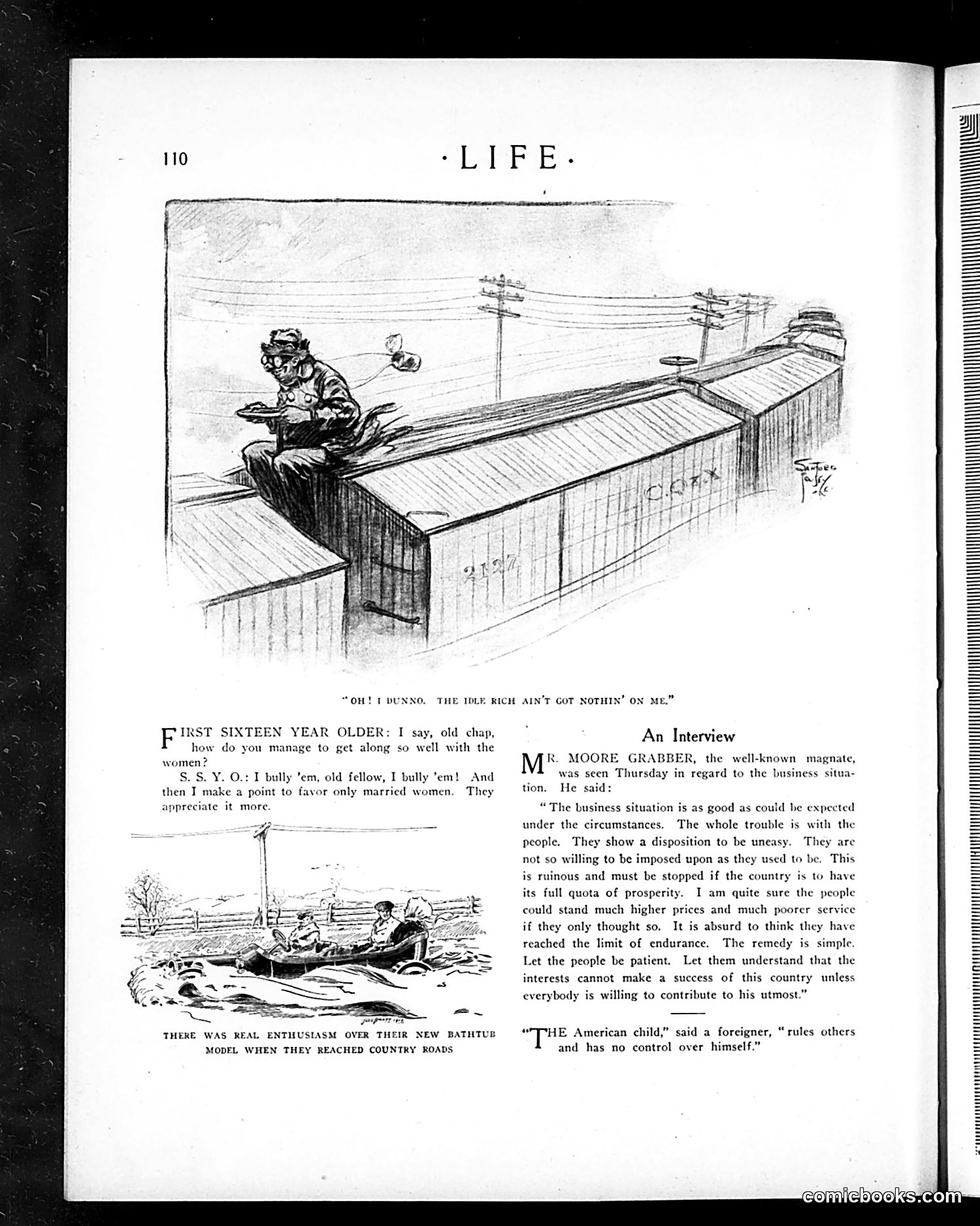
This page contains two satirical pieces critiquing American society circa the early 20th century. The top cartoon mocks working-class men's attitudes toward women, with a young man boasting he "bullies" women into compliance, particularly married women who "appreciate it more." The crude humor reflects period sexism while satirizing masculine bravado. The interview with "Moore Grabber" (a transparent pun on a greedy businessman) is sharper political satire. The magnate blames workers' uneasiness for economic troubles, arguing people should accept "higher prices and much poorer service" without complaint. He claims prosperity requires absolute worker obedience. Life magazine is mocking this robber-baron mentality—the arrogance of wealthy industrialists who view public discontent as the problem rather than their exploitation. The final foreign observation about American children—ruling others while lacking self-control—extends the critique to national character. This reflects Progressive Era anxieties about labor unrest and capitalism's excesses.
📄 Transcribed text from this page (OCR, searchable)
Machine-transcribed from the original scan — historical spelling and the odd misread are preserved.
“OH! 1 DUNNO, THE IDLE RICH AIN’T GOT NOTHIN’ ON ME.” IRST SIXTEEN YEAR OLDER: I say, old chap, how do you manage to get along so well with the women? S.S. Y. then I make a point to favor only married women. appreciate it more. O.: I bully ’em, old fellow, I bully ’em! And They THERE WAS REAL ENTHUSIASM OVER TH MODEL WHEN THEY REACHED COUNTRY ROADS An Interview M MOORE GRABBER, the well-known magnate, was seen Thursday in regard to the business situa- tion. He said: “The business situation is as good as could he expected under the circumstances. people. The whole trouble is with the They show a disposition to be uneasy. They are not so willing to be imposed upon as they used to be. This is ruinous and must be stopped if the country is to have its full quota of prosperity. I am quite sure the people could stand much higher prices and much poorer service if they only thought so. It is absurd to think they have reached the limit of endurance. Let the people be patient. The remedy is simple. Let them understand that the interests cannot make a success of this country unless everybody is willing to contribute to his utmost.” “THE American child,” said a foreigner, “rules others and has no control over himself.” WS TTTTTTTTTTTTTTTTTTTTTTTTTTTTOTTTTTUUTTTTTTTUTTTUUUTUTITITITTTNITTTTNKITNVVIY