
Life, 1912-11-07 · page 29 of 60
Life — November 7, 1912 — page 29: what you’re looking at
What you’re looking at
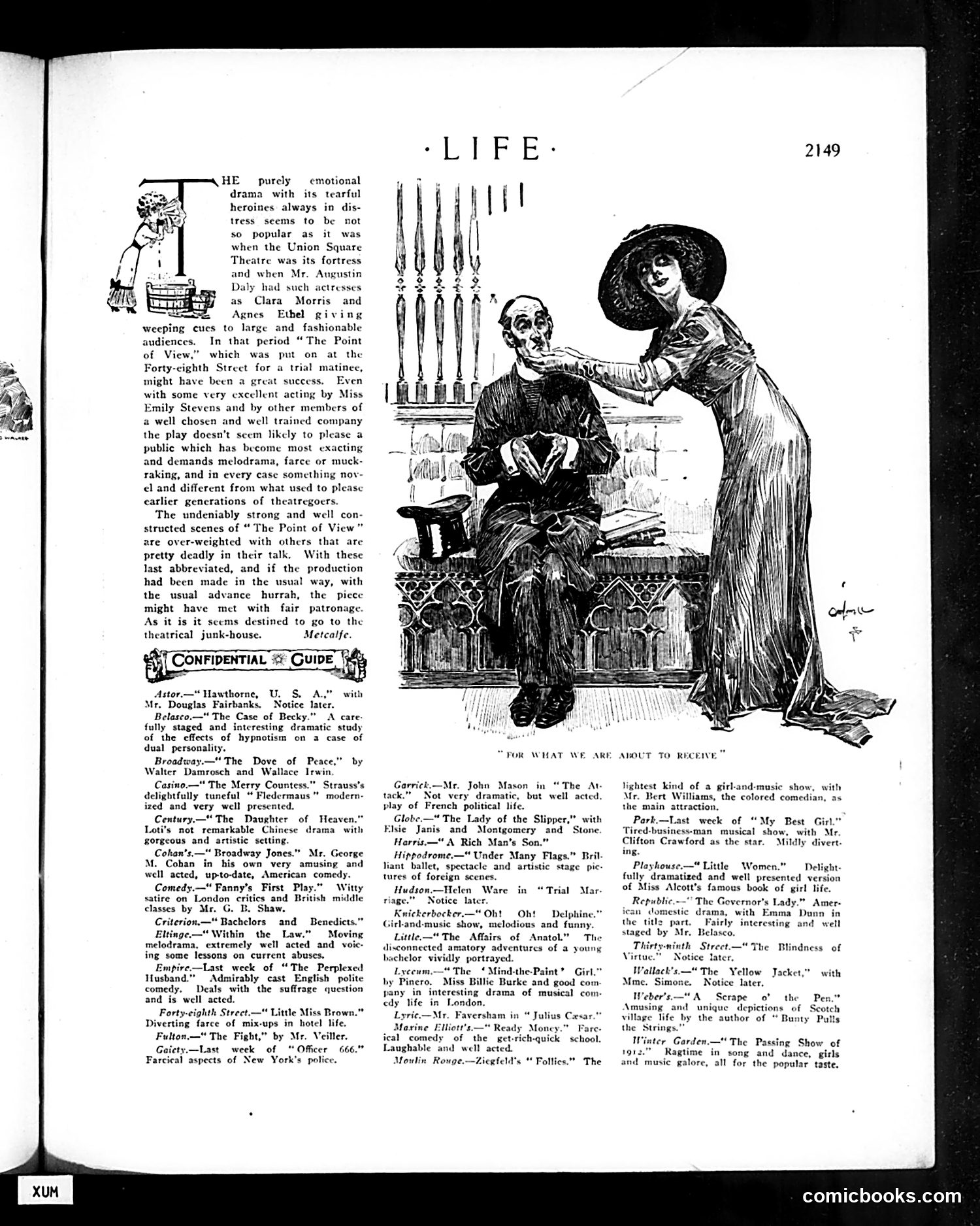
This cartoon satirizes theatrical taste in early 1910s New York. The central figure—a thin, gaunt man seated in a chair—represents the contemporary theater-going public, depicted as skeletal and dying from starvation. A woman in elaborate dress offers him a platter of theatrical productions (shown as candles or spikes), the "menu" of available shows. The satire targets the public's demanding, fickle taste. The accompanying article criticizes how audiences now reject "purely emotional drama" in favor of melodrama, farce, and "muck-raking" content. The starving figure suggests the public's insatiable appetite is actually destroying theatrical art—they consume sensational entertainments but remain spiritually and artistically malnourished. The dark humor implies that catering to lowbrow audience demands produces nothing of substance worth digesting.
📄 Transcribed text from this page (OCR, searchable)
Machine-transcribed from the original scan — historical spelling and the odd misread are preserved.
HE purely emotional drama with its tearful heroines always in dis- tress seems to be not so popular as it was when the Union Square Theatre was its fortress and when Mr. Augustin Daly had such actresses as Clara Morris and Agnes Ethel giving weeping cues to large and fashionable audiences. In that period “The Point which was put on at the Forty-cighth Strect for a trial matinee, might have been a great success, Even with some very excellent acting by Miss Emily Stevens and by other members of a well chosen and well trained company the play doesn’t scem likely to please a public which has become most exacting and demands melodrama, farce or muck- raking, and in every case something nov- cland different from what used to please carlier generations of theatregoers. The undeniably strong and well con- structed scenes of “ The Point of View” are over-weighted with others that are pretty deadly in their talk. With these last abbreviated, and if the production had been made in the usual way, with the usual advance hurrah, the picce might have met with fair patronage As it is it scems destined to go to the theatrical junk-house. Metcalfe. a CONFIDENTIAL & Guipe ap us Astor.— Hawthorne, A” Mr. Douglas Fairbanks. Notice later. Belasco.—" The Case of Becky." A care- fully staged and interesting dramatic study of the effects of hypnotism on a case of dual personality. Broadway.—" The Dove of Peace,” by Walter Damrosch and Wallace Irwin. Casino.—" The Merry Countess.” Strauss's delightfully tuneful “ Fledermaus" modern: ized and very well presented. Century.—" The Daughter of Loti's not remarkable Chinese gorgeous and artistic setting. Cohan’s.—“ Broadway Jones.” Mr. George M. Cohan in his own very amusing and well acted, up-to-date, American comedy. Comedy.—“ Fanny’s First Play.” Witty satire on London critics and British middle classes by Mr. G. B. Shaw. Criterion.—" Bachelors and _Benedicts.” Itinge.—" Within the Law.” — Mov melodrama, extremely well acted and voic- ing some lessons on current abuses, —Last week of “The Perplexed L” “Admirably cast English polite comedy. Deals with the suffrage question and is well acted. Forty-eighth Strect.—" Little Miss Brown.” Diverting farce of mix-ups in hotel life. Fulton.—" The Fight,” by Mr. Veiller. Gaicty.—Last week of “Officer 66 Farcical aspects of New York's police. with Heaven,” drama with Cc Pree 4 irs ee oh: IOS “POR WHAT WE ARE Mr. John Mason in “The At Not very dramatic, but well acted. play of French political life. Globe.—“ The Lady of the Slipper,” with Elsie Janis and Montgomery and’ Stone. Harris.—" A Rich Man's Son.” Hippodrome.—" Under Many Flags.” Brit liant ballet, spectacle and artistic stage pic- tures of foreign scenes. Helen Ware in Notice later. erbocker.—“ Oh! Oh! Delphine.” Girland-music show, melodious and funny. ttle.—" The Affairs of Anatol.” Th disconnected amatory adventures of a young bachelor vividly portrayed. find-the-Paint? Girl.” y Miss Billie Burke and good com. pany in interesting drama of musical com. edy life in London, Lyrie—Mr. Faversham i Marine Eliiott’s.—" Reat ical comedy of the get Laughable and well acted. Moulin Rouge.—Ziegfeld’s “ Follies." The “Trial Mar- AMOUT To RECEIVE” lightest kind of a girl-and-music show, with Mr. Bert Williams, the colored comedian, as the main attraction. Park.—Last week of “My Best Tired-business-man musical show, with Clifton Crawford as the star. Mildly divert: ing. Playhouse.— Little Women.” — Delight- fully dramatized and well presented version of Miss Alcott’s famous book of girl life. Republic." The Governor's Lady.” Amer- omestic drama, with Emma Dunn in part. Fairly intere y Mr. Belasco. ninth Strect.— Notice later, Wallack's.—“ The Yellow Notice later, The Blindness of Jacket,” with the Strings. Winter Garden.—' The Passing Show of * Ragtime in song and dance, girls music galore, all for the popular taste. comicbooks.com