
Life, 1912-09-19 · page 15 of 44
Life — September 19, 1912 — page 15: what you’re looking at
What you’re looking at
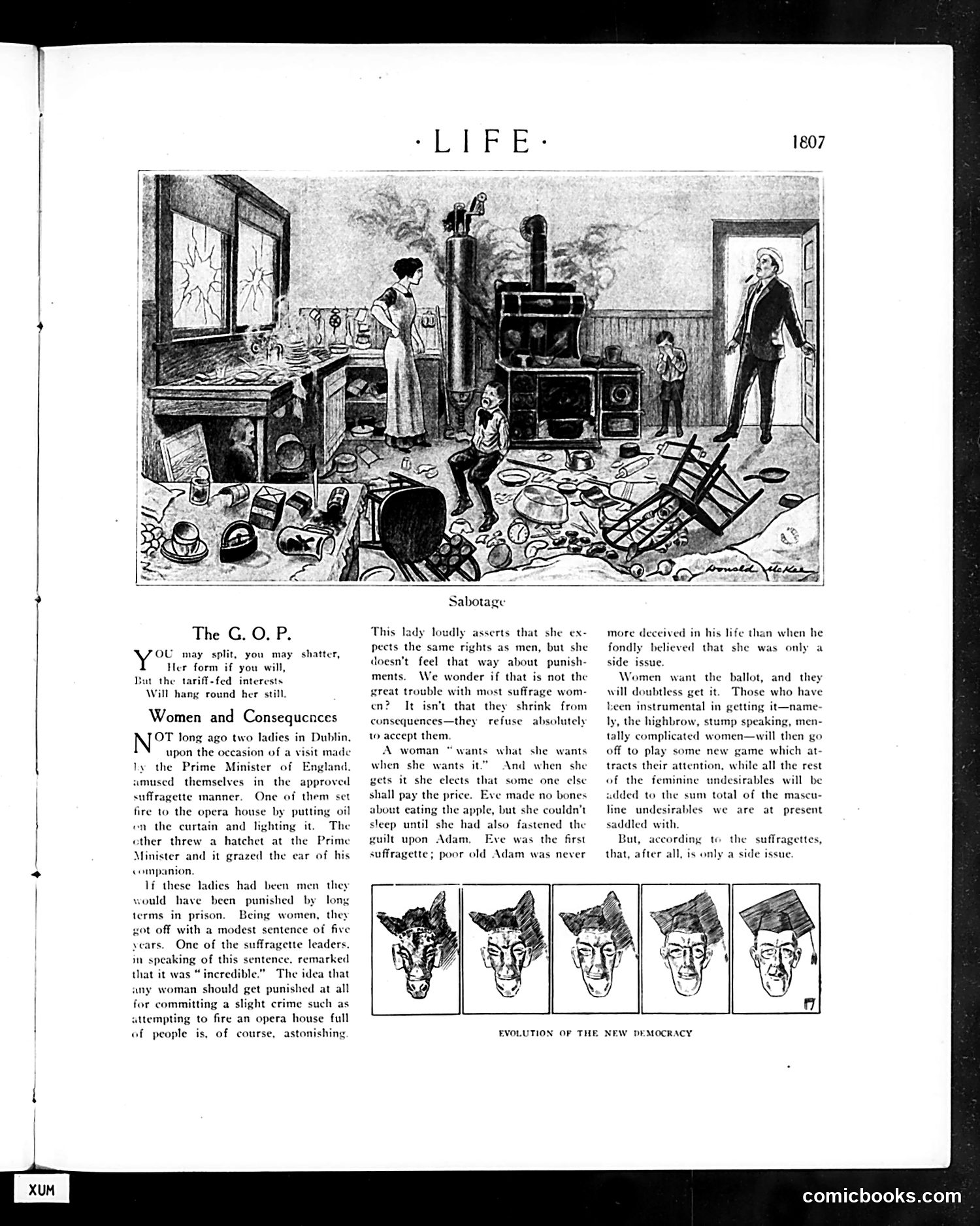
This page contains two distinct satirical pieces: **"The G.O.P."** (top): A brief poem mocking the Republican Party's inability to escape the influence of tariff-protected industrial interests, regardless of internal divisions. **"Women and Consequences"** (main article): A lengthy anti-suffrage polemic using recent British suffragette violence as its hook. The article references actual incidents—arson at an opera house and an axe attack on the British Prime Minister's companion—allegedly committed by suffragettes in Dublin. The author's central argument: women demanding voting rights refuse to accept equal *punishment* for crimes, expecting leniency based on gender. The piece sarcastically dismisses suffragettes as self-centered elites ("highbrow, stump speaking, mentally complicated women") who, once obtaining the ballot, will abandon the cause, leaving ordinary women as collateral damage to society. The "Evolution of the New Democracy" cartoon (bottom) appears to show progressive distortion of a face—likely satirizing how democracy itself becomes corrupted or absurd. The tone throughout is deeply misogynistic by modern standards, but represents mainstream editorial opinion of the era.
📄 Transcribed text from this page (OCR, searchable)
Machine-transcribed from the original scan — historical spelling and the odd misread are preserved.
The G. O. P. OU may split, you may shatter, Her form if you will, But the tariff-fed interests Will hang round her still Women and Consequences OT long ago tw upon the occasion of a visit made ly the Prime Minister of England. amused themselves in the approved suffragette manner. One of them set fire to the opera house by putting oil on the curtain and lighting it. The ether threw a hatchet at the Prime Minister and it grazed the ear of his companion. lf these ladies had been men they would have been punished by long terms in prison. Being women, they got off with a modest sentence of five years. One of the suffragette leaders. in speaking of this sentence, remarked that it was “incredible.” The idea that any woman should get punished at all for committing a slight crime such as attempting to fire an opera house full of people is, of course, astonishing ladies in Dublin, Sabotage This lady loudly asserts that she ex- pects the same rights as men, but she doesn't feel that way about punish- ments. We wonder if that is not the great trouble with most suffrage wom- en? It isn’t that they shrink from consequences—they refuse absolutely 10 accept them A woman “wants what she wants when she wants it.” And when she gets it she elects that some one else shall pay the price. Eve made no bones about eating the apple, but she couldn't sleep until she had also fastened the guilt upon Adam. Eve was the first suffragette; poor old Adam was never more deceived in his life than when he fondly believed that she was only a side issue. Women want the ballot, and they will doubtless get it. Those who have Leen instrumental in getting it—name- ly, the highbrow, stump speaking, men- tally complicated women—will then go off to play some new game which at- tracts their attention, while all the rest of the feminine undesirables will be added to the sum total of the mascu- line undesirables we are at present saddled with. But, according to the suffragettes, that, after all, is only a side issue EVOLUTION OF THE comicbooks.com