
Life, 1912-04-04 · page 37 of 80
Life — April 4, 1912 — page 37: what you’re looking at
What you’re looking at
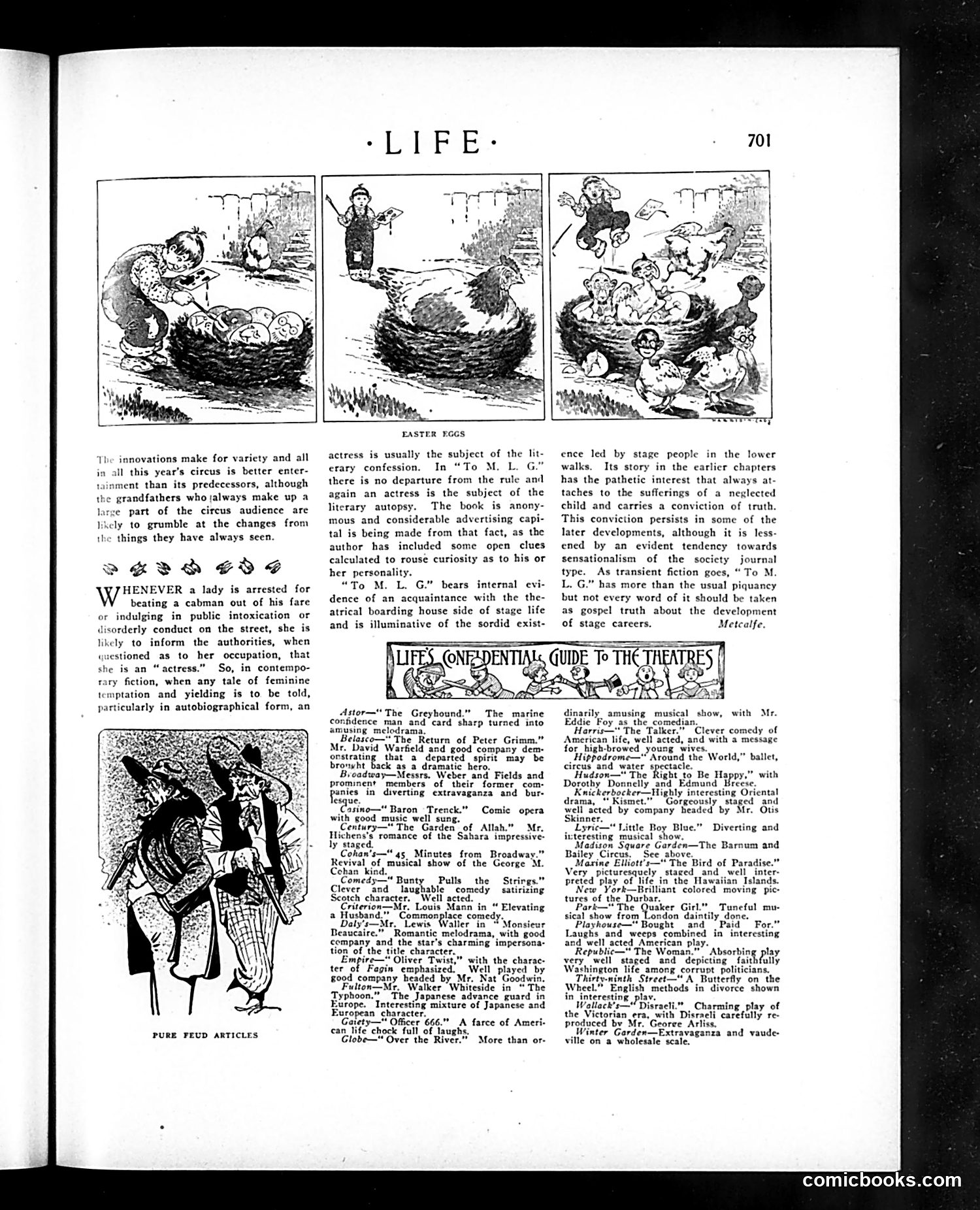
This page combines theatrical reviews with satirical social commentary. The three "Easter Eggs" cartoons at top appear to depict a humorous sequence, though details are unclear from the image quality. The main text critiques a contemporary anonymous novel titled "To M. L. G." about an actress. The satire targets a literary convention of the era: whenever women in fiction or real life (arrested women, for instance) needed moral credibility or explanation, they claimed to be "actresses"—implying the profession carried associations with loose morality and deception. The author notes this book follows that tired pattern while claiming insider knowledge of theatrical boarding-house life. Below is a section listing current Broadway productions, offering brief critical commentary on shows ranging from melodramas to comedies, many featuring well-known performers of the period (Nat Goodwin, Otis Skinner, etc.). The page satirizes both literary pretension and theatrical industry conventions of early 20th-century America.
📄 Transcribed text from this page (OCR, searchable)
Machine-transcribed from the original scan — historical spelling and the odd misread are preserved.
innovations make for variety and all 1 this year’s circus is better enter- nment than its predecessors, although grandfathers who jalways make up a ze part of the circus audience are Tiely to grumble at the changes from the things they have always seen. PEBVA EEG HENEVER a lady is arrested for beating a cabman out of his fare or indulging in public intoxication or disorderly conduct on the street, she is likely to inform the authorities, when questioned as to her occupation, that she is an “actress.” So, in contempo- rary fiction, when any tale of feminine temptation and yielding is to be told, particularly in autobiographical form, an PURE FEUD ARTICLES EASTER EGGS actress is usually the subject of the lit- erary confession. In “To M. L. ¢ there is no departure from the rule and again an actress is the subject of the literary autopsy. The book is anony- mous and considerable advertising capi- tal is being made from that fact, as the author has included some open clues calculated to rouse curiosity as to his or her personality. “To M. L. G.” bears internal evi- dence of an acquaintance with the the- atrical boarding house side of stage life and is illuminative of the sordid exist- ence led by stage people in the lower walks, Its story in the earlier chapters has the pathetic interest that always at- taches to the sufferings of a neglected child and carries a conviction of truth. This conviction persists in some of the later developments, although it is less- ened by an evident tendency towards sensationalism of the socicty journal type. As transient fiction goes, “To M. L. G.” has more than the usual piquancy but not every word of it should be taken as gospel truth about the development of stage careers. Metcalfe. Astor—"The Greyhound.” The marine confidence man and card sharp turned into amusing melodrama, Belasco—* The Return of Peter Grimm.” Mr. David Warfield and good company dem- erstrating that a departed spirit may be bronyht back as a dramatic hero. Byoadway—Messrs. Weber and Fields and prominent members of their former com- nies in diverting extravaganza and bur- lesque. ‘Casino—" Baron Trencl with good music well sung. Century—" The Garden of Allah.” Mr. Hichens's romance of the Sahara impressive- ly staged. Cohan’s—“ 4s Minutes from Broadway.” Revival of musical show of the George M. Cohan kind, Comedy—" Bunty Pulls the Strings.” Clever and laughable comedy satirizing Scotch character, “Well acted. Criterion —Mr. Louis Mann in “ Elevating ‘Commonplace comed; Waller in Monsieur Romantic melodrama, with good company and the star's charming impersona- tion of the title character. Empire—" Oliver Twist,” with the charac- ter of Fagin emphasized. Well played. by good company headed by Mr. Nat Goodwin. Fulton—Mr. Walker Whiteside in“ The Typhoon.” The Japanese advance guard in Europe. “Interesting mixture of Japanese and European character. Gaiety—" Officer 666." can life chock full of laug! Globe—" Over the River. Comic opera A farce of Ameri- More than or- dinarily amusing musical show, with Mr. Eddie Foy as the comedian. Harris—* The Talker.” Clever comedy of American life, well acted, and with a message for high-browed young wives. Hippodrome—* Around the World,” ballet, circus and water spectacle. Hudson—" The Right to Be Happy,” with Dorothy Donnelly and Edmund Breese. Knickerbocker—Highly interesting Oriental drama, “Kismet.” Gorgeously staged and well acted by company headed by Mr. Otis Skinner. Lyric—" Little Boy Blue.” ixteresting musical show. Madison Square Garden—The Barnum and Bailey Circus. See, above. Maxine Elliott’s— The Bird of Paradise.” Very picturesquely staged and well preted play of life in the Hawaiian Island: New York—Brilliant colored moving pic tures of the Durbar, Park—" The Quaker Girl.” Tuneful mu- sical show from London daintily done. Playhouse—" Bought and Paid" For.” Laughs and weeps combined in interesting and well acted American play. Republic—* The Woman.” Absorbing play very well staged and depicting faithtully Washington life among corrupt politicians. Thirty-ninth Street—" A Butterfly on the Wheel.” English methods in divorce shown in interesting play. Walleck’s—" Disraeli.” Charming play of the Victorian era, with’ Disraeli carefully re- produced by Mr. ‘George Arliss. Winter Garden—Extravaganza and vaude- ville on a wholesale scale. Diverting and 1 comicbooks.com