
Life, 1911-12-07 · page 70 of 112
Life — December 7, 1911 — page 70: what you’re looking at
What you’re looking at
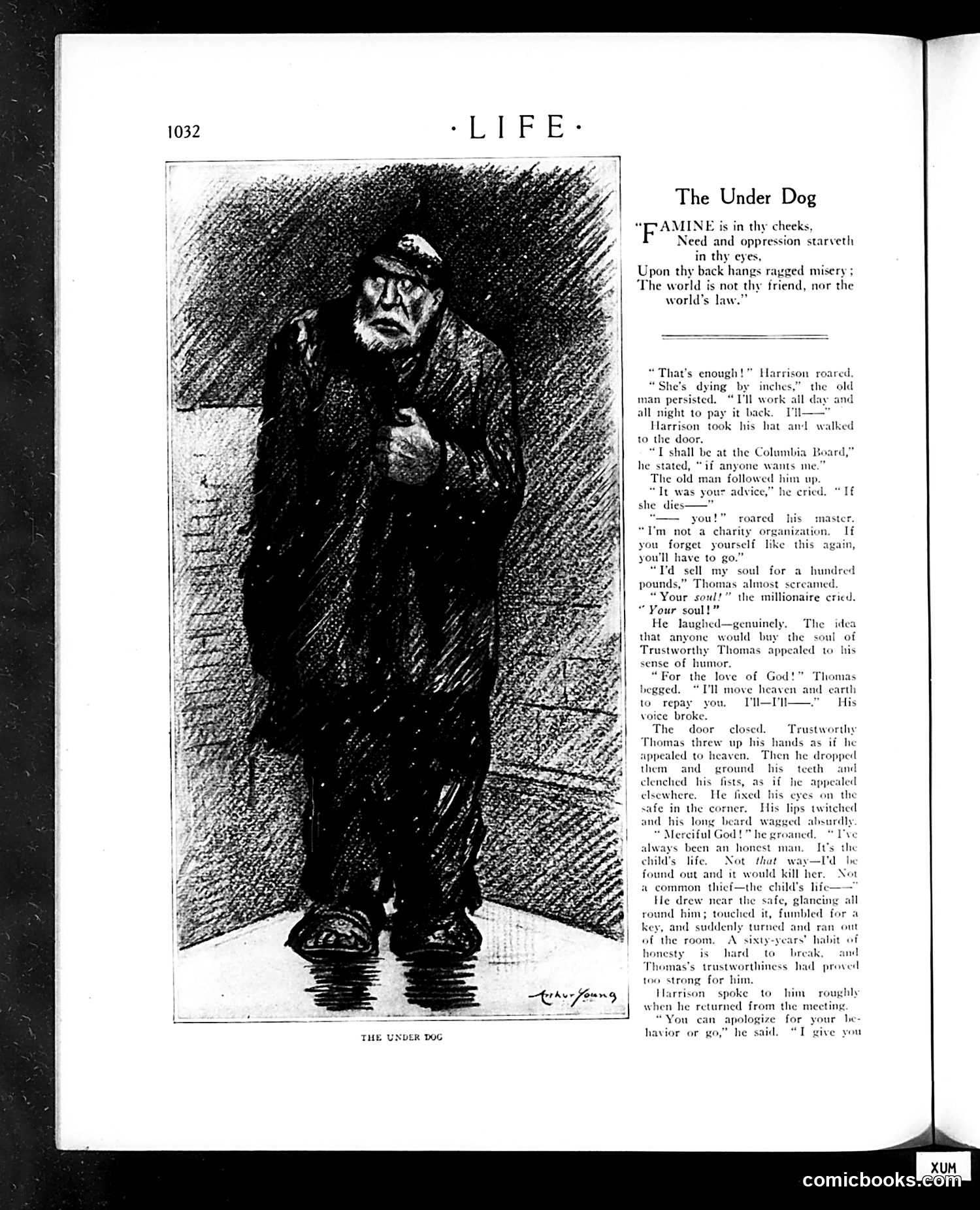
This appears to be a serialized fiction piece rather than a political cartoon. The illustration depicts an impoverished elderly man (Trustworthy Thomas) in ragged clothes, visually embodying the "under dog" title. The story critiques class exploitation: Thomas, a lifelong honest employee of a wealthy man named Harrison, desperately needs money because his child is dying. When he hints at desperation, Harrison callously refuses charity and threatens to fire him. Thomas nearly considers stealing from Harrison's safe but his sixty-year habit of honesty prevents him—even when his child's life hangs in the balance. The narrative's point is bitter: society rewards neither honesty nor human compassion. The "under dog" cannot survive through virtue alone; the system is rigged against the poor. This reflects early 20th-century *Life* magazine's tradition of social satire exposing wealth inequality and employer indifference to workers' suffering.
📄 Transcribed text from this page (OCR, searchable)
Machine-transcribed from the original scan — historical spelling and the odd misread are preserved.
The Under Dog “CAMINE is in thy cheeks, Need and oppression starveth, in thy eyes, Jpon thy back hangs ragged misery ; The world is not thy friend, nor the world’s law.” ’s enough!” Harrison roared dying by inches,” the old man persisted. “I'll work all d id all night to pay it b: 1 Harrison took his hat and walked to the door. “T shall be at the Columbia Board,” he stated, “if anyone wants me.” The old man followed him up. “It was your advice,” he cried. “If she dies — you!” roared his master. “I'm not a charity organization. If you forget yourself like this again, you'll have to go.” “T'd sell my soul for a hundred pounds,” Thomas almost screamed. “Your soul!” the millionaire cried. “ Your soul!” He laughed—genuinely. The idea that anyone would buy the soul of Trustworthy Thomas appealed to his sense of humor. “For the love of G begged. “I'M move 1 to repay you. TI—l’l—. voice broke The door closed. Trustworthy Thomas threw up 1 hands as if he appealed to heaven. Then he dropped them and ground his teeth and clenched his fists, as if he appealed elsewhere. He fixed his eyes on the ¢ in the corner. His lips twitched and his long beard wagged absurdly * Merciful God!" he groaned. I've always been an honest man. It's the child's life. Not that way—I'd_ be found out and it would kill her. Not # common thicfi—the child’s life—— He drew near the safe, glancing round him; touched it, fumbled for a key, and suddenly turned and ran out of the room. A sixty-years’ habit of honesty is hard) to” break, and Thomas's trustworthiness had proved too strong for him. Harrison spoke to him roughly when he returned from the meeting. “You can apologize for your. he- THE UNDER DOG havior or go,” he said. “TI give you comicbooks Mem